Women's Cashmere Scarves Guide
The original cashmere luxury — woven plaids, fine knits, and wraps, and how to tell a great scarf from a merely soft one.
Shop Women's Cashmere Scarves Now
Shop Women's Cashmere Scarves on Amazon Shop Women's Cashmere Scarves on eBayThe Amazon and eBay links on this page are affiliate links. If you make a purchase through them, Apparel Search may earn a commission.
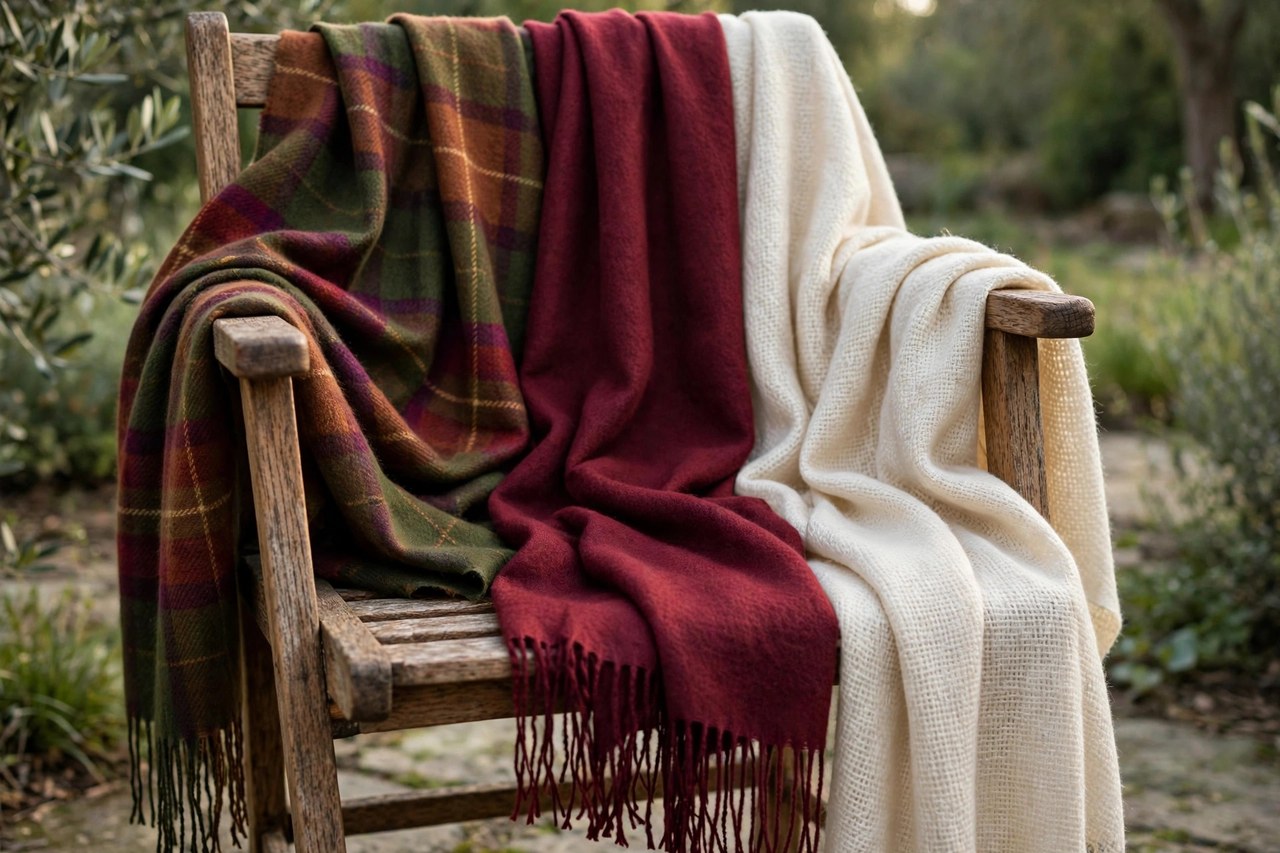
The scarf is where cashmere began its luxury career: the woven shawls of Kashmir were treasured in European courts two centuries before the cashmere sweater existed. The modern scarf keeps that heritage in a more practical size, and it remains the fiber's most gifted form — large enough to show off weave and color, small enough to be affordable at genuine quality. This guide explains the two great constructions, woven and knitted, and how to read them; the sizes from slim neck scarves to blanket wraps; the quality markers hidden in ply, weave density, and fringe; what a good scarf costs and why; the classic ways to wear one; and the care — especially moth prevention — that keeps a scarf beautiful for decades. If you buy one piece of cashmere in your life, tradition says it should be this one.
Woven Versus Knitted Cashmere Scarves
Woven scarves are loomed like cloth, and they own the classic looks: the tartan and plaid scarves of the great Scottish mills, fine plain weaves with a soft brushed finish, and patterned jacquards. Woven cashmere drapes in smooth folds, shows pattern on both faces, and tends to be the warmer choice at equal weight because the weave is dense. Knitted scarves are made like sweaters: stockinette, rib, cable, and seed-stitch scarves with a handmade character, more stretch, and a softer, loftier feel, but edges that may curl and a surface that pills a touch more readily. Neither is better; they are different instruments. Choose woven for polish, plaid, and maximum warmth; choose knitted for texture and the pleasure of a scarf that behaves like knitwear. Examine any scarf against the light: an even, opaque weave or knit is the first sign of honest fiber content.
Sizes: From Neck Warmer to Blanket Wrap
Scarf sizes divide by job. The classic muffler, roughly 25 to 30 centimeters wide and 150 to 180 long, wraps the neck once or twice inside a coat and is the everyday standard. Slim scarves, narrower and shorter, are style pieces worn loose as much for color as warmth. Stole and wrap sizes begin around 70 centimeters wide and shade into shawl territory, covering shoulders for evening or doubling as travel blankets — the definitive airplane luxury, since a cashmere wrap is a blanket that weighs grams and folds into a handbag. Oversize blanket scarves in plaid are a modern fashion category, worn belted or draped as outerwear in their own right. Buy size by purpose: a wrap worn only at the neck is a waste of fiber, and a muffler asked to cover shoulders at a winter wedding will disappoint. The right size disappears into the job.
Ply, Weave, and Fringe: Reading Quality
Quality in a scarf announces itself at the edges and in the hand. The cloth or knit should feel dense and springy, recovering when crushed in your fist, not limp or papery. Woven scarves should show a tight, even weave with no loose threads or thin streaks, and patterns should match at the fold. Fringes should be full, evenly twisted or knotted, and firmly attached — tug one gently; sheds and loose fringing are the first failures of cheap scarves. Knitted scarves should have straight, non-curling edges or an edging stitch that controls them. Fiber quality hides in the surface: long-fiber cashmere starts smooth and stays so, while short-fiber scarves are often over-brushed to feel plush in the shop and then pill and thin quickly at home. When in doubt, choose the scarf from a maker who states fiber source and ply plainly; transparency correlates with quality in this market almost perfectly.
Ways to Wear and Tie
A scarf earns its keep through variety. The classic drape — scarf over the neck, ends hanging — suits open coats and adds a vertical line of color. The once-around loop is the commuter standard for real cold. The Parisian knot, formed by folding the scarf in half and pulling the ends through the loop, gives a neat, secure finish that flatters formal coats. Wraps and stoles multiply the options: over shoulders as evening cover, belted over a dress or coat as a fashion layer, or spread as a lap blanket at outdoor events. Knitted scarves take to casual knots and tucking into knitwear. Two habits elevate any of them: arrange the scarf before the mirror once, properly, rather than adjusting all day, and let the scarf be the outfit's one pattern or brightest color when the rest is quiet — cashmere's dye depth makes even a plain scarf read as a considered choice.
Care and Moth Prevention
Scarves are stored for half the year, which makes them prime moth targets, and prevention is a ritual worth keeping. Wash or dry-clean the scarf before summer storage — moths are drawn to skin oils and food traces, not to clean cashmere — then fold it in acid-free tissue inside a breathable cotton bag with cedar or lavender, in a cool dark place. During the season, rest scarves between wears, air them rather than washing often, and de-pill the underside where coat collars rub. Woven scarves with fringes should be stored with fringes smoothed straight to avoid a season of set kinks. Treat spills immediately with cold water and patience. A quality cashmere scarf cared for this way is genuinely a multi-decade object — many of the plaid scarves still in service were gifts a generation ago, which is the strongest argument for buying the good one.
Related Women's Guides
Photos

Looking for Women's Clothing Stores?
This guide helps you choose women's cashmere scarves by weave and size. To browse where to buy, visit our women's clothing store directory, where you can find retailers that carry them.