Women's Cashmere Shawls Guide
Part garment, part blanket, all grace — the large cashmere wrap, from pashmina heritage to the modern wedding shawl.
Shop Women's Cashmere Shawls Now
Shop Women's Cashmere Shawls on Amazon Shop Women's Cashmere Shawls on eBayThe Amazon and eBay links on this page are affiliate links. If you make a purchase through them, Apparel Search may earn a commission.
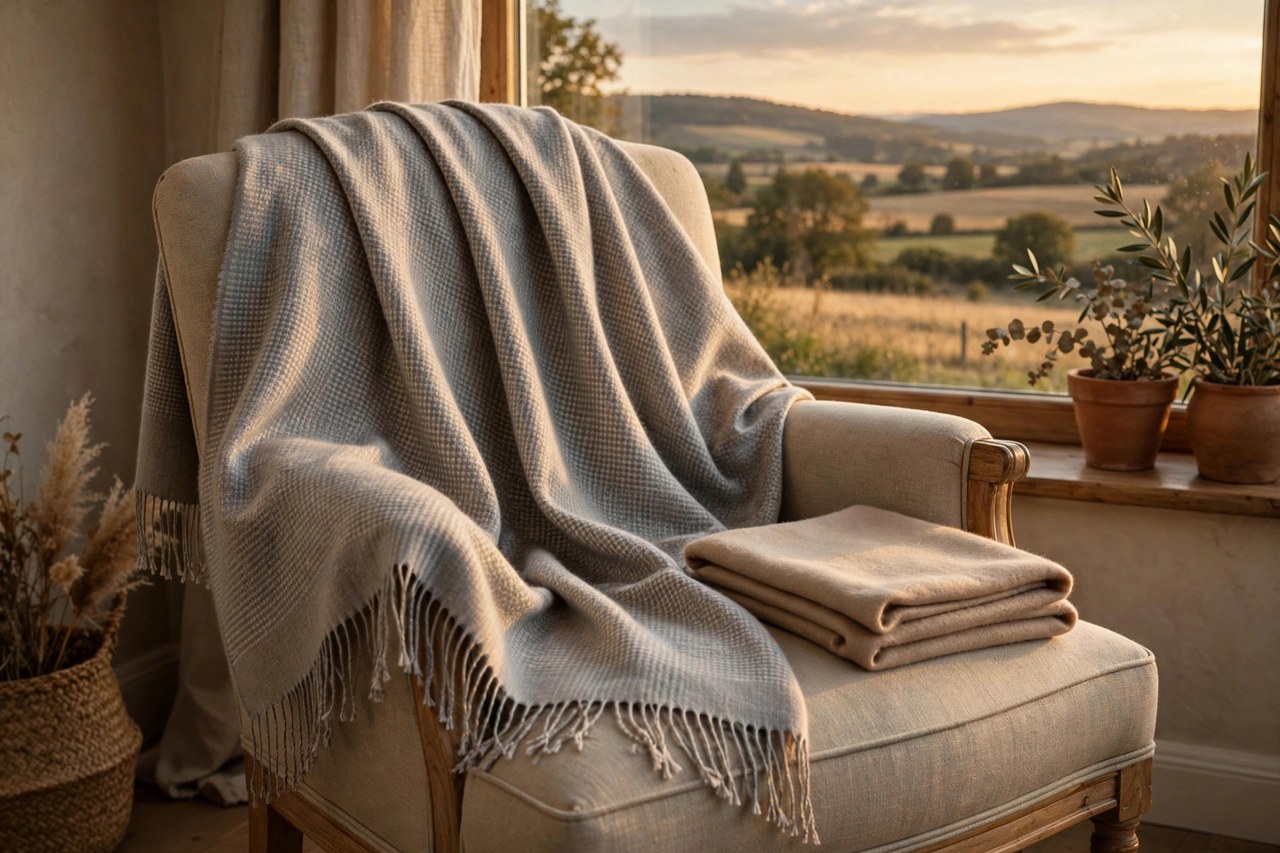
A cashmere shawl is the largest of the wraps: a generous rectangle of fine woven cashmere, typically around 70 by 200 centimeters, designed to cover shoulders, arms, and a good part of the back in one fall of cloth. It is at once a garment, a blanket, and a piece of textile heritage — the direct descendant of the Kashmir shawls that were once worth their weight in treaties. This guide explains how a shawl differs from a scarf in size and purpose, tells the pashmina story honestly, and walks through weaves, borders, and quality markers. We finish with the occasions shawls own — weddings, evenings, and travel — and the storage care that a large, valuable piece of cloth deserves. For neck-sized wraps, our scarves guide covers the smaller sibling in full.
Shawl Versus Scarf: Size and Purpose
The difference is coverage and intent. A scarf is built for the neck: it wraps, knots, and tucks into a coat, and its warmth is concentrated at the throat. A shawl is built for the shoulders and back: worn open, it covers like a light blanket, which is why it serves where scarves cannot — over a sleeveless dress at an evening event, across the shoulders at a desk, or around a traveler sleeping upright. That coverage changes how you buy. A shawl shows a large field of cloth, so weave quality, color evenness, and border finishing matter more than in a scarf that disappears into folds. It also drapes rather than wraps, so the cloth must be fluid: a shawl that stands stiffly away from the shoulders is the wrong cloth regardless of fiber. Many women own one of each, and the pair covers nearly every cold-weather occasion between them.
Pashmina and the Cashmere Shawl Tradition
Pashmina is the Persian and Urdu word for wool, and in the Kashmir tradition it names the finest grade of cashmere down, woven by hand into shawls of legendary lightness — the famous ring shawls are said to pass through a finger ring. The word has since been borrowed loosely by the market, where 'pashmina' on a label may mean fine cashmere, a cashmere-silk blend, or, regrettably, plain viscose with good marketing. The honest reading: pashmina describes a tradition and a fineness, not a legally protected fiber, so judge any shawl sold under the name by the fiber-content label and the cloth in your hands. Traditional Kashmiri shawls carry woven or embroidered borders and paisley motifs centuries old; modern shawls from Scottish and Italian mills favor plain weaves and deep solid colors. Both lineages are legitimate. What matters is that the cloth is genuinely fine cashmere, densely woven and softly finished, whatever story its name tells.
Weaves, Borders, and Fringes
Most cashmere shawls are woven in a twill or plain weave fine enough to show a subtle diagonal or a smooth face, and the weave decides the drape: twill falls in fluid folds and resists creasing, which is why it dominates. Borders carry the design interest — woven stripes, jacquard patterns, embroidered edges, or the self-fringe formed from the warp threads themselves. Inspect a shawl fully opened, not folded: the weave should be even across the whole field with no thin lanes, the borders straight and symmetrical, and the fringe full and firmly rooted. Hold it to the light; a fine shawl glows slightly but should not look gauzy unless it is deliberately a featherweight summer weave. Cashmere-silk blend shawls add a soft sheen and extra strength and drape beautifully for evening; pure cashmere is matte, warmer, and the traditionalist's choice. Either way, density is the quality signature your hands can trust.
Wearing a Shawl: Evenings, Travel, and Weddings
Evening is the shawl's oldest assignment: over a sleeveless or strapless dress it provides warmth that never has to be checked, adjusted, or apologized for, and a metallic-threaded or silk-blend shawl can be the outfit's jewelry. The wedding shawl — for brides, mothers, and guests alike — solves the cold-church, bare-shoulders problem in ivory, blush, or the wedding's accent color, and photographs as pure romance. Travel may be its finest modern use: a cashmere shawl is a blanket, a pillow cover, a privacy screen, and an arrival outfit-refresher in one item that folds to nothing and weighs grams. At home and desk it is the thinking person's cardigan. Drape it simply — centered, one end over a shoulder, or loosely belted over a dress for a modern silhouette — and let its size be the statement. Fussy arrangement is the only way to wear a shawl badly.
Care and Storage
A shawl's size makes its care specific. Wash rarely and gently — hand-washing in cool water supports its full length in the basin rather than bunching, or choose a cleaner experienced with fine shawls — and dry it flat on towels, squared to its true dimensions so the borders dry straight. Never hang a wet shawl, whose own water weight will pull the weave out of true. Fringes should be combed straight with fingers while damp. Storage is the critical season: fold the clean shawl in acid-free tissue inside a breathable bag, with cedar, in a dark drawer — a large, undisturbed, protein-rich cloth is the moth's ideal habitat, and cleanliness is the whole defense. Refold along different lines once a year to prevent permanent creases. A fine shawl cared for this way is an heirloom-grade object; many are, quite literally, handed down.
Related Women's Guides
Photos

More to Explore on Apparel Search
Looking for Women's Clothing Stores?
This guide helps you choose women's cashmere shawls for evenings and travel. To browse where to buy, visit our women's clothing store directory, where you can find retailers that carry them.