Women's Cashmere Clothing Guide
The fiber-to-garment story — where cashmere comes from, how it is graded, and how ply and gauge turn down into clothing.
Shop Women's Cashmere Clothing Now
Shop Women's Cashmere Clothing on Amazon Shop Women's Cashmere Clothing on eBayThe Amazon and eBay links on this page are affiliate links. If you make a purchase through them, Apparel Search may earn a commission.
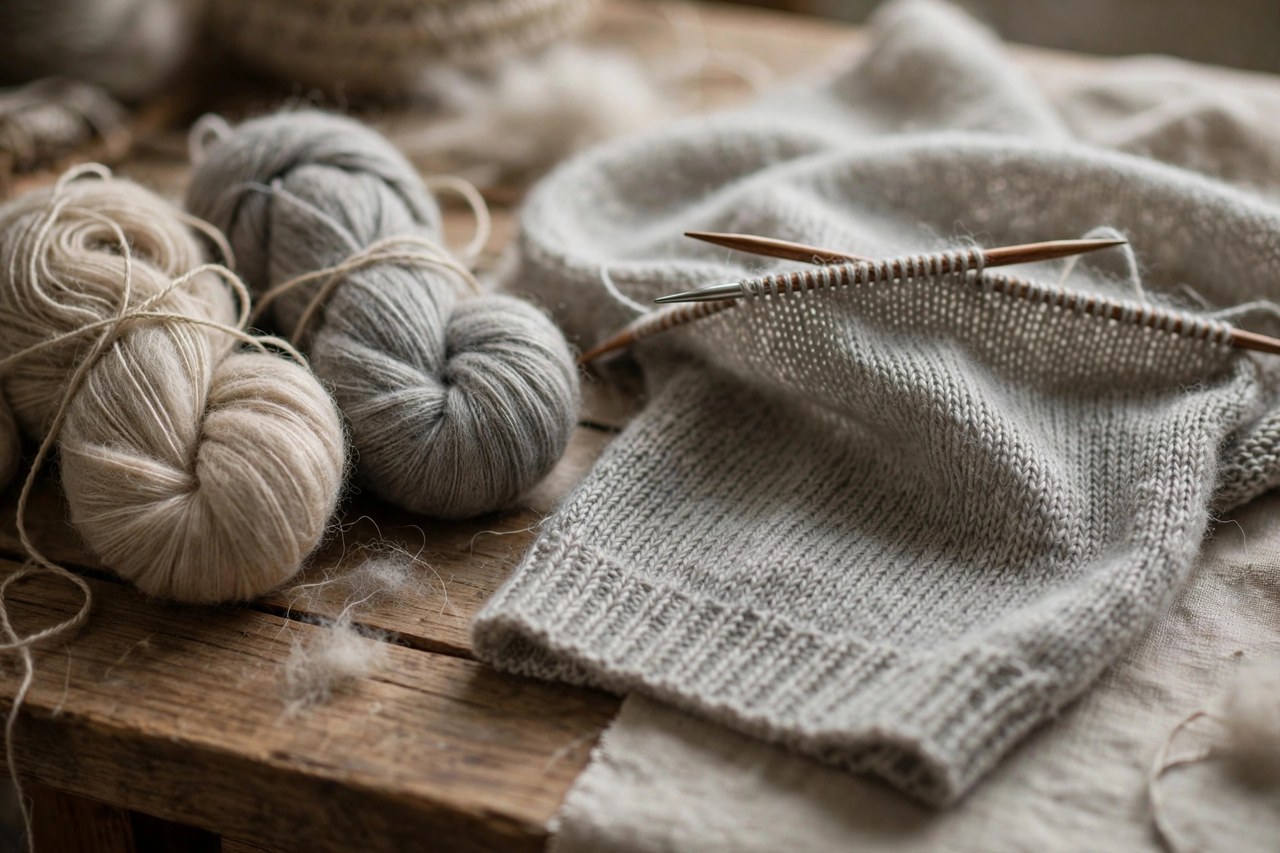
Every cashmere garment begins as a few handfuls of down combed from a goat. The journey from that down to a finished sweater — sorting, grading, dehairing, spinning, dyeing, knitting, linking, washing — decides nearly everything about how the clothing will feel and how long it will last. This guide tells that fiber-to-garment story. It explains the grades of cashmere, the meaning of ply and gauge, and how blends change the fiber's behavior, so that when you read a label or a product description you can picture the actual yarn behind the words. The other guides in this section apply the same knowledge garment by garment; this one builds the foundation they all stand on.
From Goat to Garment: Where Cashmere Comes From
Cashmere goats grow a dual coat: a coarse outer guard hair and, beneath it, a fine down that insulates them through plateau winters reaching minus thirty. In spring the down is combed out by hand. Raw fiber then goes through sorting and dehairing, where the guard hairs — thicker, straighter, and prickly — are mechanically separated from the down. The better the dehairing, the softer and more expensive the resulting fiber; residual guard hair is one reason cheap cashmere can feel scratchy despite its label. Clean fiber is dyed, carded, and spun into yarn, then knitted on flat-bed machines and linked panel to panel, or woven into cloth for coats and scarves. Most of the world's raw cashmere comes from China and Mongolia, and most fine knitting is done in China, Scotland, and Italy, each with long craft traditions.
Grades of Cashmere Fiber
Cashmere is graded on two numbers: fineness, measured in microns, and length, measured in millimeters. Premium fiber runs 14 to 15.5 microns and 36 to 42 millimeters long; standard good fiber sits around 16 to 17 microns and 34 millimeters; fiber below about 19 microns or shorter than 28 millimeters produces the soft-but-fragile yarns of bargain cashmere. Fineness controls the feel against skin — finer is softer and warmer per gram. Length controls durability: long fibers twist into stronger yarn with fewer loose ends, so the garment pills less and holds its surface for years, while short fibers work loose as pills and thin patches. Neither number appears on most consumer labels, which is why price, brand reputation, and the knit's density in hand remain the shopper's practical proxies for grade.
Ply: How Many Strands Make the Yarn
Ply counts the single yarns twisted together before knitting. A one-ply yarn makes the lightest, most fluid knits — summer-weight tops, fine scarves, layering tees. Two-ply doubles the substance and is the standard for a classic sweater with real warmth. Four-ply, six-ply, and beyond build the dense, cushioned knits of heavy winter sweaters and cardigans that wear almost like outerwear. More ply is not automatically better: it is better only when the garment's purpose calls for weight. Ply does multiply cost, since each step up uses proportionally more of a scarce fiber, and it changes care — heavy plies take longer to wash and dry. When a seller boasts of ply, check the knit itself: a loosely knitted four-ply can feel thinner than a tight two-ply, because gauge decides how much yarn actually ends up in the garment.
Gauge: The Fineness of the Knit
Gauge is the number of stitches across one inch of knitting, and it defines a garment's surface and character. Low gauges, 3 to 7, make chunky, textured knits — weekend sweaters, cozy cardigans, relaxed scarves. Mid gauges, 10 to 12, are the versatile middle of classic knitwear. Fine gauges, 14 to 18, produce the smooth, almost fabric-like knits of dressy tops, knit shirts, and layering shells, where stitches nearly disappear and the surface looks refined enough for tailoring. Fine-gauge knitting suits cashmere particularly well because the fiber's own fineness matches the small stitches. Gauge also signals honesty: cashmere's cost pressures makers to knit loosely and save yarn, and a garment that looks transparent against the light or stretches out of shape on the hanger is telling you its gauge was stretched past what the yarn could support.
Blends and What They Mean
Pure cashmere is not always the best engineering choice. Blends exist for honest reasons: a small percentage of silk adds sheen and strength to fine gauges; nylon at the heel and toe makes cashmere socks survivable; elastane gives knit pants and fitted tops their recovery; and wool blended with cashmere trades a little softness for resilience and a lower price. The label percentage tells you the recipe, and the order matters — a garment that is 85 percent cashmere behaves like cashmere, while one that is 15 percent cashmere behaves like its majority fiber with a marketing story. Rule of thumb: for sweaters and scarves, buy the highest cashmere content you can; for socks, pants, and anything that stretches or rubs, a thoughtful blend is genuinely the better garment. Judge blends by purpose, not by purity.
Related Women's Guides
More to Explore on Apparel Search
Looking for Women's Clothing Stores?
This guide helps you choose women's cashmere clothing by fiber and construction. To browse where to buy, visit our women's clothing store directory, where you can find retailers that carry them.