Women's Cashmere Hats Guide
The beanie, perfected — and its elegant cousins, the beret and the cloche, in the softest knit there is.
Shop Women's Cashmere Hats Now
Shop Women's Cashmere Hats on Amazon Shop Women's Cashmere Hats on eBayThe Amazon and eBay links on this page are affiliate links. If you make a purchase through them, Apparel Search may earn a commission.
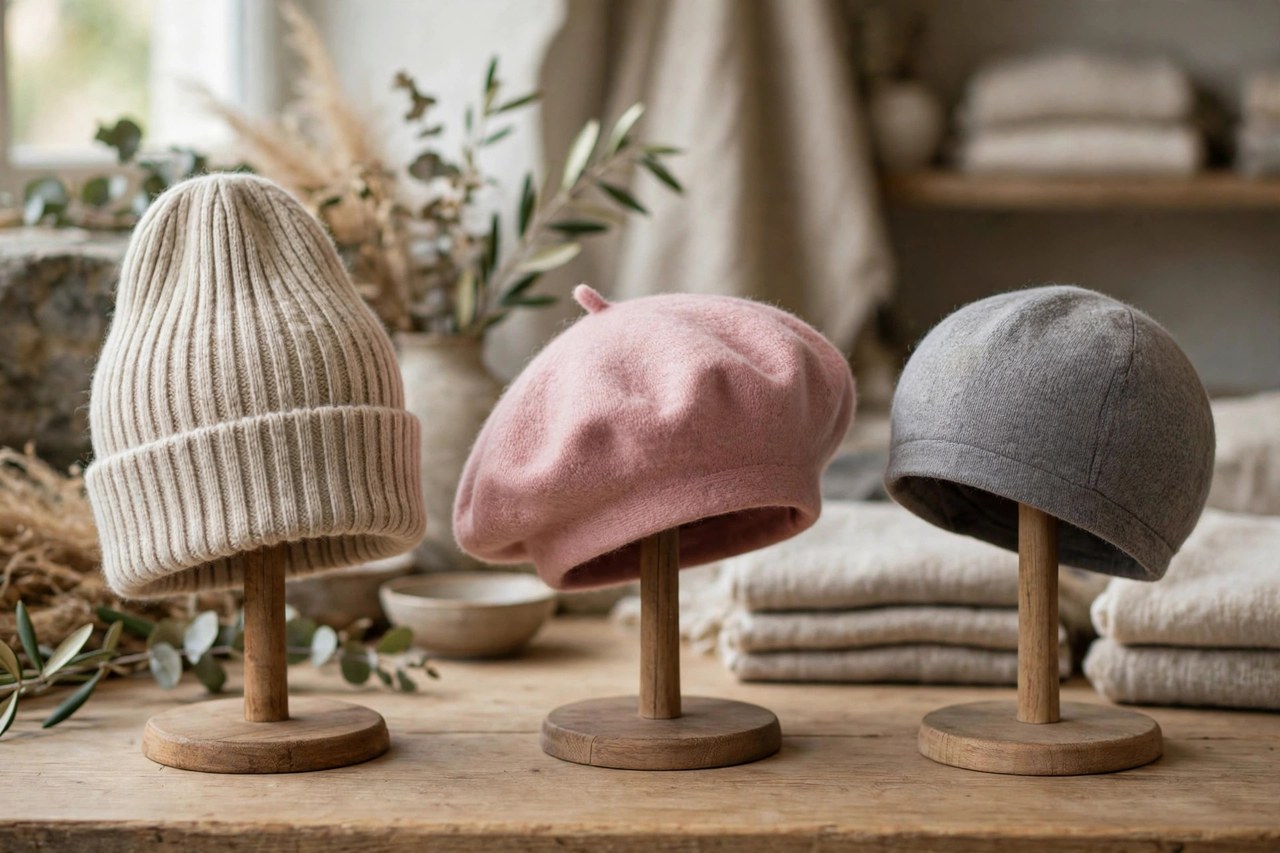
A hat is the most visible winter garment you own — it sits at eye level in every conversation — and cashmere gives it a particular advantage: warmth without bulk, and a surface so soft it never itches a forehead or crushes a hairstyle the way coarse wool can. This guide is about cashmere hats specifically: the beanie in its many forms, the beret, the cloche and other shaped styles, and the technical questions that decide whether a hat stays lovely — gauge, ply, and above all stretch recovery. We also cover fitting a hat to your head and your coat, what good cashmere hats cost, and the washing and storage routine that keeps knit hats in shape season after season. For the broader family of cashmere for the head, including headbands and ear warmers, see our headwear guide.
Cashmere Hat Styles: Beanie, Beret, and More
The beanie is the modern default: a close-fitting cuffed cap, usually ribbed, whose folded brim adds a double layer over the ears exactly where warmth is needed. Variations run from fine, smooth watch caps that sit neatly under a hood to slouchy beanies with extra length pooled at the back. The beret is cashmere's elegant option, knitted and lightly felted or kept soft and drapey, worn pulled to one side; it covers less ear but adds more outfit. Cloches and bucket shapes in firm cashmere knits bring a tailored, vintage note and protect hairstyles better than close caps. Balaclava-style and hood hats have cycled back as fashion as well as function. Pom-pom hats deserve a word: a real-fur pom is increasingly replaced by faux or cashmere-knit poms, and a detachable pom is the practical choice, since it lets the hat itself be washed gently without ruining the trim.
Gauge and Ply in a Hat
A hat is a small garment, so its construction is easy to read. Fine-gauge cashmere hats (14-gauge and up) knit up smooth and light, layer well under hoods, and suit shaped styles like berets and cloches where the surface should look refined. Mid and chunky gauges make the classic ribbed beanie, with the rib itself supplying much of the fit and warmth. Ply decides substance: a two-ply beanie is the all-round standard, four-ply builds serious winter armor, and one-ply hats are really three-season pieces for cool rather than cold days. Because hats use little yarn, makers can afford good fiber here, and the best-value cashmere in a shop is often in the hat basket. Judge by density: squeeze the knit and it should feel plump and even, not thin or stringy, and the ribbing should look crisp rather than wavy when relaxed.
Fit and Stretch: Will It Keep Its Shape
A cashmere hat must do something difficult: stretch over the head, grip without squeezing, and return to shape daily for years. That performance comes from the rib structure and the yarn's resilience, sometimes helped by a small percentage of elastane or a nylon core yarn in better-engineered hats. Fit yours by feel: the hat should sit securely at a natural angle without a pressure line across the forehead, cover the ears as much as its style intends, and stay in place when you shake your head gently. One-size hats genuinely fit a range, but women with very small or large heads should seek sized ranges. The recovery test in the shop is simple: stretch the brim firmly once, and watch it snap back. A hat that stays stretched at first touch will live on your head as a slouch whether you wanted that look or not. Quality cashmere, tightly knitted, passes this test for seasons.
Matching Hats With Coats and Scarves
Because a hat is worn with the same coat for months, think of the two as one purchase. The classic arrangements are tonal — hat in the coat's color family, scarf carrying the accent — or the hat itself as the single color note against a neutral coat. Cream and oatmeal hats brighten dark coats and flatter nearly every face; charcoal and navy are the urban defaults; a burgundy or forest hat over a black coat is a small, complete outfit decision. Coordinate textures too: a ribbed beanie suits a smooth overcoat, while a smooth fine-gauge hat or beret complements a textured or plaid coat. Sets of matching hat, scarf, and gloves look polished when the knit and color truly match, and slightly costumey when they almost do — if you are mixing separate pieces, vary either color or texture deliberately so the difference reads as a choice.
Care and Storage for Knit Hats
Hats absorb more than we like to think about: hair products, makeup at the brim, city air. Wash your cashmere hat by hand in cool water a few times a season, more often if the forehead band shows makeup, and dry it flat, reshaped over a small bowl or a balled towel if it is a shaped style, so it dries in its intended form. Never hang a wet knit hat by its brim, which stretches the edge into a wave. Pilling concentrates inside the band and where a hood rubs; a quick pass with a cashmere comb keeps it tidy. Between wears, rest the hat unstuffed in the open air rather than crushed in a coat pocket for weeks, which breaks down the rib's spring. Summer storage follows the family rules: clean, folded loosely with tissue, cedar nearby. A well-kept cashmere hat holds its fit and softness for many winters, which is fortunate, because a favorite hat becomes part of how people recognize you.
Related Women's Guides
Photos

More to Explore on Apparel Search
Looking for Women's Clothing Stores?
This guide helps you choose women's cashmere hats by style and gauge. To browse where to buy, visit our women's clothing store directory, where you can find retailers that carry them.