Women's Cashmere Gloves Guide
Warmth you can feel in your fingertips — why cashmere makes exceptional gloves, and how to buy a pair that lasts.
Shop Women's Cashmere Gloves Now
Shop Women's Cashmere Gloves on Amazon Shop Women's Cashmere Gloves on eBayThe Amazon and eBay links on this page are affiliate links. If you make a purchase through them, Apparel Search may earn a commission.
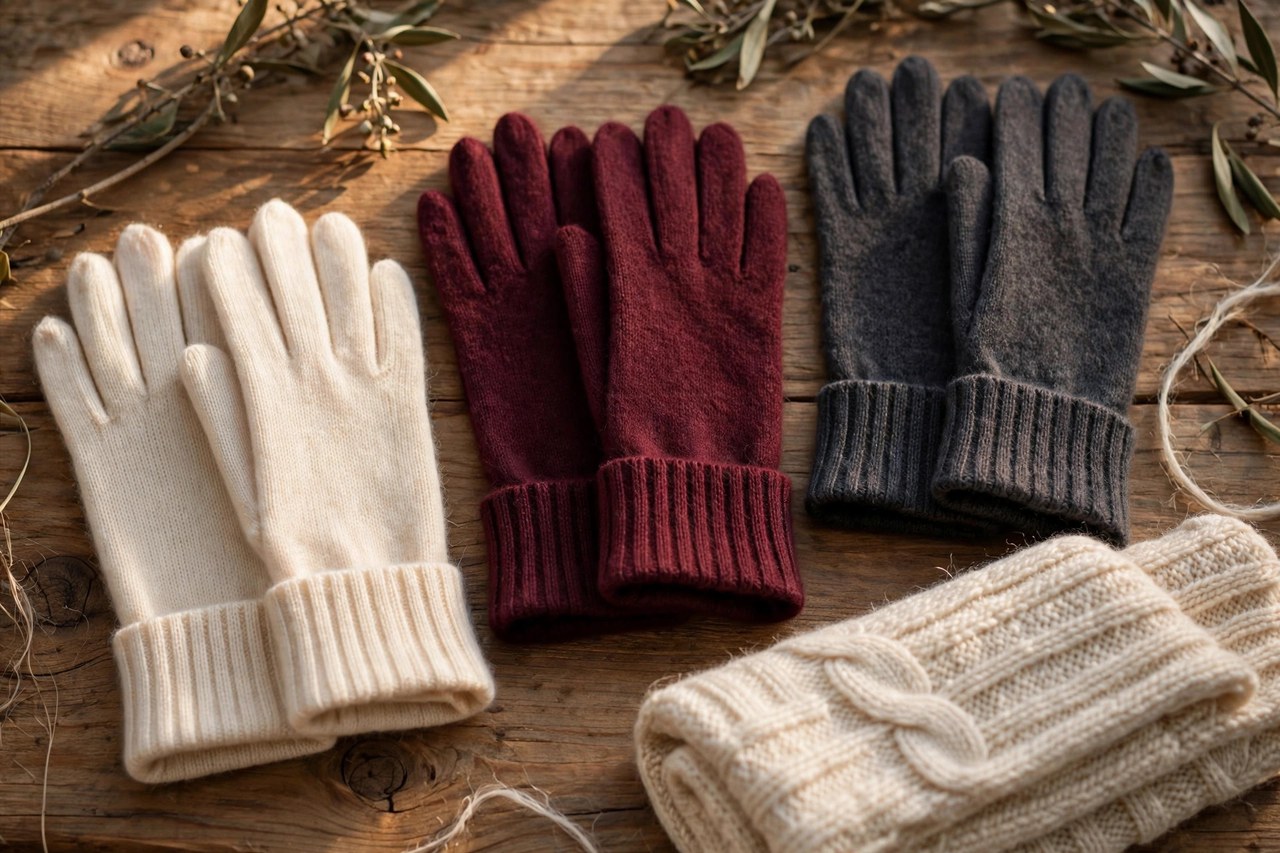
Hands notice cold first and forgive bad gloves never. Cashmere gloves earn their devoted following because the fiber delivers real insulation in a knit thin enough to keep your fingers useful — you can hold a coffee, manage keys, and feel a steering wheel, all while your hands stay genuinely warm. That combination of warmth and dexterity is cashmere's party trick, and it is why a good pair of cashmere gloves is often the first piece of the fiber a woman buys and the last she would give up. This guide covers the styles on offer, how gloves should fit, the quality details that separate a five-winter pair from a one-season disappointment, what to expect to pay, and the simple care that keeps knit gloves soft, whole, and moth-free.
Why Cashmere Gloves Feel Different
Gloves are a warmth-to-weight test that bulky fibers fail. Thick wool or synthetic fleece gloves insulate by loft, which pads the fingers apart and makes every task clumsy. Cashmere insulates by fiber structure instead: its fine, hollow, crimped fibers trap warm air in a layer only millimeters thick, so the glove can follow the hand's shape closely. The result is a glove you can wear for a whole winter day rather than pulling off for every task — and gloves that stay on are the only ones that actually work. Cashmere is also naturally temperature-regulating, so hands are less likely to overheat indoors and then chill in damp fabric. For women whose hands run cold or whose circulation complains in January, that steady, dry warmth is not a luxury; it is the difference between enjoying winter and enduring it.
Knit, Lined, and Leather-Trimmed Styles
The classic cashmere glove is fully knitted, usually in a smooth stockinette or fine rib, ending at the wrist with a ribbed cuff that seals out drafts. Lined versions add a second layer — either a finer cashmere lining for pure luxury or a thin fleece or silk layer for wind resistance — and suit the coldest climates. Leather-trimmed gloves combine a cashmere back with leather palms or full leather construction lined in cashmere; the leather grips a wheel and wears like iron, while the lining supplies the warmth, making these the driver's favorite. Length is the other choice: wrist gloves for everyday, three-quarter and elbow lengths for wearing with bracelet-sleeve coats and evening capes, a glamorous and practical solution to bare forearms in winter. Fingerless cashmere gloves and convertible mittens serve the phone-dependent, trading a little warmth for full dexterity.
Fit: Fingers, Cuffs, and Touchscreen Tips
Gloves fit by hand size, and a correct fit looks almost tailored: the fingers should reach the ends of the glove's fingers without pressure at the tips, the palm should lie smooth with no diagonal pull when you make a fist, and the cuff should hug the wrist without cutting in. Cashmere knits relax slightly with wear, so a new pair should feel snug rather than roomy; a loose cashmere glove will become a sloppy one. Try gloves on both hands, since most women's hands differ by half a size. Touchscreen capability comes from conductive yarn woven into the thumb and forefinger tips, sometimes in a contrasting thread; test it in the shop if you can, because quality varies and the feature is miserable when it half-works. Women between sizes or with long fingers should look for makers who offer sized rather than one-size gloves — the difference in comfort is immediate.
What Good Cashmere Gloves Cost
Gloves use little fiber, so cashmere's entry price here is genuinely accessible: simple one-size knit gloves from mainstream makers sit at the modest end, lined and sized gloves occupy the middle, and leather gloves with full cashmere linings from specialists form the top tier. What the money buys is density and finishing. Hold a glove to the light: a quality knit shows an even, opaque surface, while a cheap one reveals a sparse, see-through web that will wear at the fingertips within a season. Check the finger seams for smooth, flat construction — bulky inside seams are the first complaint in budget gloves. Ribbed cuffs should spring back smartly when stretched. As a first cashmere purchase, gloves are close to perfect: small commitment, daily use, and a clear demonstration of what the fiber does better than anything else in the drawer.
Care: Washing, De-Pilling, and Storage
Cashmere gloves work hard and pick up the world — handrails, pet fur, the insides of pockets — so they benefit from the most attentive care in the accessories drawer. Wash them by hand in cool water with wool wash when they begin to look dull, squeeze gently in a towel, and dry flat with the fingers smoothed into shape; never wring a knit glove, which twists the fingers out of true. Friction makes gloves pill between the fingers and on the palms, and a small cashmere comb used little and often keeps the surface clean without thinning it. Rest pairs in rotation if you can, since a day off restores the knit. Store gloves clean, flat, and paired with cedar nearby through the summer — moths love small, undisturbed, soiled knits most of all. A hole at a fingertip, caught early, is a five-minute darn; caught late, it is the end of the pair.
Related Women's Guides
Photos


More to Explore on Apparel Search
Looking for Women's Clothing Stores?
This guide helps you choose women's cashmere gloves by style and lining. To browse where to buy, visit our women's clothing store directory, where you can find retailers that carry them.