Women's Gloves Guide
Dress gloves for polish, leather gloves for a lifetime, winter gloves for weather: the general guide to women's gloves by type, size, material and occasion.
Shop Women's Gloves Now
Shop Women's Gloves on Amazon Shop Women's Gloves on eBayThe Amazon and eBay links on this page are affiliate links. If you make a purchase through them, Apparel Search may earn a commission.
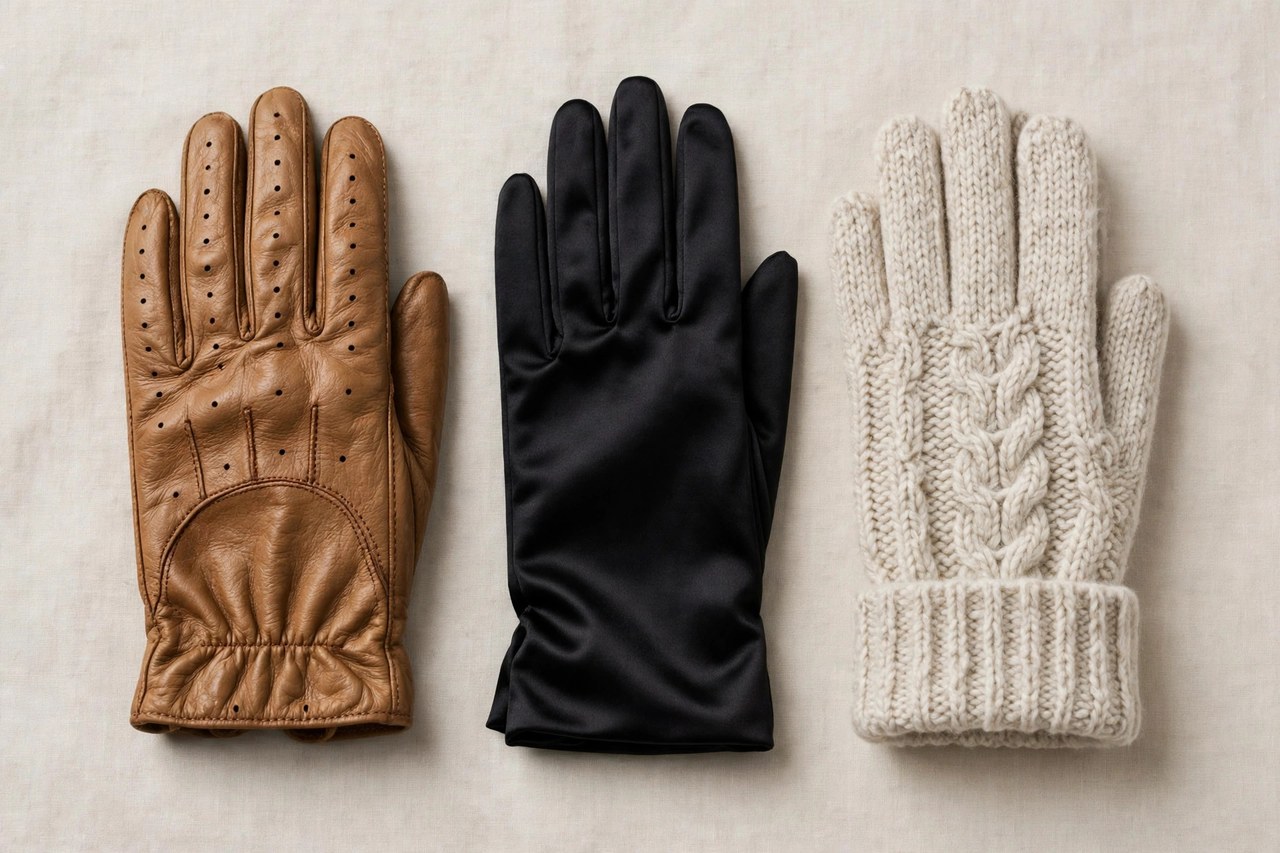
This is the general guide to women's gloves: the dress pair that finishes an outfit, the leather pair bought once and worn for a decade, and the winter pair that earns its drawer space every January. It is a different subject from the single, grip-focused glove of the golf course — for that specialist, see our golf gloves guide — though the two share a sizing system and a respect for good leather.
Gloves divide first by job. Dress gloves are about line and occasion; leather gloves about material and making; winter gloves about insulation. Most women who wear gloves own one of each, and the guides to choosing them barely overlap.
Dress and Evening Gloves
Dress gloves are measured in length as much as size: wrist length for day dresses and suits, elbow length for evening, and the full opera length that reaches above the elbow for the most formal gowns. Fabrics run from matte cotton and fine knit jersey to satin and lace for evening, in colours matched or deliberately contrasted to the dress.
The etiquette is old and mostly optional now, but the useful parts survive: gloves come off to eat, and a glove's seams and fingers should be smooth and unpuckered when worn — dress gloves are tailored garments, and a baggy pair reads as a costume.
Leather Gloves: Types and Making
The classic leather glove wardrobe holds three styles: the unlined dress glove in soft kid or lambskin for mild weather and driving; the lined glove — silk, cashmere or wool inside the leather — for real cold; and the driving glove, knuckle-holed and often string-backed, made for grip on a wheel. Fine gloves are still table-cut and hand-finished at the quality end, with quirks — the diamond-shaped gussets between the fingers — that let the hand close without strain.
Leather quality is read by touch: the best skins are thin, unmarked and evenly grained, and they cost accordingly. A good leather glove moulds to its owner's hand within a season and, kept dry and rested, lasts for many years — the original argument for buying once and buying well.
Winter Gloves and Modern Features
Winter gloves trade fineness for insulation: fleece, knit and softshell styles for everyday cold; insulated and waterproof constructions for snow and skiing; touchscreen-compatible fingertips, once a novelty and now close to standard, so the phone survives the dog walk. Mittens are warmer than gloves at the same weight — shared air beats divided fingers — and convertible fingerless-to-mitten styles serve photographers, dog handlers and anyone whose hands work outdoors. The touchscreen gloves guide explains how those conductive fingertips work, and the heated gloves guide covers the battery-powered end of the range, where insulation alone is not enough.
Size winter gloves with a fraction more room than dress gloves: a tight glove is a cold glove, because the insulation needs its loft and the hand needs its circulation.
Sizing, Fit and Care
Glove size is the circumference of the palm at the knuckles, in inches, with the thumb excluded — most women fall between 6.5 and 8. Fingers should reach the ends of the glove's fingers without pressing; leather stretches a little across the palm with wear but never lengthens, so a glove short in the finger is simply the wrong size.
Rest leather gloves flat and away from heat, clean them with products made for glove leather (or a specialist cleaner for the best pairs), and never wring or machine-wash them. Knit and fleece gloves wash cool and dry flat. Store the good pairs in their box or a cloth bag — gloves crease where they are folded, and they remember it.
A Short Note on Glove Etiquette and History
Gloves are among the oldest status garments in the wardrobe: for centuries the giving of gloves marked agreements, challenges and favour, and a lady's glove size was once as standard a piece of personal knowledge as her shoe size is now. The formal rules have relaxed — nobody is now expected to remove a glove to shake hands, though it remains the polished thing to do — but a few survivals are worth keeping: gloves come off for eating, always; a glove should be put on seated or standing still, never wrestled with while walking; and dress gloves are smoothed from fingertip to wrist, not yanked by the cuff. Knowing the choreography is part of what makes the formal glove read as elegance rather than costume.
Photos


More to Explore on Apparel Search
- Women's Shearling Gloves
- Women's Leather Gloves
- Women's Work Gloves
- Fashion Accessories
- Fashion Accessories Guide
- Fashion Accessory Stores
- Women's Fashion Accessory Wholesalers
- Women's Cashmere Gloves
- Glove Influence
- Fashion Designer Directory
- Touchscreen Gloves
- Heated Gloves
Women’s Clothes Guide by Letter: Women's Fashion Directory L
Looking for Women's Clothing Stores?
This guide helps you choose women's dress, leather and winter gloves. To browse where to buy, visit our women's clothing store directory, where you can find retailers that carry them.