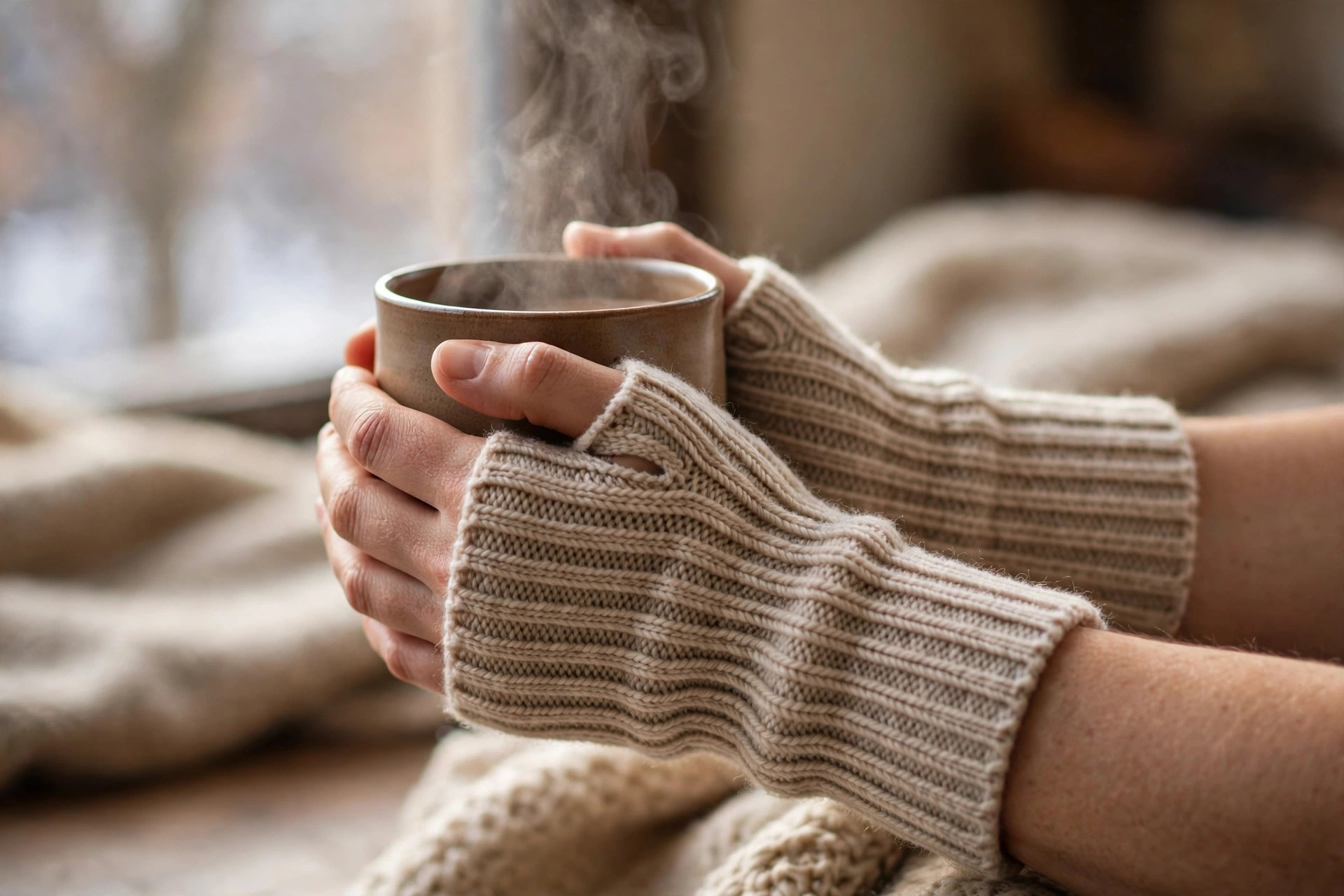
Arm warmers are separate sleeves — usually knitted or fleece — that cover the arm from the wrist up to the forearm or above the elbow, worn over bare skin under a short or three-quarter sleeve. Some end cleanly at the wrist; others add a thumb hole or a short section over the back of the hand for partial hand coverage. They are sleeves you can add, remove, and carry in a bag.
One naming note: in fashion, an arm warmer is a garment for warmth and style. In sport, the similar-looking arm sleeve is a tight synthetic tube made for UV protection, compression, or crash coverage for cyclists and runners. This guide covers the fashion garment; the two share a shape, not a purpose.
Materials and Lengths
What a pair is made of decides where it belongs:
- Wool and cashmere knits: the warmest and dressiest — fine cashmere pairs work with dresses and evening tops; chunky wool ribbing suits sweaters and casual wear.
- Cotton jersey: soft, breathable, and washable; the everyday choice for offices and layering under tees.
- Fleece: the utility option — brushed, warm, and cheap, made for driving, dog walking, and drafty houses.
- Lace and fashion knits: warmth takes second place to texture; these are styling pieces for dresses and going-out tops.
Lengths run from wrist-length cuffs that barely pass the forearm, through the common mid-forearm style, to long versions that reach above the elbow. Longer pairs need the best fit, because they have the furthest to slide.
The Layering Trick
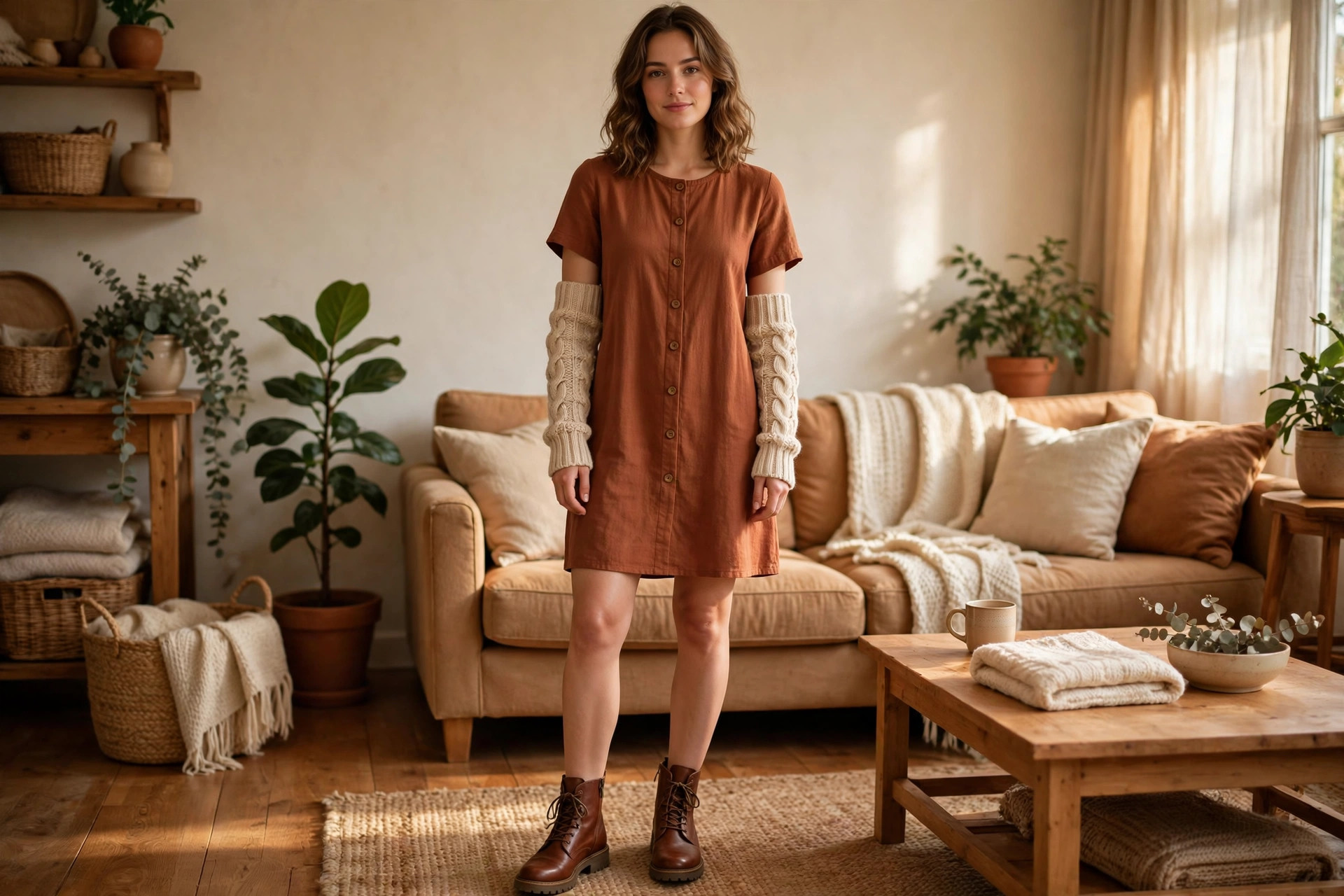
Arm warmers earn their drawer space one way: they extend summer clothes into cold weather. A short-sleeve top or a favorite dress gains full sleeves in ten seconds, with no cardigan hiding the outfit and no extra bulk under a coat. When the room warms up, they push down to the wrist or come off entirely — something no sewn sleeve can do.
They also solve the bare-wrist problem. Three-quarter sleeves end mid-forearm, coats end at the wrist, and gloves start at the hand, leaving a band of bare skin that leaks heat all day. An arm warmer bridges that gap under the coat, which is why the wrist feels warmer out of proportion to the fabric involved.
How to Style Them
With tees, arm warmers read as a deliberate layered look — wear them under a short sleeve, slightly scrunched, in a contrasting color or a matching tone for a longer line. Tanks layered over long-sleeve tops can swap the under-layer for arm warmers on milder days. With sweater dresses and knit dresses, a fine-knit pair in the same color family keeps the outfit unbroken from shoulder to wrist.
Pair them with fingerless gloves when hands need coverage too — or choose thumb-hole arm warmers and skip the second garment. For hands that need full coverage plus phone use, see touchscreen gloves. The sibling garment for the other end of the outfit is leg warmers, worn the same spirit: warmth added where the outfit stops short.
Practical Uses, Sizing, and Care
Where they quietly help
Cold offices are the classic case: typing with warm forearms and free fingers beats typing in gloves. Drivers like them on cold morning steering wheels. Cyclists and runners wear lighter pairs for the first cold miles, then strip them off mid-route. And people whose hands and arms run unusually cold — including many with Raynaud's-type sensitivity — find covered forearms a modest but real comfort; treat that as comfort, not treatment.
Sizing and fit
A good pair stays up without squeezing. Measure the upper arm where the top band will sit and follow the maker's chart; between sizes, the smaller usually stays put better. Ribbed knits grip naturally, and some pairs add a silicone band inside the top edge — worth choosing if smooth jersey pairs have slid on you before. If you can pinch loose fabric at the top, they will travel down.
Care
Wool and cashmere pairs want hand washing or a gentle cycle in a mesh bag, dried flat so the ribbing keeps its spring. Cotton and fleece pairs machine wash easily. Whatever the fabric, stretched-out elastic is the usual cause of sliding — rotating two pairs extends both lives.
Common Questions
- What are arm warmers for?
- They add a removable sleeve wherever your outfit lacks one: extending short-sleeve tops and dresses into cold weather, covering the bare wrist between a three-quarter sleeve and a glove, and warming arms in cold offices, cars, and theatres without a whole extra sweater.
- What is the difference between arm warmers and fingerless gloves?
- Length and coverage. Fingerless gloves cover the hand and wrist and stop there. Arm warmers run from the wrist up the forearm — short ones to mid-forearm, long ones above the elbow. Many arm warmers add a thumb hole or a short hand section, which is where the two garments overlap.
- How do you keep arm warmers from sliding down?
- Fit first: they should hug firmly without squeezing, sized to your upper-arm measurement. Ribbed knits grip better than smooth jersey, and some pairs have a silicone band inside the top edge. If a pair slides, it is usually too big or the knit has relaxed with wear.
- Can you wear arm warmers with a dress?
- Yes — that is one of their best uses. Long knit or lace arm warmers turn a sleeveless or short-sleeve dress into a cold-weather outfit without hiding it under a cardigan. Match the texture to the dress: fine knits and lace for dressier fabrics, chunky ribbing for casual knits.
- Are arm warmers the same as arm sleeves?
- Not quite. Arm warmers, in the fashion sense, are knitted or fleece sleeves worn for warmth and style. Sports arm sleeves are tight synthetic tubes made for sun protection, compression, or scraping protection in cycling and running. The shapes look similar; the purpose and fabrics are different.
Winter Warmth and Style Series
This guide is part of the Apparel Search Winter Warmth and Style Series: practical guides to dressing well and staying warm through the cold months.