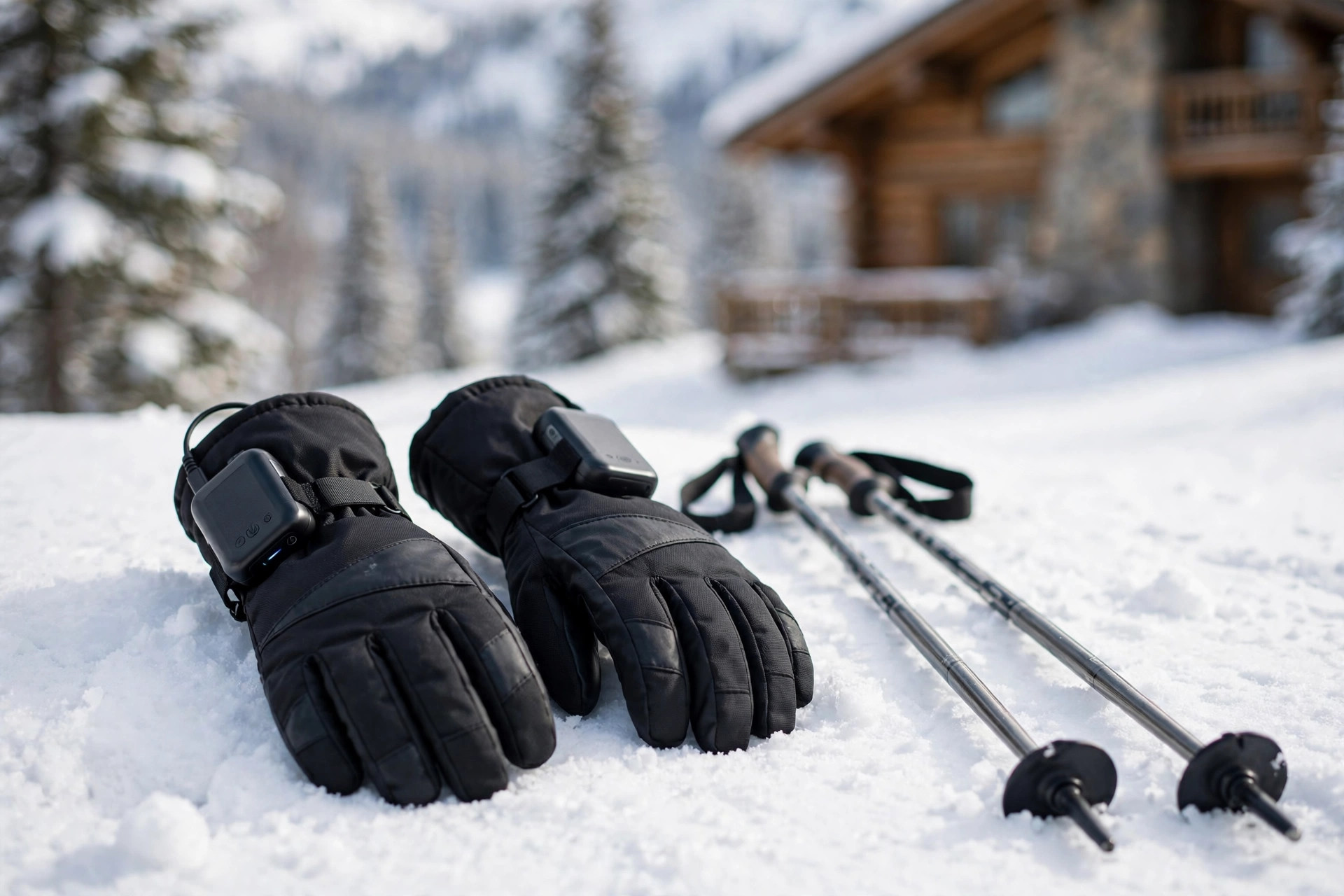
Heated gloves carry thin electric heating elements — fine wires or flexible panels — around the back of the hand and fingers, powered by small rechargeable battery packs that sit in a pocket at the cuff. A button cycles through heat settings. They do not replace insulation; they add active warmth on top of it, which is why they help most in the exact situation insulation fails: fingers that go cold and stay cold.
How Heated Gloves Work
The elements that matter are the ones that reach the fingers — back-of-hand-only designs feel pleasant but leave fingertips cold. Battery packs, usually one per glove, connect inside a zippered or Velcro cuff pocket; common systems run two to three heat levels. Realistic runtimes follow a simple trade: on the lowest setting many gloves run most of a day (roughly six to ten hours in makers' ratings), while the highest setting is a two-to-four-hour resource to spend on lift rides and the coldest hours. Cold itself shortens battery life, so ratings are best treated as fair-weather numbers.
Three formats cover most needs: full heated gloves for skiing, work, and riding; heated liners, thin elements worn under your own shell gloves or mittens, for people whose outer gloves already fit a system; and heated mittens, the warmest format of all, since fingers share warmth and the element has less surface to heat. The wider category, including jackets and socks, is introduced in the women's heated clothing guide.
Who They Suit — and Their Honest Limits
The strongest cases are people whose hands chill out of proportion: many people with Raynaud's phenomenon or poor circulation use heated gloves because the fingers are warmed directly rather than waiting for blood flow to do it. They are a comfort aid, not a medical treatment, but for that group they can be the difference between joining the ski day and watching it. Skiers, hunters, winter motorcyclists, outdoor workers, and cold-weather photographers — anyone who must keep hands out and working — are the other natural owners.
The limits are cost, weight, and discipline. Heated gloves cost several times a plain pair, the batteries add bulk at the wrist, and a forgotten charge the night before means ordinary gloves that morning. Spare batteries are a sensible purchase for long days. They are also not a substitute for a sane layering system: a warm core in a good base layer keeps blood flowing to the hands in the first place.
Buying and Caring for Them
Check element placement (fingers, not just hand back), battery position and spare availability, and whether the shell is water-resistant enough for your use — wet insulation plus electronics is a poor mix. Fit runs bulky; size for the liner socks of the glove world, meaning a touch of room rather than a squeeze. Care is conservative: remove the batteries before any cleaning, spot clean or follow the maker's instructions precisely, never wring the glove (elements run through it), and store batteries partly charged rather than flat or topped up for months.
Common Questions
- How long do heated gloves stay warm on one charge?
- It depends on the setting. On low, many models are rated for roughly six to ten hours; on high, more like two to four. Cold weather shortens real runtimes, so experienced users run low as the baseline and spend high on lifts and breaks.
- Can you wash heated gloves?
- Carefully, and only as the maker directs. Always remove the battery packs first. Many heated gloves are spot-clean only; those that allow washing want it gentle, with no wringing, because heating elements run through the fingers.
- Are heated gloves or heated mittens warmer?
- Mittens, for most people. Fingers sharing one compartment warm each other, and the heating element works on a smaller, shared space. Gloves win when you need dexterity for poles, tools, zips, and cameras.
- Do heated gloves help with cold, numb fingers?
- Many people with poor circulation or Raynaud's find they help a great deal, because the fingers are warmed directly instead of relying on blood flow. They are best understood as a comfort aid rather than a treatment for any condition.
Cold-Weather Warmth and Hosiery Series
This guide is part of the Apparel Search cold-weather warmth and hosiery series: the small garments that decide whether winter dressing is comfortable. Browse the full series below, or start from the women's winter clothing guide and the women's hosiery guide.