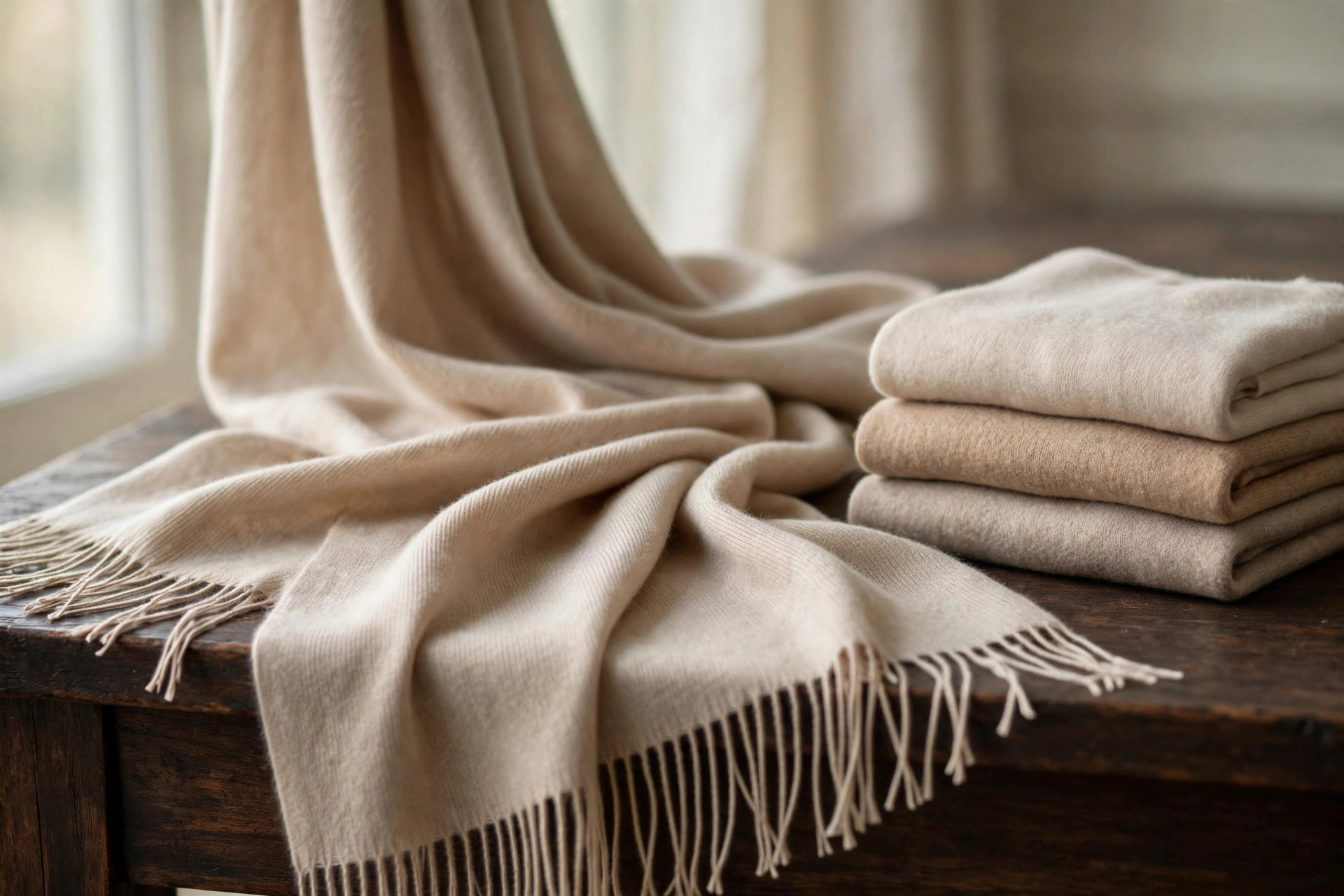
A cashmere scarf is simply a scarf made from cashmere, the fine undercoat fiber combed from cashmere goats — but within that simple description sits an enormous quality range. This page is the buying guide: how ply, weave, fiber length, and size change warmth, drape, and longevity. For the category catalogs themselves, see the women's cashmere scarves guide and the men's cashmere scarves guide; here we cover how to choose one well.
Quality: Fiber Length, Ply, and Weave
Cashmere quality starts with the fiber itself. Long, fine fibers — the premium grade runs around 14 to 16 microns thick and over 34 mm long — spin into yarn that is strong, soft, and resistant to pilling. Short fibers are cheaper, feel soft in the shop, and pill and thin quickly; a suspiciously cheap pure-cashmere scarf is almost always short-fiber, loosely spun, or quietly blended. Ply counts the yarns twisted together: a single-ply woven scarf is light and fluid, a two-ply noticeably warmer and more substantial. Neither is automatically better; match ply to climate and to whether the scarf will live under a coat or over one.
Weave decides drape. Plain and twill weaves give the classic flat scarf; herringbone adds a subtle pattern woven into the structure. Knitted cashmere scarves — ribbed or garter stitch — are stretchier and more casual, closer to a snood's character than a woven wrap's. Hold any cashmere scarf to the light: an even, dense surface with no thin patches is the mark of a well-made piece, and the fringe should be twisted or knotted neatly rather than fraying loose.
Sizes, Colors, and the Gifting Question
The classic oblong scarf runs about 170 by 30 cm — enough for a single loop or a Parisian fold with the ends tucked. Oversized wraps and stoles, around 200 by 70 cm, double as travel blankets and evening wraps and are the better gift for someone who flies or feels the cold. Skinny scarves are styling pieces and give little warmth. For gifts, cashmere's one-size nature removes the guessing that sinks most clothing presents, and neutrals — camel, grey, navy, black, cream — are the safe and genuinely useful choices; a deep red or forest is the standard step beyond safe.
Men's and women's scarves differ mainly in width, color palette, and fringe length, not in construction, and many are sold unisex. If the recipient wears a heavy beard, choose a tighter weave; loose weaves and cashmere do not enjoy stubble.
Care Basics
Cashmere improves with rest: rotate the scarf rather than wearing it daily, and let it air folded between outings. Minor pilling in the first wears is normal even on good fiber — lift the pills with a cashmere comb rather than pulling them. Wash rarely, by hand in cool water with a wool-safe detergent, dry flat away from heat, and store folded with cedar against moths rather than hung, which stretches the weave. Treated this way, a well-bought cashmere scarf is a decade-long garment, and its cost per wear drops below the cheap scarf replaced every other winter. The fiber's wider family is covered in the women's cashmere sweaters guide.
Common Questions
- How can you tell if a cashmere scarf is good quality?
- Look for dense, even weaving with no thin spots against the light, neatly finished fringe, and a springy feel when the fabric is gently stretched and released. Long, fine fibers pill less; a very cheap price on supposedly pure cashmere is the most reliable warning sign of short fiber or blending.
- Is a thicker cashmere scarf always warmer?
- Not always. Warmth comes from fiber quality and how much still air the fabric holds, so a well-made single-ply in a tight weave can outperform a lofty, loosely woven thicker scarf in wind. Ply adds substance and warmth, but weave density matters just as much.
- What size cashmere scarf should you buy?
- The classic oblong, about 170 by 30 cm, suits most people and coats. Choose an oversized wrap around 200 by 70 cm for travelers, evening wear over dresses, or anyone who wants a scarf that can double as a shawl or travel blanket.
- How should a cashmere scarf be stored?
- Clean, folded, and in a drawer or box with cedar to deter moths. Never hang a cashmere scarf for long periods — the weight stretches the weave. Rest it between wears and comb away early pills gently rather than pulling them.
Cold-Weather Warmth and Hosiery Series
This guide is part of the Apparel Search cold-weather warmth and hosiery series: the small garments that decide whether winter dressing is comfortable. Browse the full series below, or start from the women's winter clothing guide and the women's hosiery guide.