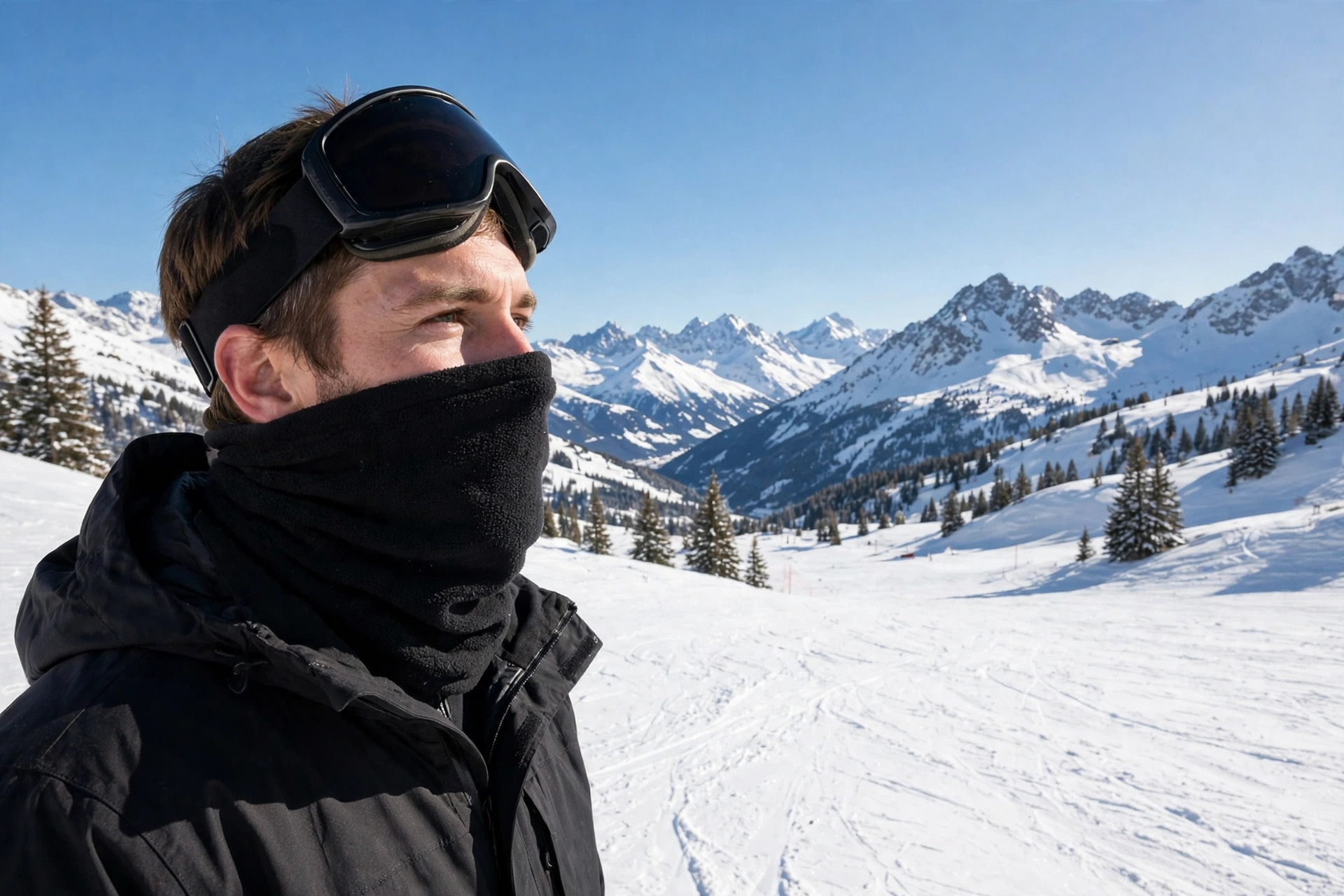
A neck warmer is a short tube of insulating, usually stretchy fabric worn snugly around the neck. It can be pulled up over the chin, nose, and ears as conditions demand, then pushed back down in seconds. Known also as a neck gaiter or buff-style tube, it is the performance member of the scarf family: no ends, no knots, nothing to flap, and a complete seal between jacket collar and hat.
Fabrics: Fleece, Merino, and Windproof Panels
Basic fleece neck warmers are warm, inexpensive, and slightly bulky — the default for skiing and winter work. Merino wool versions regulate temperature across a wider range, resist odor over multi-day trips, and pack smaller, at a higher price. Thin synthetic stretch tubes weigh almost nothing and fit under a helmet, trading insulation for coverage; they double as sun and dust protection in summer weights. The warmest designs add a windproof panel across the front, because wind through fleece is what makes a cold neck feel colder on a chairlift or bike. Double-layer versions, with fleece outside and a soft liner inside, sit at the top of the warmth scale.
Seams and edges matter more than brand: a flat seam at the top edge is comfortable against the chin, and a contoured or longer front tucks into a jacket zip. The gaiters definition covers the term's wider family, including the leg version worn over boots.
How a Neck Warmer Is Worn
Around the neck it works as a compact scarf. Pulled to the chin it seals the collar gap. Over the nose and ears, tucked under goggles or sunglasses, it becomes light face protection for skiing, snowboarding, winter cycling, and motorcycling — most of the coverage of a balaclava without covering the head, so it pairs with any helmet or hat. Worn up over the crown it improvises an ear band or thin beanie in a pinch. This adjustability is the whole point: one garment that meters its own warmth as the weather and your effort change.
For everyday wear the appeal is tidiness. A neck warmer cannot trail into machinery, doors, or bicycle chains, cannot come untied, and stuffs into a coat pocket. Commuters who found scarves fussy often end up here.
Choosing One, and the Snood Question
Choose length first: longer tubes (around 45 to 50 cm) pull up higher and double over for extra insulation; shorter ones stay put as a pure neck seal. Then choose fabric by activity — fleece or windproof-front for low-output cold, merino for mixed days and travel, thin synthetics for high-output effort where overheating is the risk. Fit should be snug without pressure; a gaiter that slides down off the nose is too big or too worn.
If you are deciding between this page's garment and a snood: the snood is the knitted, town-friendly relative, deeper and more scarf-like; the neck warmer is the technical, close-fitting one. Many winter regulars own both and choose by outfit and forecast.
Common Questions
- What is the difference between a neck warmer and a snood?
- A neck warmer is a short, close-fitting tube of performance fabric such as fleece, merino, or stretch synthetic, made for sport and sealing the collar gap. A snood is usually knitted, deeper, and more scarf-like, and can double as a hood around town.
- Can a neck warmer replace a scarf?
- For warmth and convenience, yes. It seals the neck completely with nothing to tie or trail. What it does not do is drape decoratively over a coat the way a long scarf does, so the choice is partly about the look you want.
- How do you wear a neck warmer with ski goggles?
- Pull the tube up over your nose and ears first, then settle the goggles over its top edge so the foam overlaps the fabric. That overlap stops breath escaping upward and fogging the lens, and seals the gap at the cheeks.
- Are neck warmers warm enough for very cold weather?
- In fleece or windproof-front form, worn with a hat, yes for most winter activity. Face coverage plus a sealed collar removes the main routes for heat loss at the neck. In extreme cold, pair one with a balaclava or a hooded shell.
Cold-Weather Warmth and Hosiery Series
This guide is part of the Apparel Search cold-weather warmth and hosiery series: the small garments that decide whether winter dressing is comfortable. Browse the full series below, or start from the women's winter clothing guide and the women's hosiery guide.