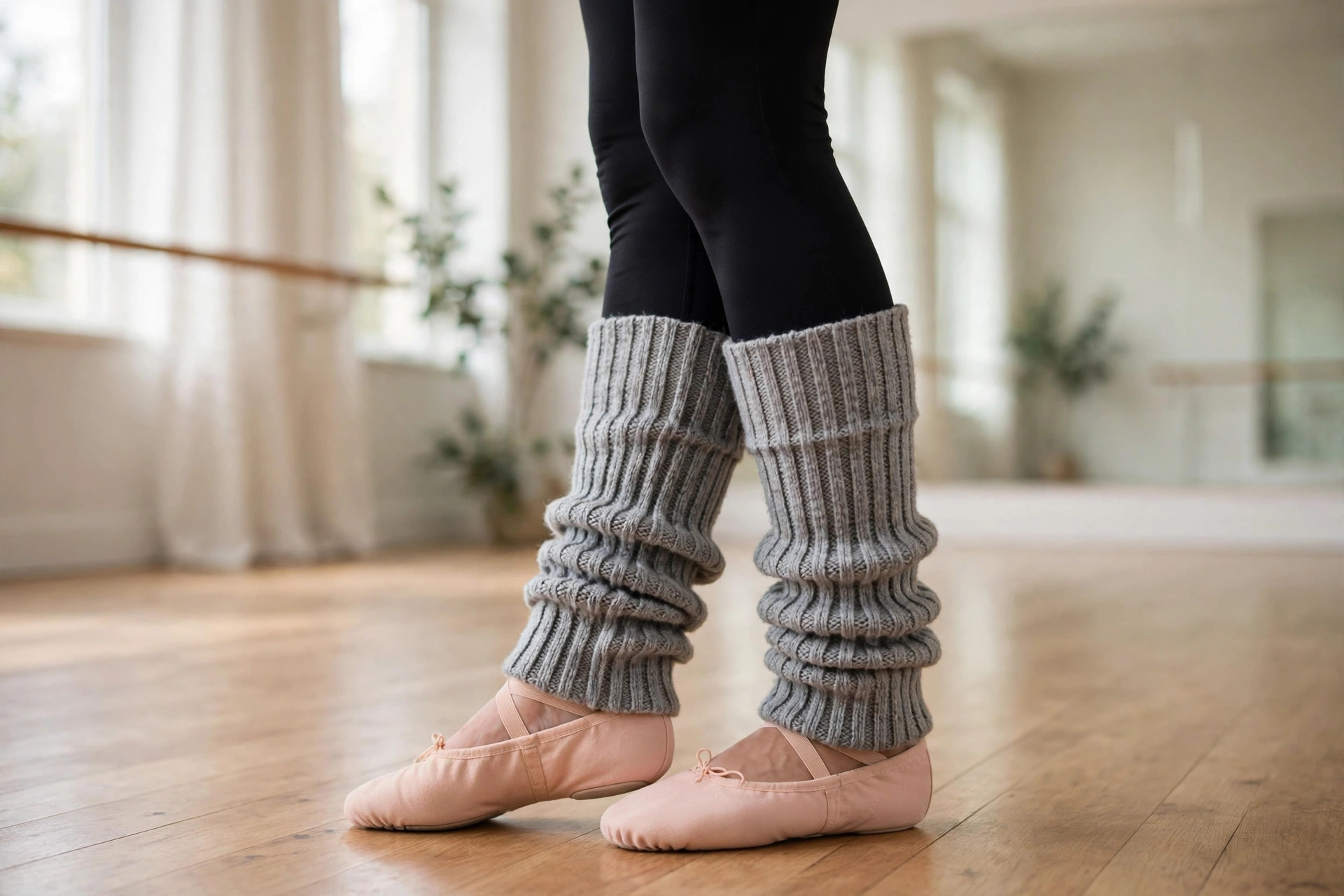
Leg warmers are footless knitted tubes that cover the leg from the ankle to below the knee — some reach over the knee or mid-thigh. They began as practical dance gear, keeping calf and ankle muscles warm before and between exercises without covering the foot, and became a defining 1980s fashion item. Today they do both jobs at once: studio warm-up staple, winter layering trick, and a recurring style accent worn slouched above boots and flats.
What Leg Warmers Are For
The original purpose is muscle warmth: dancers pull them on over tights to keep calves and ankles warm during warm-up and between combinations, then push them down or remove them for full work. Some dance versions add a stirrup or heel opening so the foot grips the floor while the heel stays covered. Outside the studio, the same tube fills winter's awkward gap — the bare stretch of leg between a boot top and a coat hem, or over tights under a skirt — without adding a whole layer everywhere. They are not a sock substitute: the foot itself stays in whatever you were already wearing.
Because they are removable in seconds, leg warmers meter warmth the way a zip does on a jacket. On for the cold platform, off in the heated train.
Knits, Lengths, and Fit
Classic leg warmers are ribbed acrylic, cotton, or wool-blend knits; the rib is what lets one size hug a slim ankle and stretch over a boot. Lengths run from short ankle styles to long over-knee versions that slouch to mid-calf. Dance pairs are often finer and closer; fashion pairs chunkier and scrunchier. Fit should be secure at the top without a tourniquet feel — a gentle elastic or ribbed cuff does the holding. If a pair slides down over shoes, it is too big or the rib has tired; a smaller size or a stirrup style solves it.
For warmth layering, natural-fiber blends breathe better over a long day; for pure studio and style use, acrylic's easy washing and low price are hard to beat.
Styling Them Now
The current revival rides ballet-influenced styling: leg warmers over tights or leggings, worn with ballet flats, loafers, or Mary Janes, and slouched to just above the ankle. In winter dress they peek over boot tops — a ribbed cuff of cream or grey above a brown boot is the tamest and most wearable version. With skirts, match the warmer to the tight for a continuous leg line, or contrast deliberately. However they are worn, the rule from their dance origins still applies: they are an accent and an extra layer, not the main garment.
Common Questions
- What is the point of leg warmers?
- They warm the calf and ankle without covering the foot. Dancers use them to keep muscles warm before and between exercises; in everyday winter wear they fill the cold gap between boot tops and hems and layer over tights for extra insulation.
- Do leg warmers go over or under tights?
- Over. They are designed to be pulled on over tights, leggings, or bare legs and removed just as easily. Worn under anything they would bunch, and their warmth and slouch styling both depend on being the outer layer.
- Are leg warmers in style again?
- They cycle back regularly, most recently with ballet-inspired styling — over tights with flats and loafers — and as a visible cuff above winter boots. Between revivals they never leave dance studios, where they are working equipment rather than fashion.
- How long should leg warmers be?
- Standard pairs reach from the ankle to just below the knee when stretched, and are usually worn scrunched shorter. Longer over-knee styles slouch to mid-calf. Choose by how much leg you want covered and how much slouch you like.
Cold-Weather Warmth and Hosiery Series
This guide is part of the Apparel Search cold-weather warmth and hosiery series: the small garments that decide whether winter dressing is comfortable. Browse the full series below, or start from the women's winter clothing guide and the women's hosiery guide.