Difference Between Leggings, Hosiery and Tights
Coverage, thickness and the transatlantic naming trap
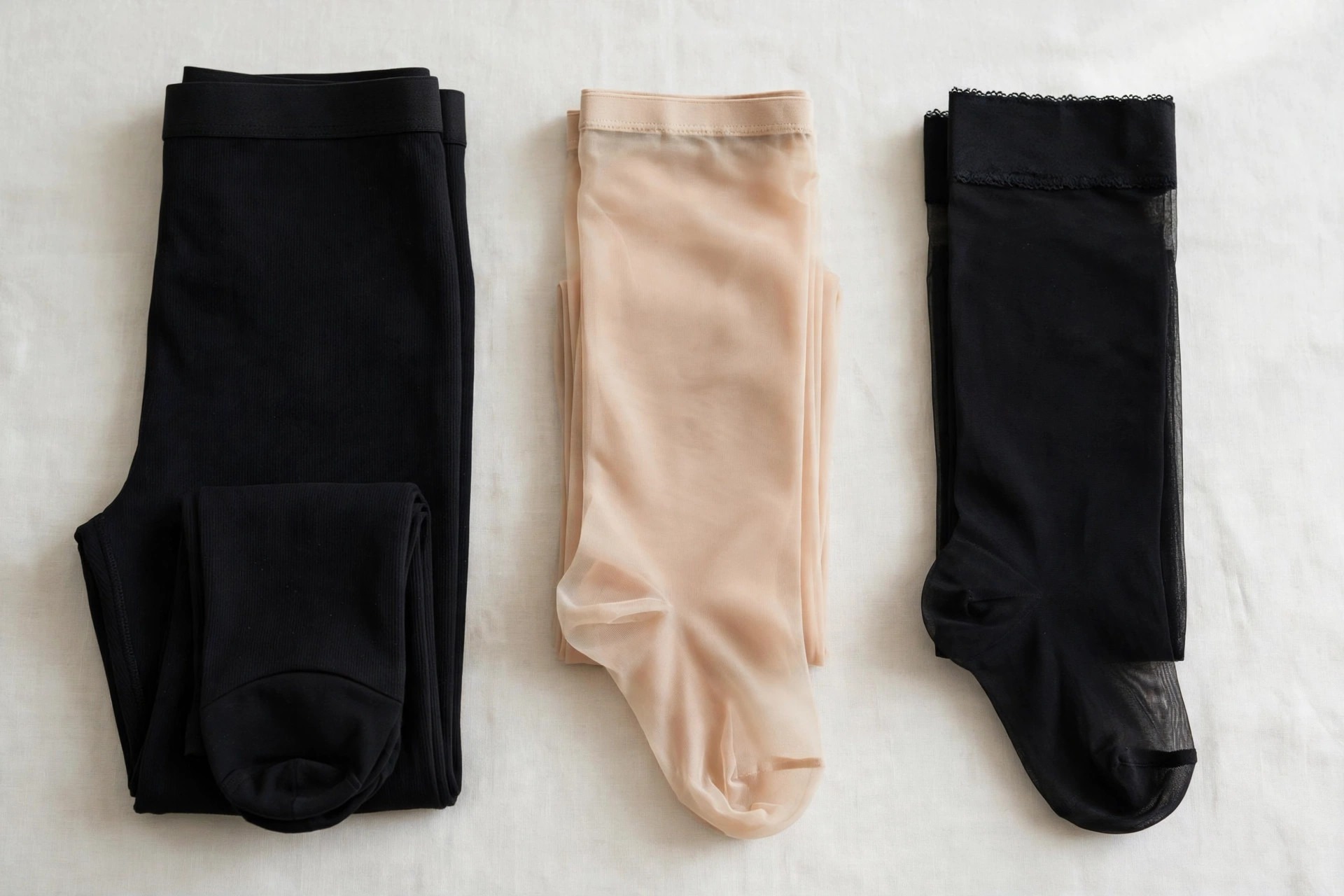
The quickest way to separate them is coverage and thickness: leggings are a thick, skin-tight, pant-like garment that ends between the knee and the ankle and leaves the feet uncovered; tights and pantyhose cover the wearer from the waist to the feet or toes; and stockings cover only the leg, from the toe up to somewhere between the knee and mid-thigh. Hosiery is the umbrella family for the sheer, foot-covering side of this group.
One warning before the definitions: American and British English swap some of these words. What the United States calls pantyhose is called tights in the United Kingdom, and the thicker American tights correspond to a different UK usage again. The garments themselves are consistent worldwide — it is the labels that travel badly — so shop by coverage, opacity and whether the feet are covered, not by the name alone.
Related Fashion Questions & Guides
Pantyhose: Sheer and Waist to Feet
Pantyhose — called tights in the UK and a few other countries — are sheer, close-fitting legwear that covers the wearer from the waist to the feet. Pantyhose first appeared in the 1960s as an alternative to control panties and nylon stockings, combining the stocking and a brief into a single garment that did not need a garter belt. That one-piece convenience is what made them a wardrobe standard so quickly.
Pantyhose are designed to be attractive in appearance, to hide visible imperfections, to reduce visible panty lines, and to ease chafing between the feet and footwear or between the thighs. Sheerness is their defining quality: the fine, transparent knit smooths the leg's appearance rather than covering it opaquely. When an American listing says pantyhose and a British listing says tights for what looks like the same sheer garment, they are describing the same thing.
Tights: Thicker, Waist to Toe
In American usage, tights are a cloth garment covering the wearer from the waist to the toe with a tight fit, usually knitted or made of thicker material than pantyhose. That thickness is the practical dividing line: tights come in absolute opaque, opaque, sheer and fishnet styles, or a combination, but the classic tight is the opaque, substantial version worn for warmth, dance, athletics and winter layering as well as fashion.
Tights used to be worn primarily by men, but nowadays, aside from athletics and ballet, they are mostly worn by women and girls. In British usage the picture shifts: the UK word tights covers the sheer garment Americans call pantyhose, and the thicker American-style tights sit under the same word as well, which is why UK listings lean on denier and opacity descriptions. Wherever you shop, the checks are the same — does it cover the foot, and how opaque is the knit?
Stockings: Toe to Thigh, Held Up
Stockings, also known as hose, are a close-fitting elastic garment covering the wearer from the toe to somewhere between the knee and mid-thigh, usually of a similar material to pantyhose. Unlike pantyhose and tights, stockings are separate leg garments with no waist or brief section — each leg is dressed independently, which was the universal system before pantyhose arrived in the 1960s.
Because they end mid-leg, stockings must be held up somehow. Modern stockings are held up by elastic, but historically they were kept up with a garter belt, which went around the wearer's waist and had suspenders that clipped to the tops of the stockings, or with stay-ups and garters — bands that went around the tops of the stockings themselves. Hold-ups with silicone bands are the modern descendant of that garter idea. If a garment stops at the thigh and comes as two separate legs, it is a stocking, whatever the packet calls it.
Leggings: The Pant of the Family
Leggings are a type of skin-tight garment that covers the legs, and they are more similar to pants than to pantyhose, tights or stockings. The construction proves it: leggings are made from a thicker material, substantial enough to be worn as an outer garment, and they cover the wearer from the waist to anywhere between the knee and the ankle. Cropped and capri lengths end higher; full-length leggings end at the ankle.
The decisive feature is the foot: leggings leave the feet uncovered. That single fact separates them from every hosiery garment on this page, all of which enclose the foot. Leggings also carry a waistband and pant-style construction, are worn with shoes or barefoot, and are made in fabrics from cotton jersey to athletic stretch knits. So the full sorting rule is: foot covered and sheer means pantyhose, foot covered and thick means tights, thigh-high separate legs means stockings, and foot bare with a thick pant-like knit means leggings.
Common Questions
What is the main difference between leggings and tights?
Feet and thickness. Leggings leave the feet uncovered, end between the knee and the ankle, and are made from a thicker, pant-like material worn as an outer garment. Tights cover the wearer from the waist to the toe with a tight fit, enclosing the foot, and are a hosiery garment worn under or with other clothing.
Are pantyhose and tights the same thing?
In the UK, yes — pantyhose are called tights there. In the US they differ: pantyhose are sheer, close-fitting legwear from waist to feet that first appeared in the 1960s, while American tights are usually knitted from thicker material than pantyhose and come in opaque, sheer and fishnet styles. Always check opacity and coverage when shopping across regions.
How are stockings different from pantyhose?
Stockings cover only the leg, from the toe to somewhere between the knee and mid-thigh, and come as two separate garments of similar material to pantyhose. Pantyhose cover from the waist to the feet in one piece. Stockings are held up by elastic, stay-up bands or, historically, a garter belt with suspenders clipped to the tops.
If You Have More Questions About Fashion
You may want to try these sections here on Apparel Search: