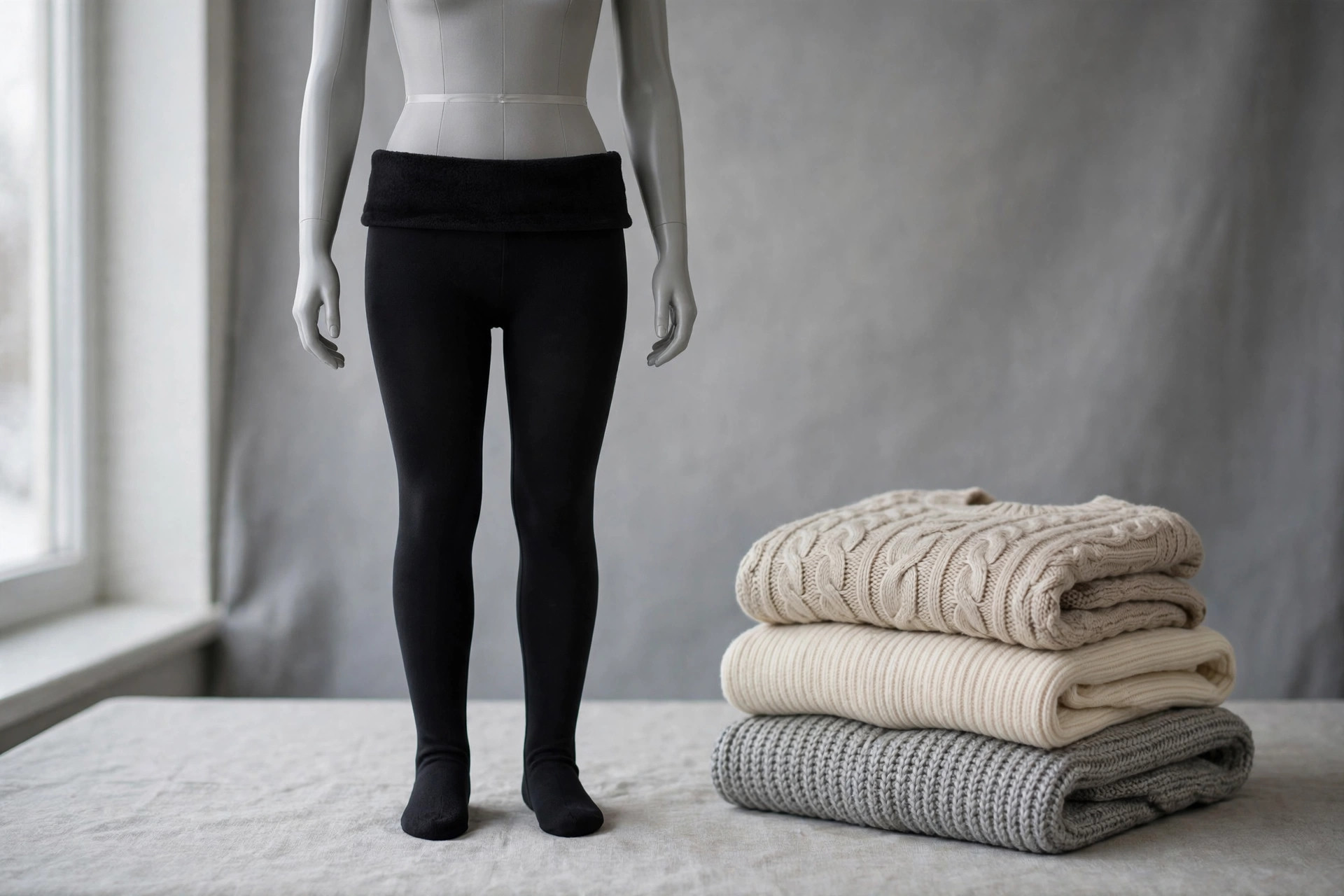
Fleece-lined tights are winter tights with a soft, brushed fleece layer bonded to the inside. From the outside they look like ordinary opaque tights; against the skin, the raised fleece fibers trap a layer of still air, which is what actually keeps legs warm. They exist for one reason: to let skirts, dresses, and tunics stay in rotation through the coldest months without the misery of thin hosiery in freezing wind.
How the Warmth Works, and How It Compares With Regular Tights
Regular opaque tights get their modest warmth from fabric thickness, usually described in denier. Fleece-lined tights work differently: the outside is a normal stretch knit, but the inside is brushed into a soft pile, much like the inside of a sweatshirt. That pile holds warm air next to the skin and blocks the chill that passes straight through a single layer of nylon. In practice, ordinary opaque tights are comfortable for most people down to roughly 40 degrees Fahrenheit (about 5 Celsius) under a coat, while fleece-lined tights stay comfortable well below freezing on a typical walk or commute.
The best-known variation is the sheer-look lined tight: a skin-tone fleece lining worn under a sheer black outer layer, which reads on the leg as translucent black hosiery while insulating like a winter tight. It solves the oldest winter styling problem — the look of sheer tights with the warmth of opaque ones — and explains much of the style's recent popularity. Heavier plush-lined versions trade a little sleekness for still more warmth and are the choice for outdoor events, winter markets, and long waits on cold platforms.
Choosing a Pair: Weight, Fit, and Sizing
Linings come in grades, from a light brushed interior for cool autumn days to a thick plush pile for deep winter. Match the grade to your climate and your commute rather than buying the warmest pair by default: a heavy plush tight can be uncomfortably warm in a heated office. Footed styles are standard; footless versions work over socks with boots. Waistband comfort matters more here than in regular tights because the fabric is thicker — look for a wide, soft band that will not dig in over a full day.
Sizing runs small. The lining reduces the fabric's stretch, so a pair in your usual hosiery size can feel a full size tighter, especially at the waist and hip. If you are between sizes or tall, size up; a fleece tight that is constantly being hitched up is worse than one with a little ease. Black is the workhorse color, with charcoal, navy, and brown as the usual alternatives, plus the skin-tone linings used for the sheer look. For the wider hosiery landscape around them, see the women's tights guide and the wool tights guide.
Care: Keeping the Lining Soft
Turn fleece-lined tights inside out and machine wash cold on gentle, or hand wash, then hang to dry. Heat is the enemy of both the elastic in the outer knit and the loft of the lining; a tumble dryer will shorten the life of the pair noticeably. Skip fabric softener, which coats the fleece fibers and flattens the pile that does the insulating. Stored folded rather than balled up, a good pair should last several winters.
Common Questions
- How warm are fleece-lined tights compared with regular tights?
- Much warmer. The brushed fleece interior traps still air against the skin, so fleece-lined tights stay comfortable in below-freezing weather where regular opaque tights feel cold within minutes. Light linings suit autumn; thick plush linings are made for deep winter.
- What is the sheer-look fleece-lined tight?
- It is a fleece lining in a skin tone worn under a sheer black outer layer. On the leg it looks like translucent black hosiery, but it insulates like a winter tight. It is the style behind most winter outfit photos that seem to show bare or sheer legs in the snow.
- Do fleece-lined tights run true to size?
- They usually run small, because the lining reduces stretch. If you are between sizes, tall, or prefer a less firm fit at the waist, choose the larger size. A wide, soft waistband also helps comfort over a full day.
- How should fleece-lined tights be washed?
- Inside out, cold and gentle, then hung to dry. Avoid the tumble dryer and fabric softener: heat damages the elastic and the lining's loft, and softener coats the fleece fibers that trap warm air.
Cold-Weather Warmth and Hosiery Series
This guide is part of the Apparel Search cold-weather warmth and hosiery series: the small garments that decide whether winter dressing is comfortable. Browse the full series below, or start from the women's winter clothing guide and the women's hosiery guide.