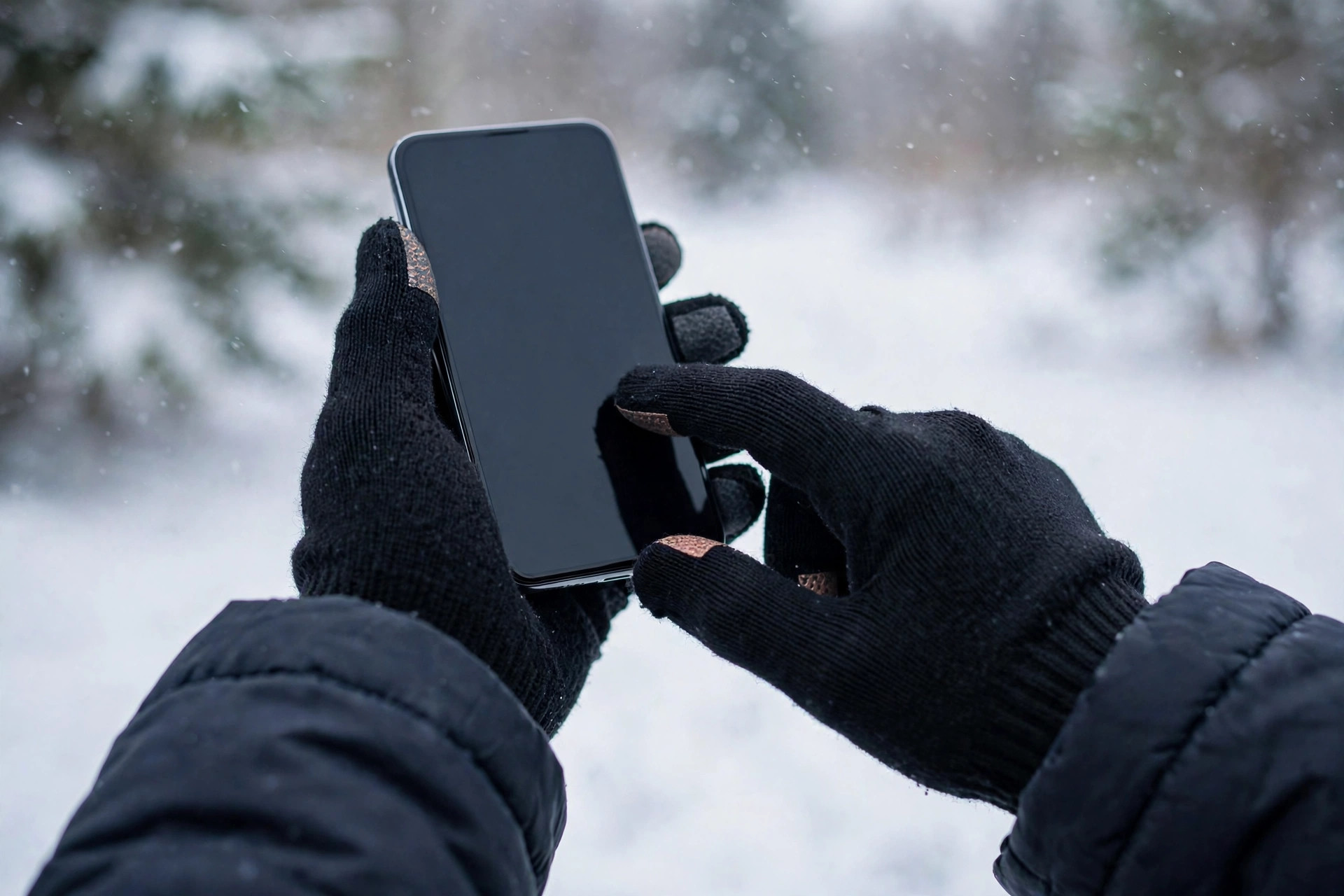
Touchscreen gloves are gloves whose fingertips can operate a capacitive touchscreen. A phone screen senses the tiny electrical charge of skin; an ordinary glove insulates the finger and breaks that contact. Touchscreen gloves build conductive material — metallic-coated fibers or conductive patches — into the thumb and fingertip, passing the signal through so taps and swipes register with the gloves on.
How the Conductive Fingertip Works
Most styles weave silver-coated or stainless fibers into the thumb and index fingertip; some add the middle finger, and premium versions make all five fingertips — or a whole conductive palm — touch-capable. Two conductive points matter: pinch-to-zoom needs thumb and finger together. Conductive patches sewn or printed onto leather fingertips do the same job on dress and driving gloves. Sensitivity varies: a thin liner glove tracks almost like a bare finger, while the padded tip of a ski glove is working through insulation, so taps land less precisely and typing gets slower.
A common disappointment is the glove that works on the home screen but fumbles a keyboard. That is geometry, not defect: the conductive area must contact the screen at the point your finger aims at, which is why fingertip fit, below, decides real-world accuracy.
Types, From Liners to Ski Gloves
Knit touchscreen gloves are the everyday default — a phone-friendly version of the classic magic glove, fine for cool days and dog walks. Fleece and softshell versions add wind resistance for commuting and winter running. Leather touchscreen gloves put conductive fingertips on a dress glove for drivers and anyone whose coat is tailored. At the warm end, insulated ski and snowboard gloves and mittens add a conductive index finger; on mittens the whole hand stays warm while one finger answers the phone. Layering works too: a thin conductive liner under a mitt or heavy glove gives touchscreen access in serious cold, at the price of removing the outer layer.
The warmth hierarchy on this site runs from the wool gloves guide for classic knits to heated gloves for hands that never warm up; touchscreen ability now appears at every level.
Fit, Wear, and Care
Buy touchscreen gloves snug. A fingertip with spare fabric at the tip folds and doubles under your touch, and the screen reads the wrong spot. In the shop, type a sentence and pinch a photo before committing. Conductive fibers are a wear item: the coating on woven tips can thin with seasons of use and harsh washing, so treat the tips gently — cool washes, no bleach, air dry. If an older pair starts missing touches, it is usually the fingertip coating, not the phone.
Common Questions
- Why do regular gloves not work on phone screens?
- Phone screens are capacitive: they sense the electrical charge of your skin. Ordinary glove fabric insulates your finger, so the screen registers nothing. Touchscreen gloves pass the signal through conductive material built into the fingertips.
- Which fingers are conductive on touchscreen gloves?
- Almost always the thumb and index finger, since those handle tapping, swiping, and pinch-to-zoom. Some gloves add the middle finger or make all five fingertips conductive; a few conductive-palm designs register touch anywhere on the hand.
- Do touchscreen gloves work through a screen protector?
- Usually, yes, with standard thin protectors. Very thick tempered-glass protectors can reduce sensitivity for any finger, gloved or bare, and the effect is most noticeable with heavily padded ski gloves.
- Do the conductive fingertips wear out?
- They can. The metallic coating on woven fingertips thins with heavy use and washing over seasons, and touches start to miss. Gentle cool washing and air drying slow the wear; it is the most common reason an older pair stops working.
Cold-Weather Warmth and Hosiery Series
This guide is part of the Apparel Search cold-weather warmth and hosiery series: the small garments that decide whether winter dressing is comfortable. Browse the full series below, or start from the women's winter clothing guide and the women's hosiery guide.