Heated Clothing Guide
Warmth on a switch: how battery-heated garments work, heat zones and battery life, safety and washing rules, and layering heated pieces with ordinary insulation.
Shop Heated Clothing Now
Shop Heated Clothing on Amazon Shop Heated Clothing on eBayThe Amazon and eBay links on this page are affiliate links. If you make a purchase through them, Apparel Search may earn a commission.
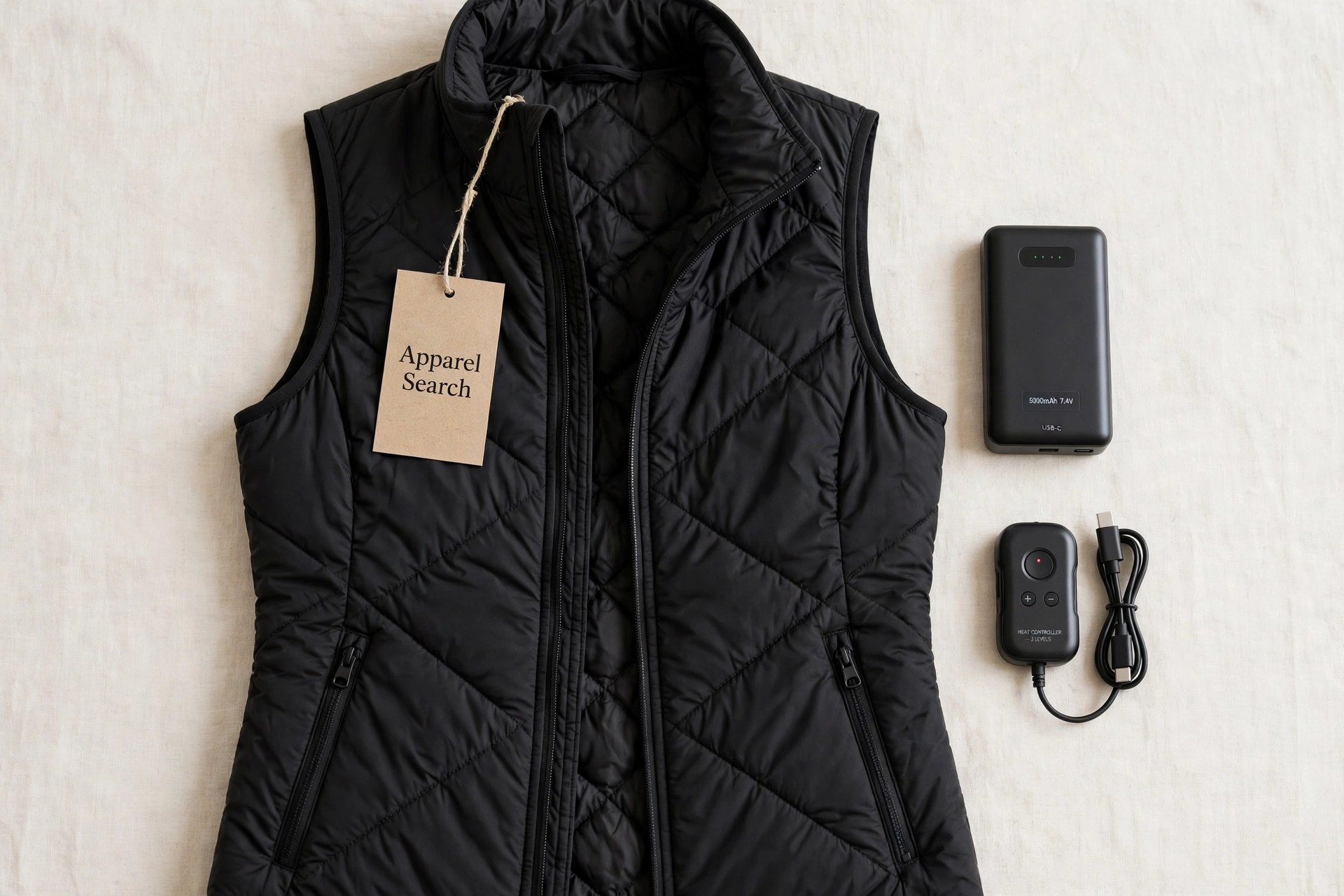
Heated clothing puts the warmth where insulation can't: inside the garment, on demand. Thin carbon-fibre or alloy heating elements are sewn into panels — typically the chest, back and pockets of a jacket, the toes of a sock, the back of a glove — and powered by a rechargeable battery with two to four heat settings. For people who work outdoors, watch winter sport from the sidelines, ride motorcycles, or simply run cold, a heated layer changes what a winter day allows.
This guide explains how the systems work, what battery numbers mean in real hours, and the safety and washing rules that keep heated garments working for years. It is the cold-side companion to our cooling clothing guide, and it layers — literally — with the insulation advice in the winter clothing guide.
How Heated Garments Work
Elements are either carbon-fibre panels — flexible, even-heating, common in quality jackets and vests — or alloy wires, cheaper and used in many gloves and socks. Power comes from a lithium battery pack, usually 5V (USB power-bank style) or 7.4V/12V proprietary packs for heavier garments; higher voltage generally means faster, hotter heat for workwear and motorcycle kit. A controller button cycles settings, typically low/medium/high around roughly 35/45/55°C at the element.
Heat zones matter more than headline temperature: a vest heating chest and back warms the core, which warms everything; gloves and socks serve the extremities that insulation reaches last. Some jackets add heated pockets — hand-warming that doubles as battery warming, since cold batteries deliver less.
Battery Life, Honestly
Manufacturers quote the best case: low setting, mild day, new battery. A realistic budget: a typical vest battery gives roughly 8–10 hours on low, 4–6 on medium, 2–3 on high — halved in bitter wind if the garment is worn as an outer layer, because the heat escapes outward as fast as inward. Heated gloves and socks run shorter per charge. The practical strategy is to wear heated pieces as a mid-layer under insulation, pulse high heat to warm up, then cruise on low.
Spare batteries are the cheapest range-extender, and USB-powered pieces can run from any power bank — worth knowing for travel. Check before buying whether the battery is proprietary, what a spare costs, and whether the garment works while charging; for all-day outdoor work those answers decide the purchase more than the jacket's colour.
Safety and Washing
Heated clothing from reputable makers is low-voltage and safe, with overheat cut-outs in better systems — but the rules are firm: never use a damaged element or a battery that is swollen or punctured; don't sleep in heated clothing on high; follow maker guidance for people with pacemakers or reduced heat sensation, for whom medical advice comes first; and never dry-clean unless the label allows it.
Washing is the question every buyer asks: most heated garments are machine-washable after removing the battery, in a mesh bag, gentle cycle, then air-dried flat — never tumble-dried on heat, never wrung (the elements run through the fabric). Store batteries half-charged, out of the garment, and recharge them a few times a year even off-season; a lithium battery left flat for two winters may never wake up.
Common Questions
How long does heated clothing stay warm?
On a typical vest battery: about 8–10 hours on low, 4–6 on medium and 2–3 on high, less in strong wind if worn as the outer layer. Wearing the heated piece under insulation and using high heat in short bursts extends a charge the most.
Can you wash heated clothing?
Usually yes, once the battery is removed: mesh bag, gentle machine wash, air dry. Never wash the battery itself, never tumble-dry on heat, and follow the specific label — some budget garments are spot-clean only.
Is heated clothing safe?
From reputable manufacturers, yes: the systems are low-voltage with sealed connectors and, in better models, overheat protection. Avoid damaged elements and swollen batteries, don't sleep in a garment set to high, and people with pacemakers or impaired heat sensation should take medical advice before use.
More Weather & Sport Guides in This Cluster
The other guides in this wave — clothing for heat, cold, rain and the pickleball court:
More to Explore on Apparel Search
Cold handled, now the wet — continue to the rain pants guide.
Next: Women's Rain Pants Guide: Waterproof Overtrousers & Fit »Looking for Women's Clothing Stores?
This guide helps you choose heated clothing with the right zones, battery and fit for your winter. To browse where to buy, visit our womens clothing store directory, where you can find retailers that carry them.