Women's Rain Pants Guide
The bottom half of staying dry: waterproof membranes and ratings, full-length side zips vs pull-ons, fit over boots and trousers, and packing for walkers, cyclists and riders.
Shop Women's Rain Pants Now
Shop Women's Rain Pants on Amazon Shop Women's Rain Pants on eBayThe Amazon and eBay links on this page are affiliate links. If you make a purchase through them, Apparel Search may earn a commission.
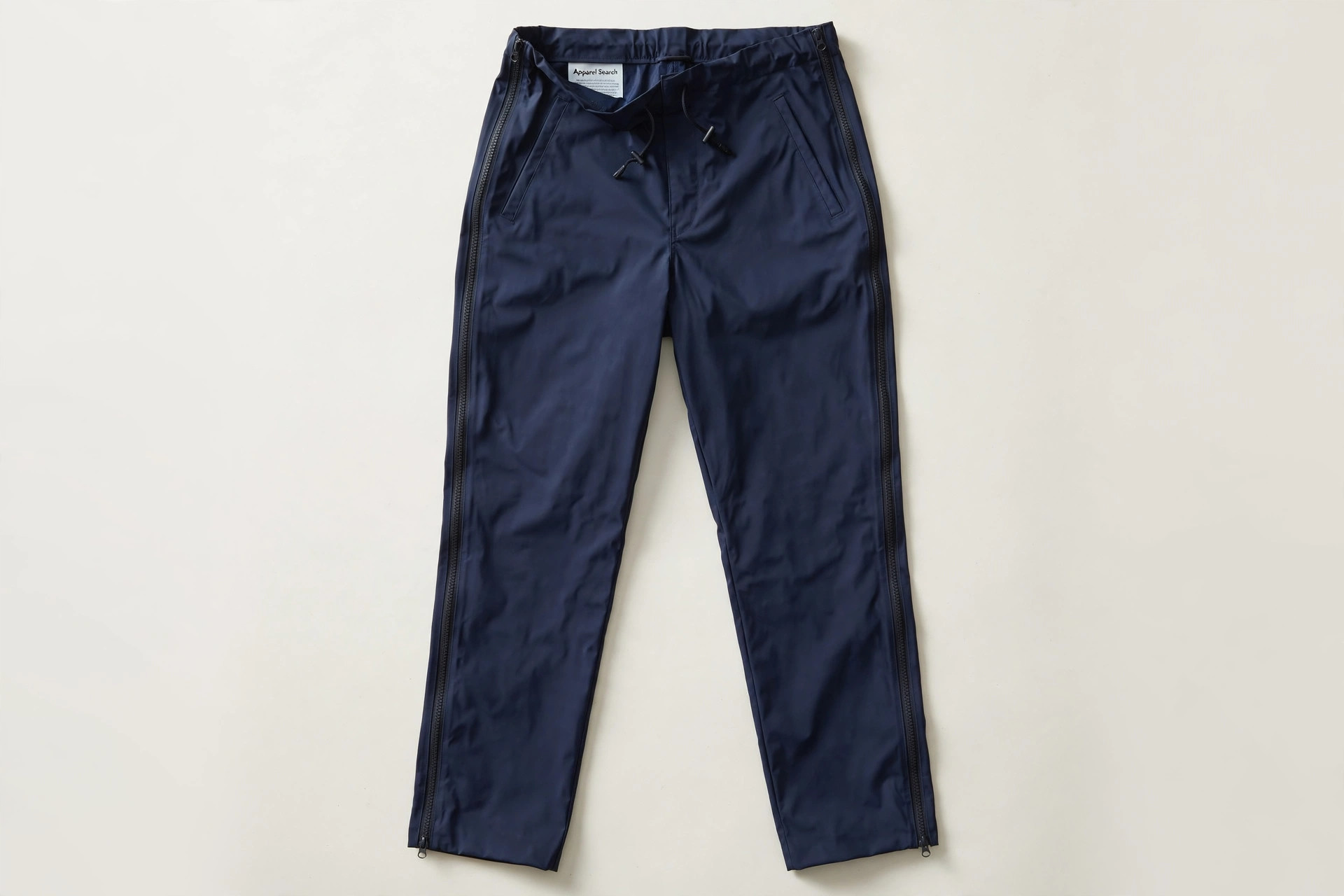
Rain pants — waterproof overtrousers — are the least glamorous and most decisive piece of wet-weather clothing. A good jacket over soaked trousers still means a miserable day: wet fabric chills legs fast, and sitting down in wet trousers finishes the job. Rain pants solve it, in two families: featherweight packable overtrousers for walkers, and tougher waterproof trousers for cycling, motorcycling, work and fishing.
This guide explains waterproof ratings in plain terms, why the side-zip design decides whether you'll actually wear them, and fit over the trousers and boots you already own. It is the bottom half of the system our rainwear guide and raincoats guide cover from the waist up, and it pairs with the complete-set approach of the rain suit guide.
Waterproof, Breathable and Sealed: The Ratings
Waterproofing is measured as hydrostatic head — the height of a water column the fabric withstands. Around 1,500 mm resists showers; 5,000–10,000 mm handles sustained rain; 20,000 mm and up is storm-grade. But fabric is only half the story: seams must be sealed (taped or welded), because needle holes leak at far lower pressure than the fabric fails. A garment described as 'water resistant' or 'showerproof' is a coating, not a system, and will wet through in real rain.
Breathability ratings (grams of vapour per square metre per day) matter more in trousers than anywhere: legs work hard and sweat against a waterproof layer turns to condensation that feels exactly like a leak. Better membranes and venting side zips manage it; cheap coated nylon cannot, which is why bargain rain pants feel like a sauna by the second hill.
Full-Zip vs Pull-On: The Decision That Matters
Full-length side zips open the leg from hip to ankle, so the pants go on over boots without hopping on one leg in a car park — and open part-way as vents when the rain stops. They cost more and the zips are a potential leak line, protected by storm flaps on good designs. Pull-on overtrousers with ankle zips or elastic are lighter, cheaper and fine if you dress at home or the car before setting out. Waterproof trousers (worn instead of, not over, ordinary trousers) serve cyclists, riders and outdoor workers who are out in the weather all day.
Fit checks: buy for the layers beneath — try them over your thickest trousers and biggest boots. The waist should sit high enough that your jacket overlaps it when you bend; the leg should cover the boot top when seated with knees bent, which is two inches longer than feels right standing.
Care and Packing
Rain pants live scrunched in bags and boots of cars, which their coatings tolerate but don't love. Rinse mud off, dry them before storing, and keep them away from heat sources that delaminate seam tape. When water stops beading on the surface, reproof with a wash-in or spray-on DWR treatment — the membrane underneath usually still works even when the face fabric wets out and feels cold and clammy.
Walkers should pack rain pants loose in the top of the pack, not in their stuff sack at the bottom — the pair you can reach in thirty seconds is the pair that keeps you dry. Cyclists: check the seat and inner leg for reinforcement, the two places pedalling wears through first.
Common Questions
What waterproof rating do rain pants need?
For sustained rain, look for at least 5,000 mm hydrostatic head with fully taped seams; 10,000–20,000 mm is storm-grade. Below that, and without seam sealing, trousers are showerproof only and will wet through on a wet day.
Are full-zip rain pants worth it?
For most walkers and commuters, yes: they go on over boots in seconds when rain starts, and vent when it stops. Pull-on styles are lighter and cheaper and fine when you can put them on before setting out.
Why do my rain pants feel wet inside when they don't leak?
Usually condensation: sweat vapour condenses on the inside of a less breathable membrane, or the outer fabric's water-repellent finish has worn off so the face wets out and chills the lining. Reproof the DWR finish, vent with the side zips, and wear wicking layers underneath.
More Weather & Sport Guides in This Cluster
The other guides in this wave — clothing for heat, cold, rain and the pickleball court:
More to Explore on Apparel Search
Prefer the jacket and pants bought as one matched system? Continue to the rain suit guide.
Next: Women's Rain Suit Guide: Jacket & Pants Sets for Work and Play »Looking for Women's Clothing Stores?
This guide helps you choose rain pants that go on fast over boots and keep the rain out. To browse where to buy, visit our womens clothing store directory, where you can find retailers that carry them.