Cooling Clothing Guide
Clothing engineered for heat: sun-protective UPF fabrics, moisture-wicking knits, evaporative and phase-change cooling — what works, and for whom.
Shop Cooling Clothing Now
Shop Cooling Clothing on Amazon Shop Cooling Clothing on eBayThe Amazon and eBay links on this page are affiliate links. If you make a purchase through them, Apparel Search may earn a commission.
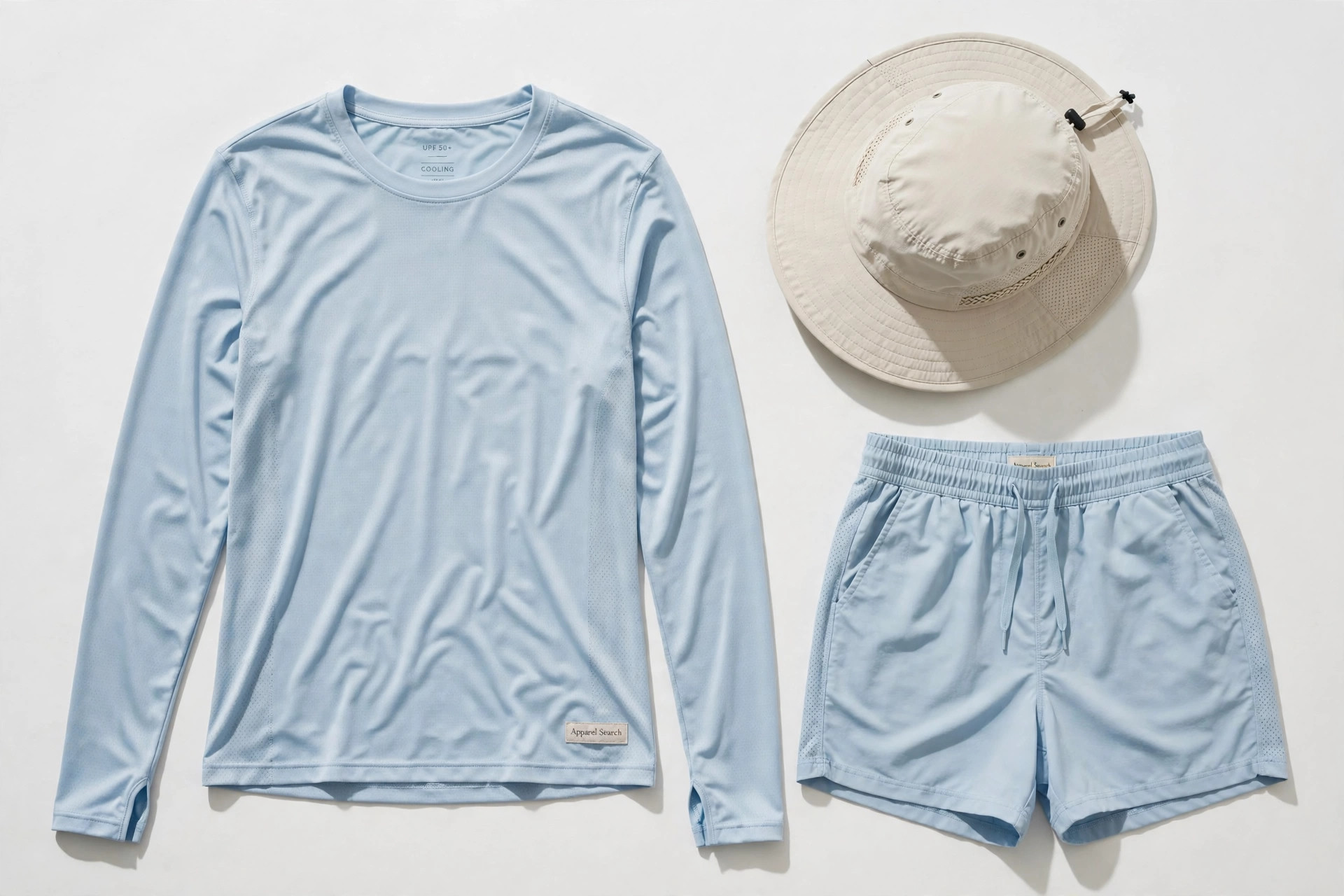
Cooling clothing is the warm-weather mirror of the insulated wardrobe: garments engineered to move heat, sweat and sunlight away from the body instead of trapping warmth in. Four technologies do the work — sun-blocking UPF fabrics, moisture-wicking knits, evaporative cooling materials that chill as they dry, and phase-change materials that absorb heat like a cold pack woven into cloth. Each suits a different climate and activity, and the marketing rarely says which is which.
This guide separates the technologies honestly, explains the ratings, and helps you choose for humid heat, dry heat, sport and outdoor work. It pairs with our heated clothing guide — the same body-temperature problem attacked from the opposite direction — and sits alongside the sun and weather guides in the wider Clothes Guide.
The Four Cooling Technologies
UPF (ultraviolet protection factor) clothing blocks UV radiation the way sunscreen does, but without reapplication: UPF 50 fabric lets through only 1/50th of UV. The protection comes from weave density, fibre and sometimes added absorbers, and — unlike SPF lotion — it doesn't wash off quickly, though it fades as fabric stretches and thins with age. Moisture-wicking knits pull sweat off the skin and spread it to evaporate, which cools the wearer and stops the clammy drag of wet cotton; polyester and nylon wick, merino wicks and resists odour, cotton does neither.
Evaporative cooling garments — towels, vests, sleeves and hats made of hyper-absorbent PVA or microfibre — are soaked, wrung and worn; as the stored water evaporates the fabric surface drops well below air temperature. They are superb in dry heat and nearly useless in humid heat, where the air can't take more water. Phase-change materials (PCM) contain microcapsules that melt at a set temperature, absorbing heat as they do — the cooling in a PCM vest lasts one to three hours per charge, re-set by cooling the garment again.
Choosing for Your Climate and Activity
Humid heat wants wicking plus airflow: loose, light, quick-dry knits with mesh ventilation, and UPF on the shoulders and arms. Dry desert heat rewards coverage — long, loose UPF clothing shades the skin and slows sweat loss, and evaporative pieces genuinely shine. Sport wants wicking compression or relaxed training cuts depending on the discipline, with flat seams where straps and packs rub. Outdoor workers should look for UPF ratings plus hi-vis options and neck shades on hats, and treat cooling clothing as one layer of a heat plan that still includes water, shade and rest.
Fit matters more than the label suggests: wicking only works in contact with skin, so a wicking base must be close-fitting; UPF and evaporative pieces work loose. A garment claiming all four technologies at once is usually claiming one of them honestly.
Ratings, Care and Honest Limits
UPF ratings are tested to standards (such as AS/NZS 4399 and AATCC 183) and a rating of 50+ is the ceiling worth paying for; ordinary clothing varies wildly — a white cotton tee is roughly UPF 5 when dry and less when wet. Darker, denser, unstretched fabric protects more. Check whether the rating covers the garment as made, including its lightest panel.
Care protects performance: fabric softener coats wicking fibres and kills their function, so wash technical pieces without it; evaporative garments must be stored dry or they mildew; PCM pieces recharge in a fridge, freezer or cool water per their instructions. And the honest limit: no garment makes extreme heat safe. Cooling clothing extends comfort and working time at the margins — heat illness is prevented by hydration, shade and stopping, not by a shirt.
Common Questions
Does cooling clothing really work?
Yes, within limits. Wicking fabrics measurably improve comfort in humidity, UPF clothing blocks UV as rated, evaporative garments cool strongly in dry heat, and phase-change vests absorb heat for one to three hours. None of them replaces water, shade and rest in dangerous heat.
What is the difference between UPF and SPF?
SPF rates sunscreen applied to skin and washes and wears off. UPF rates fabric: UPF 50 lets through 1/50th of UV radiation. Fabric protection is consistent across the covered area but depends on the fabric staying unstretched, undamaged and — for the highest ratings — dry.
Why shouldn't I use fabric softener on wicking clothes?
Fabric softener coats fibres with a waxy layer that blocks the capillary action wicking depends on. The garment then holds sweat against the skin like cotton. Wash technical clothing without softener, and strip old residue with a sport wash if performance has faded.
More Weather & Sport Guides in This Cluster
The other guides in this wave — clothing for heat, cold, rain and the pickleball court:
More to Explore on Apparel Search
From beating the heat to beating the cold — continue to the heated clothing guide.
Next: Heated Clothing Guide: Battery-Heated Jackets, Vests & Gloves »Looking for Women's Clothing Stores?
This guide helps you choose cooling clothing matched to your heat, sun and activity. To browse where to buy, visit our womens clothing store directory, where you can find retailers that carry them.