Women's Snow Pants Guide
Snow pants are insulated, waterproof trousers for cold and wet snow — also sold as ski pants, bibs and snowboarding pants — worn from waist to ankle over a base layer.
Shop Women's Snow Pants Now
Shop Women's Snow Pants on Amazon Shop Women's Snow Pants on eBayThe Amazon and eBay links on this page are affiliate links. If you make a purchase through them, Apparel Search may earn a commission.
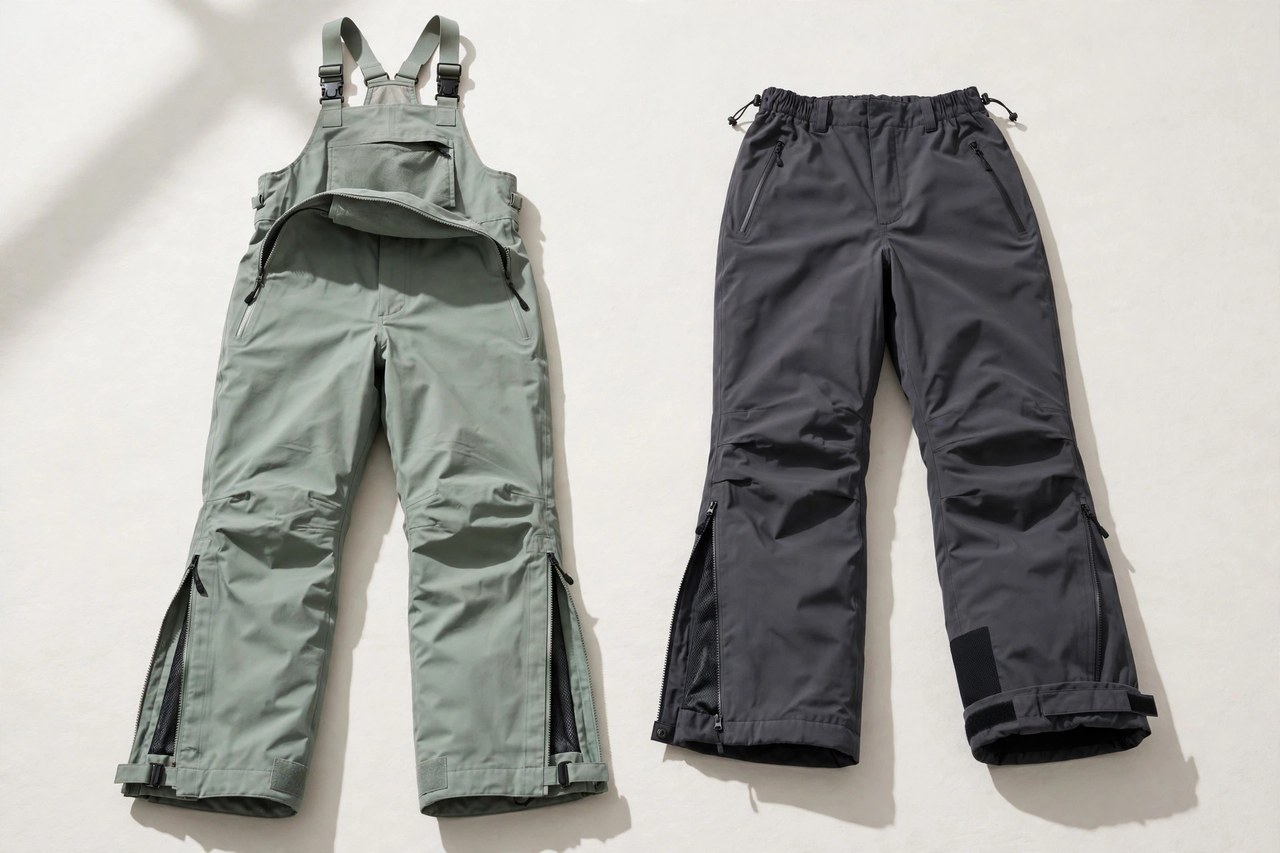
Snow pants are trousers built for snow: clothing worn on the lower half of the body, from the waist to the ankles, covering both legs separately, in a waterproof and usually insulated form. This type of trouser is also referred to as a snow pant, ski pant, bib or snowboarding pant. Snow is wet and cold, so pants that keep you dry and warm are the entire point.
Where the snow boot page covers footwear and the snowboarding boot page covers sport boots, this page covers the trouser layer. It explains shell versus insulated construction, the bib question, the vents and gaiters that separate a real snow pant from a padded trouser, and how to size a garment designed to be worn over other clothing.
Shell vs Insulated Construction
Snow pants divide by warmth strategy. Insulated pants build a layer of synthetic fill between the waterproof shell and the lining, and suit cold, less active days: lifts, watching, working outdoors, walking in real winter. Shell pants are uninsulated waterproof trousers worn over a base layer you choose by temperature, which suits active skiing and boarding, where your legs generate their own heat and a fixed fill would overheat by midday.
Either way, the outer fabric should be a waterproof-breathable membrane or coated shell with sealed seams at least at the seat and knees, the zones that sit in snow. Waterproof ratings on listings compare usefully within a brand. A soft inner lining protects the membrane and slides over base layers; mesh linings breathe better, brushed linings feel warmer. Articulated knees, cut with a built-in bend, are standard on better pants and matter more than any cosmetic detail.
Styles: Waist Pants, Bibs and Sport Fits
The waist pant is the familiar form, with belt loops or internal adjusters, and it layers and vents easily. The bib extends the shell up the torso with straps, eliminating the waist gap entirely: no snow down the back when you fall or bend, no cold band at the middle, at the cost of slower layer changes. Bibs are the cold-weather and deep-snow preference, and many women skiers and boarders switch permanently after one powder day in a waist pant.
Ski and snowboard cuts differ modestly. Snowboard pants traditionally run baggier, with room for impact shorts and a lower rise; ski pants run closer and more tailored, with stretch panels. Neither difference is a rule — buy the fit that matches your layering and movement. In all styles, check the leg opening: it must expand to fit over a ski or snowboard boot, with a zip or gusset, or the pant fails its most basic fitting test in the shop.
Vents, Gaiters and Reinforcements
Three features mark a serious snow pant. Vent zips, usually mesh-backed openings along the inner or outer thigh, dump heat on climbs and spring days without removing the pant. Internal gaiters at each ankle — elastic cuffs that grip the boot — keep snow from climbing inside the leg when you step deep or fall. Reinforced cuffs and kick patches at the inner ankle resist the cuts and abrasion of ski edges and crampons, the spot where unreinforced pants shred within a season.
Pockets deserve a cold-hands test: zips should work with gloves on, and cargo pockets should sit where a chairlift bar or a harness does not press their contents into your leg. A fleece-lined hand pocket is a small mercy on a lift. Waist adjustability — Velcro tabs, internal elastic or belt loops that take a real belt — matters because snow pants are sized for layers you may not wear on a milder day, and a sliding waistband undoes the gaiters' work below it.
Layering, Sizing and Care
Size snow pants over the base layer you will actually wear. The system is: a moisture-wicking thermal legging, an optional fleece mid-layer on the coldest days, then the pant. In the shop, sit, crouch and lift a knee high; the waistband should stay put and the knee should not bind. Length should break over the boot without pooling, since pooled fabric catches edges and bindings and soaks through at the hem.
Care protects the waterproofing. Wash shell and insulated pants with a technical or mild detergent, no fabric softener, which clogs breathable membranes, and rinse well. Many shells revive their water-repellent finish with low tumble heat; reproofing treatments restore finishes heat no longer wakes. Patch cuff cuts promptly, store the pants dry and hung, and a good pair will outlast several pairs of the boots it covers — which is as it should be, since it costs accordingly.
Related Women's Guides
Looking for Women's Clothing Stores?
This guide helps you choose women's snow pants. To browse where to buy, visit our women's clothing store directory, where you can find retailers that carry them.