Women's Skiwear Guide
Skiwear is the complete clothing system for skiing — base layers, insulation, waterproof shells, gloves, hats and boots working together against cold, wind and snow.
Shop Women's Skiwear Now
Shop Women's Skiwear on Amazon Shop Women's Skiwear on eBayThe Amazon and eBay links on this page are affiliate links. If you make a purchase through them, Apparel Search may earn a commission.
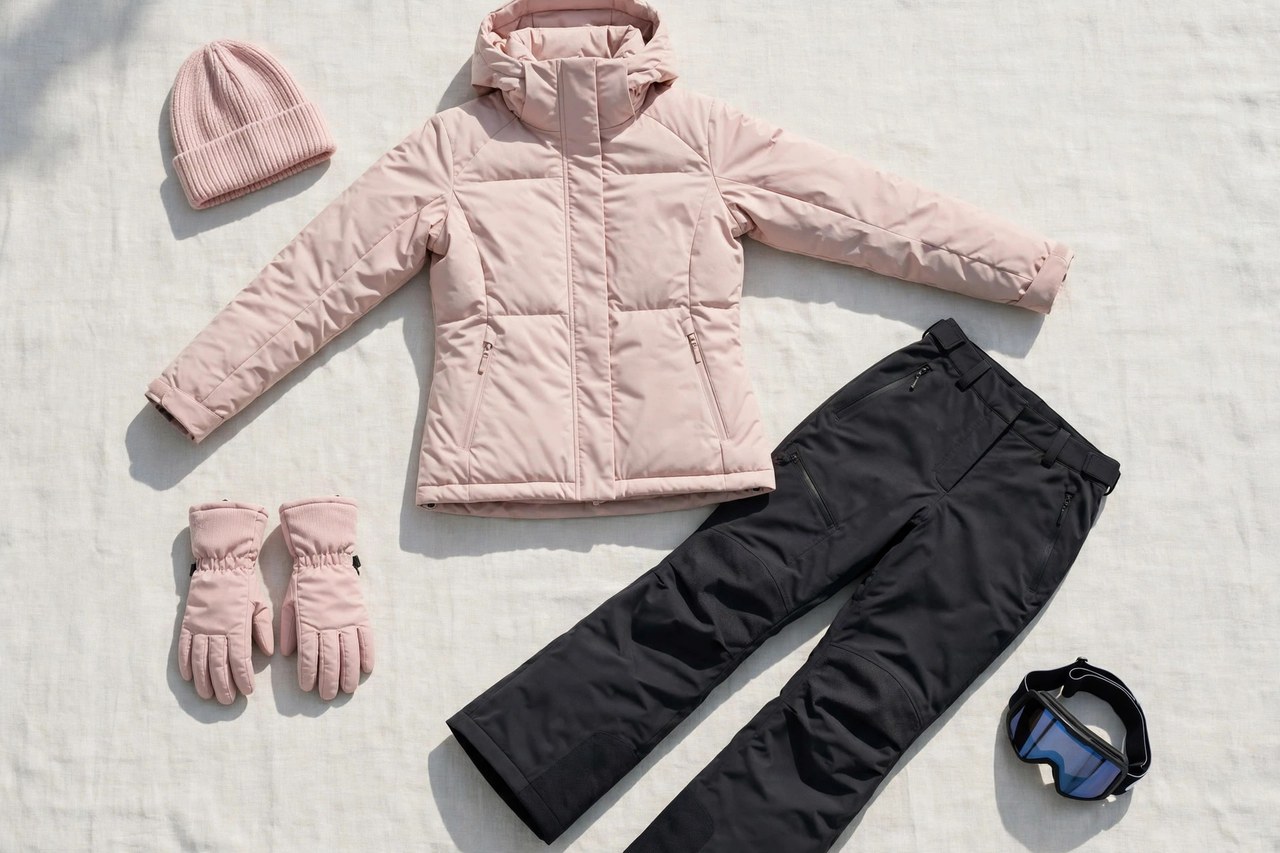
Skiwear is the umbrella category for everything worn to ski — ski pants, down jackets, gloves, mittens, wool hats — with snow pants and snow boots at its edges. The reason the category exists as a system rather than a pile of warm clothes is that skiing combines cold, wind, falling snow, sitting still on lifts and working hard on descents, sometimes within the same ten minutes. No single garment answers all of that; layers, adjusted through the day, do.
This guide takes the category view: the three-layer system, what each piece must do, how the shell pieces differ from ordinary winter clothing, and how to buy the kit in the order that matters. The deep dive on the leg layer lives on the ski pants page; here the subject is how pants, jacket, gloves, hat and the rest fit together into one weatherproof plan.
The Three Layers, and What Each One Does
The system runs in threes. The base layer — merino wool or synthetic long underwear — sits against the skin and moves sweat away; cotton is the one forbidden fabric, because it holds moisture and chills. The mid layer insulates: fleece, down or synthetic puff jackets and vests trap warm air, and their thickness is your thermostat, added on cold mornings and shed by spring afternoons. The shell layer — jacket and pants — blocks wind and snow with a waterproof-breathable membrane, taped seams and a water repellent finish, contributing almost no warmth of its own.
Bought as a system, the layers must be sized for each other: base layers close, mid layers roomy enough not to compress, shells cut to move over both without binding at the shoulder when you pole or reach. Vents in the shell — pit zips, thigh vents — are the fine adjustment, dumping heat on climbs without undressing on a lift. Most misery attributed to skiwear is actually a layering error: too much insulation under an unvented shell, or a cotton hoodie quietly doing its chilling work underneath a fine jacket.
Jackets, Gloves, Mittens and Headwear
The ski jacket is the shell's upper half: waterproof, hooded or high-collared, with a powder skirt to seal against the pants, cuff closures over gloves, and pockets placed to clear a backpack's straps if you wear one. Insulated jackets merge mid and shell for simplicity; shell jackets keep them separate for adaptability. Gloves versus mittens is the system's standing debate, and both are right: mittens are warmer, keeping fingers together; gloves give the dexterity bindings, zips and phones demand. Many skiers own both and choose by temperature.
On the head, the modern answer is a helmet, worn by the large majority of skiers, with a thin liner or balaclava beneath it in cold weather; the traditional wool hat remains the après-ski and warm-day option, and a neck gaiter closes the jacket-to-helmet gap that wind finds first. Goggles protect eyes from wind, glare and falling snow and are sized to the helmet, not the face alone. Every one of these pieces is small; together they decide whether the last run of the day is pleasure or endurance.
Boots, Socks and the Snow Relatives
Ski boots are equipment more than clothing and are fitted by specialists, but skiwear owns their clothing partner: the ski sock, a single thin-to-medium cushioned sock in merino or synthetic, worn alone — two pairs bunch, cut circulation and cause the cold feet they were meant to prevent. The category's borders are worth marking: snow pants serve sledding, snow play and shoveling rather than chairlifts, and snow boots are the walking footwear of the same weather. Skiwear shades into general winter wear at exactly those edges.
Accessories finish the system in order of how often they are forgotten: sunscreen and lip protection, because altitude and snow glare burn fast; a small pack or the jacket's cargo capacity for water and a layer; and hand warmers in the coldest weeks. None of it is glamorous, and all of it is the difference between a kit and a costume. Skiwear's aesthetic — bright shells, technical fabrics — is a by-product of visibility and function, which is why it has influenced ordinary winter fashion so heavily in return.
Buying and Caring for the System
Buy in order of irreplaceability: shell jacket and ski pants first (they cannot be improvised), then a proper base layer, then gloves, socks and headwear, then upgrades. End-of-season sales are the category's open secret, cutting technical prices deeply just as sizing knowledge from the season is fresh. Fit everything together in the store, layers on, and sit, squat and swing your arms — a system that only works standing in front of a mirror does not work. Renting skiwear for a first trip is rational; buying begins when the trip count does.
Care is system care: technical shells washed with technical detergent and dried to revive repellency, down stored uncompressed, merino washed gently and dried flat, gloves dried at room temperature rather than on radiators that crack leather palms. Audit the kit each fall — reproof shells, check seam tape, replace compressed socks — so the first storm of winter finds a system, not an archaeological layer of almost-right pieces. That is all skiwear promises: cold, wind and snow handled as routine, so the day is about the skiing.
Related Women's Guides
More to Explore on Apparel Search
Women’s Clothes Guide by Letter: Women's Apparel Directory N · Women's Clothes Directory O · Women's Clothing Directory P · Women's Apparel Directory Q · Women's Fashion Directory R · Women's Clothes Directory T
More to Explore on Apparel Search
Looking for Women's Clothing Stores?
This guide helps you choose women's skiwear. To browse where to buy, visit our women's clothing store directory, where you can find retailers that carry them.