Women's Mittens Guide
The hand covering with no separate fingers: one chamber for four fingers, one for the thumb — and the warmest design cold weather ever produced.
Shop Women's Mittens Now
Shop Women's Mittens on Amazon Shop Women's Mittens on eBayThe Amazon and eBay links on this page are affiliate links. If you make a purchase through them, Apparel Search may earn a commission.
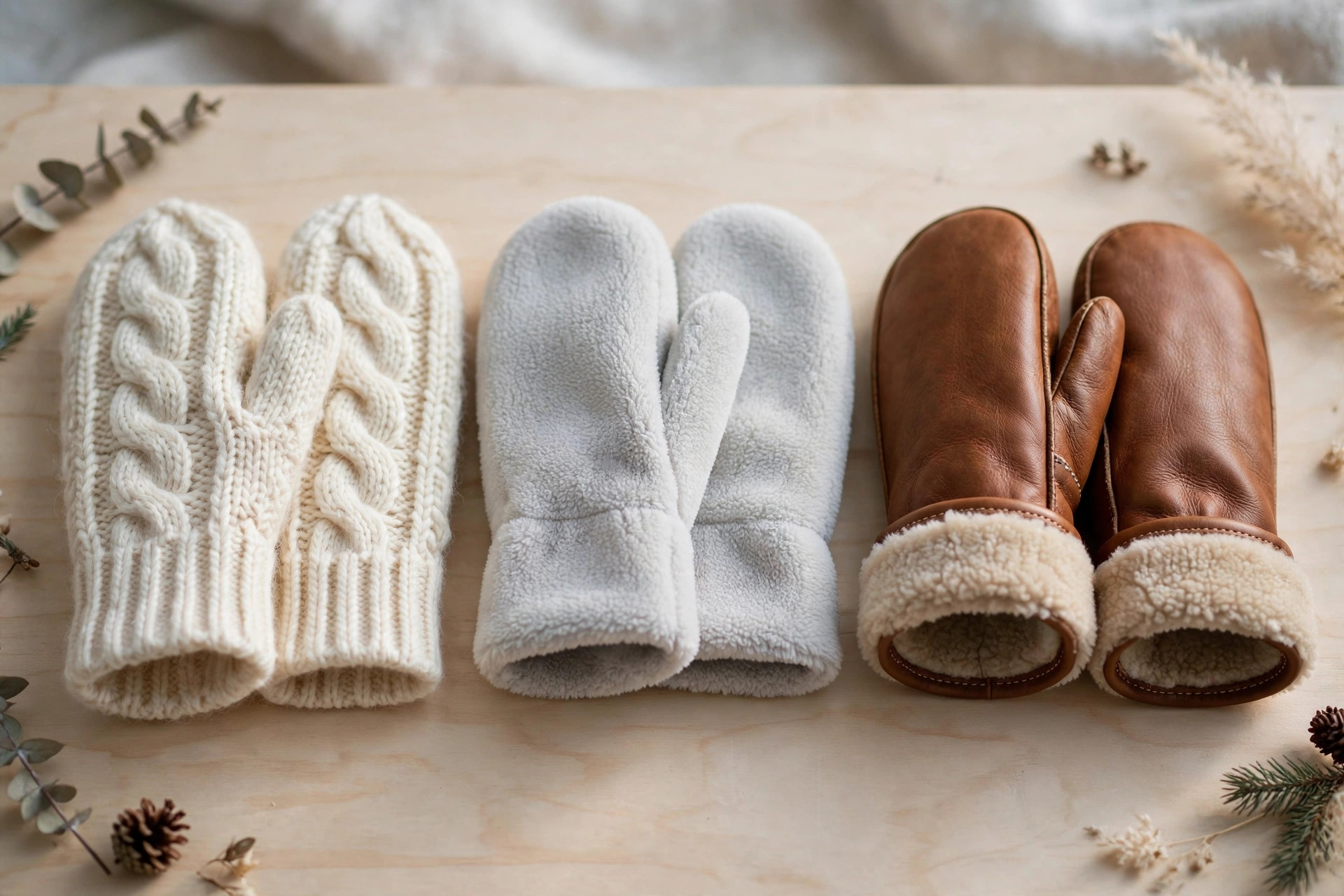
A mitten is a glove that does not have separate finger openings: it encloses the hand in two sections, one for the thumb and one for the four fingers together. That is the complete definition, and everything about the mitten — its warmth, its clumsiness, its charm — follows from that single design decision to keep the fingers together in one shared chamber.
Mittens are the cold-weather specialist. Gloves win on dexterity; mittens win on warmth, and they win for a physical reason: fingers kept together share heat and present less surface area to the cold than fingers separated by four walls of glove fabric. When the temperature is serious, the mitten is the correct tool, and every other hand covering is a compromise with it.
Materials: Wool, Fleece, Leather and Ski Shells
Knit wool mittens are the classic: warm, breathable, naturally water-shedding to a degree, and repairable. Fleece mittens are lighter, dry faster and cost less, at some cost in wind resistance. Leather mittens — often lined in shearling, fleece or Thinsulate — block wind entirely and age beautifully, the choice for driving and town wear in real cold.
Ski and mountaineering mittens are systems: a waterproof-breathable shell, insulation, a removable liner, a gauntlet cuff that closes over the jacket sleeve, and often a wrist leash so a dropped mitten on a lift is an inconvenience, not a loss. Between the knit pair and the expedition system sits the everyday insulated mitten, which is what most women need for most winters.
Convertible Mittens and Liners
The mitten's weakness is tasks: keys, phones, dog leashes, zips. The convertible mitten answers it — a fingerless glove with a mitten flap that folds back and secures with a button or magnet, giving fingers on demand and full warmth the rest of the time. Touchscreen-compatible liner gloves worn under mittens answer it the other way: slip the mitten off, keep a layer on.
Liners deserve their own mention. A thin merino or synthetic liner inside a shell mitten adds warmth, wicks moisture, and lets you wash the layer that touches skin while the shell lasts for years. Two-part systems also dry overnight in a way a single soaked mitten never will — a real consideration on trips and ski weeks.
Sizing, Fit and Care
Size mittens by hand circumference around the knuckles; the mitten should admit a loose fist without straining the thumb seam, and the finger chamber should end just past your fingertips — a little air space insulates, a lot of air space is a cold pocket. Try them with your liner if you wear one, and check that the cuff closes over, not under, your coat sleeve.
Wash knit and fleece mittens gently and dry them flat or on low heat; leather mittens get conditioner, not water. Dry any mitten fully — radiator heat at a distance, never on it — before storing, and store pairs clipped together. The mitten is a simple garment that asks little: keep it dry, keep the pair together, and it will keep your hands warmer than anything else you own.
One More Consideration
A last practical note: mittens are the easiest cold-weather garment to lose and the cheapest to protect. Clip the pair together in your coat pocket, keep a spare pair in the car from November to March, and label children's and partners' pairs if your household runs a shared mitten basket. None of this is glamorous, but warmth rarely is — the mitten's whole philosophy is function over fuss, one warm chamber for four fingers, and it rewards the same practicality in its owners that it shows in its design.
Related Women's Guides
Photos

More to Explore on Apparel Search
Looking for Women's Clothing Stores?
If you are ready to shop rather than browse guides, visit our women’s clothing shopping directory for stores carrying women's mittens and winter handwear and much more, or use the Amazon and eBay buttons at the top of this page.