Women's Moccasins Guide
The soft leather shoe whose sole turns up around the foot and meets the top in a gathered seam: an Indigenous North American design that became a worldwide classic.
Shop Women's Moccasins Now
Shop Women's Moccasins on Amazon Shop Women's Moccasins on eBayThe Amazon and eBay links on this page are affiliate links. If you make a purchase through them, Apparel Search may earn a commission.
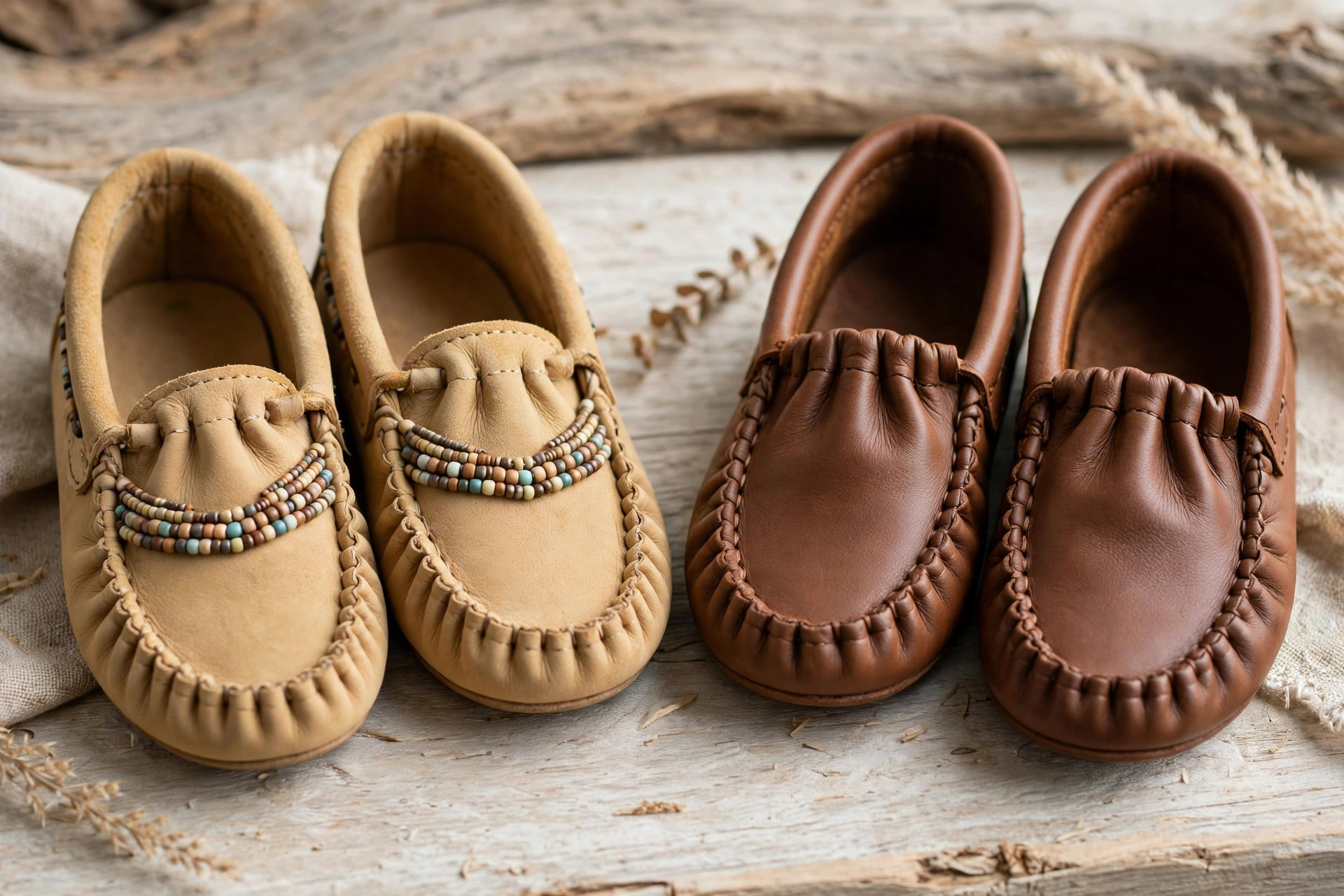
A moccasin is a slipper made with soft leather, turned up at the edges with the top of the shoe stitched to it in a gathered seam along the top of the foot, and with no heel. Read that again and you have the whole engineering: one piece of leather wraps under the foot and up its sides, and a second piece — the vamp or plug — is gathered and sewn across the toes. It is construction you can see and feel, and it has barely changed in centuries.
The moccasin is of North American Indian origin — the word and the design come from the Indigenous peoples of North America, whose soft-soled footwear was made for quiet movement over natural ground. European settlers adopted it, traders spread it, and the gathered-seam shoe became a permanent member of the world's footwear wardrobe.
Construction: True Moccasins and Their Imitators
A true moccasin keeps the original structure: the sole leather wraps up around the foot and the plug is gathered into it, so your foot rests inside a single leather envelope. Most modern “moccasins” are moccasin-construction shoes instead — a conventional sole unit with a gathered, stitched vamp on top that reproduces the look and much of the comfort at a production price. Both are legitimate; know which you are buying, because the true version molds to the foot like a glove and the imitation merely resembles one.
The gathered seam — puckered stitching around the toe, traditionally in contrasting thread, often with a rawhide lace threaded through and tied in a bow — is the style's signature. Beadwork decorates the vamp of traditional and traditionally-inspired pairs alike, carrying Indigenous designs; buy those from makers who credit and compensate the craft's originators.
Driving Mocs, Slippers and Outdoor Pairs
The driving moc adds a segmented rubber-stud sole that wraps up the heel — built for pedal feel in a car, adopted as a casual classic far from any driver's seat. The moccasin slipper lines the same pattern in shearling, fleece or flannel and is the house shoe of cold climates; a hard-soled version commutes between house and garden. Hard-sole outdoor moccasins and moccasin boots extend the design for camp and trail in dry weather.
What unites them is the feel: soft leather, a low and heel-less or near-heel-less profile, and a fit that relaxes around the foot. That is also the limit — a true soft-sole moccasin is not a hiking shoe or a rain shoe, and it asks for the ground it was designed for: dry, natural, and taken at a walking pace.
How does the moccasin's soft construction compare with a structured slip-on? Loafers vs moccasins puts the two side by side - formality, support and fit included.
Fit and Leather Care
Buy moccasins snug. Soft leather stretches — a new pair that feels a half-step close will mold into a custom fit within days, while a pair bought loose will only grow looser. Wear them first with thin socks or bare feet as intended; slipper styles with shearling compress as the lining packs down, which is the same rule in warmer form.
Care is leather care, gently: brush off dirt, condition cowhide and deerskin before they dry out, keep soft soles out of soaking weather, and let wet moccasins dry slowly away from heat, stuffed with paper to hold the shape. Resoling is possible on hard-sole styles. A good pair is among the longest-lived shoes a wardrobe can hold — the design has had several hundred years to get the details right.
Related Women's Guides
Photos


Looking for Women's Clothing Stores?
If you are ready to shop rather than browse guides, visit our women’s clothing shopping directory for stores carrying women's moccasins and moccasin slippers and much more, or use the Amazon and eBay buttons at the top of this page.