Women's Snow Boots Guide
A snow boot is a high-sided, waterproof or water-resistant boot with a rubber sole, built for deep snow, slush and mud rather than for a light dusting.
Shop Women's Snow Boots Now
Shop Women's Snow Boots on Amazon Shop Women's Snow Boots on eBayThe Amazon and eBay links on this page are affiliate links. If you make a purchase through them, Apparel Search may earn a commission.
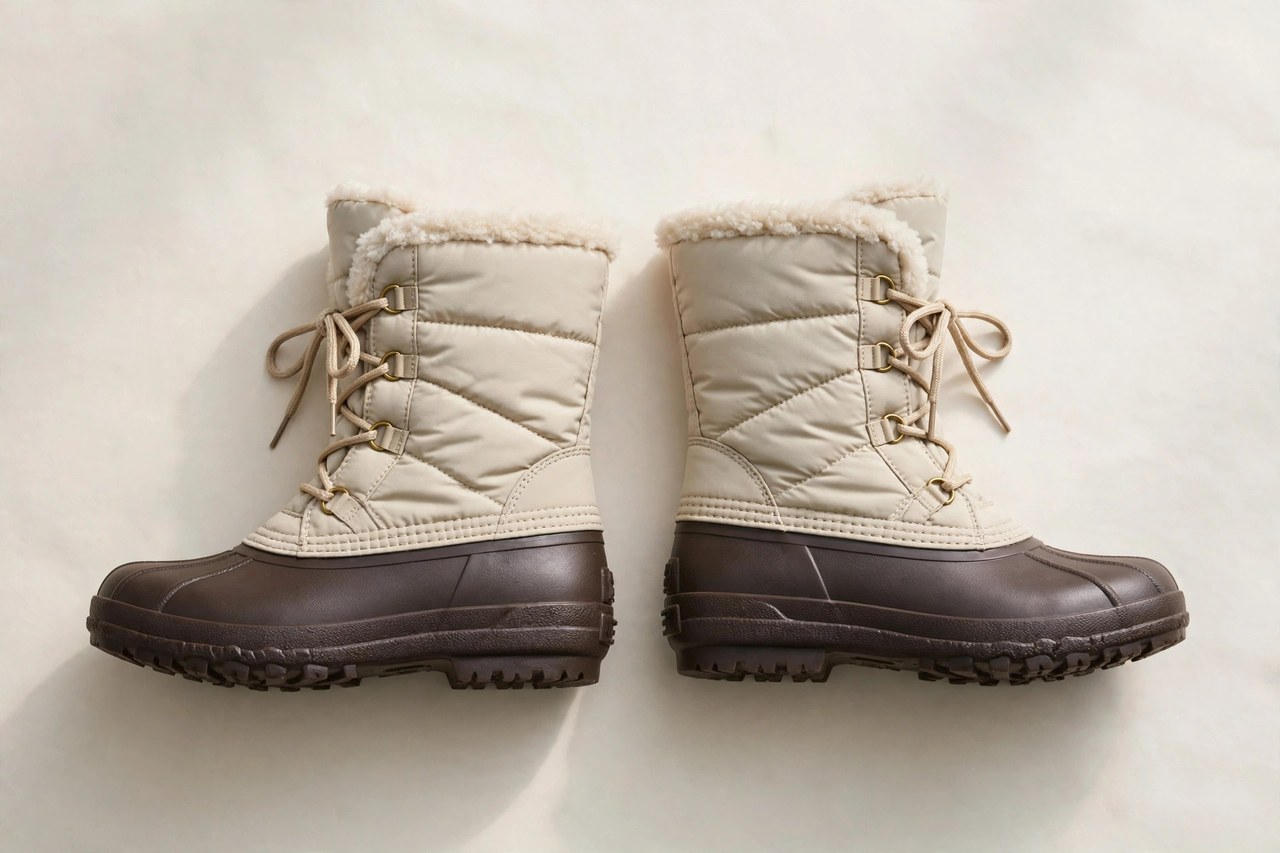
A snow boot is a type of boot, generally waterproof or water-resistant, with a high side that keeps snow from entering and a rubber sole that keeps water out. The category line is firm: snow boots are for deep, heavy wet snow, slush or mud — not for a half-inch dusting. That distinction organizes everything else, because a snow boot is weather equipment first and footwear second.
This guide covers the boot as cold-weather equipment: how waterproofing and insulation actually work, what temperature ratings do and do not mean, why the sole matters more than the upper on ice, and how snow boots differ from the snow pants they are worn with and the snowboarding boots they are sometimes confused with — each of which has its own page here, because each does a different job.
Construction: Rubber Shells and Waterproof Uppers
The classic snow boot is built in two zones. The lower boot is a molded waterproof shell, usually rubber or an injected synthetic, covering the foot completely so slush and meltwater have no seam to enter. The upper shaft rises from it in leather, suede or textile with a waterproof treatment or membrane, laced or buckled, and tall enough that stepping into a drift does not pour snow over the top. Fully textile winter boots use seam-sealed membranes instead of a shell.
Waterproof and water-resistant are different claims here, as everywhere. A resistant upper sheds light snow happily and wets through in an hour of slush; a shell boot or membrane boot is built for the wet case. Check how the shaft closes, too: a gusseted tongue that is attached up its sides stops snow and water entering through the lace gaps, while an open tongue on a tall boot quietly defeats the height you paid for.
Insulation and Temperature Ratings
Warmth comes from trapped air, delivered by felt liners, foam, synthetic insulation fills measured in grams, or shearling. Removable felt liners are the traditional cold-climate solution and have the practical virtue of coming out to dry overnight. Fixed synthetic insulation is lighter and slimmer. Many boots carry a comfort temperature rating, but treat ratings as a rough comparison between boots from the same maker, not as a promise: activity level, socks and circulation move your personal rating by many degrees.
The fit rule follows from the insulation: a snow boot must leave air space around the toes. A boot fitted tight like a shoe compresses its insulation and squeezes the foot, and a squeezed foot gets cold faster than a slightly loose one. That is why snow boots are sized to be worn with a proper winter sock and still feel roomy, and why the same wearer often takes a half or full size larger here than in ordinary boots.
Traction: Lugs, Rubber and Ice
Snow boots are judged on the ground. Look for a deep-lugged rubber outsole with wide channels that clear snow rather than packing into a smooth, slippery cake. Softer rubber compounds stay grippy at low temperatures, while hard, shiny soles turn treacherous on ice. No ordinary boot sole grips glare ice well; for regular icy pavements, removable traction cleats worn over the boot are the honest answer, and many cold-climate walkers keep a set by the door.
Traction also includes staying upright in slush and ruts, where a slight heel breast and a wide, stable base help. Fashion winter boots with smooth, slim soles borrow the snow boot look without the sole, and the distinction is exactly the one this category exists to mark. If a listing does not describe its outsole at all, assume it is decorative. In a real snow boot, the sole is a headline feature and is described like one.
Sizing, Socks and Care
Try snow boots with your thickest winter socks, late in the day, and walk and flex: toes should wiggle, the heel may lift slightly, which is normal in a stiff shell boot, and nothing should pinch across the instep when the boot flexes. Pair them with the right sock system — a single thick wool or wool-blend sock usually beats two thin pairs, which bunch and constrict — and with snow pants or gaiters over the shaft, so the overlap sheds snow downward like shingles.
Care is mostly drying. Remove liners and insoles after wet use and dry everything at room temperature, never on a radiator, which cracks rubber and leather alike. Rinse road salt off shells and leathers promptly, since salt dries and stains both, and reproof leather uppers each season. Stored dry and upright, a shell boot lasts for many winters; stored damp in a bag, it fails by smell and mildew before its sole ever wears out.
Related Women's Guides
More to Explore on Apparel Search
Looking for Women's Clothing Stores?
This guide helps you choose women's snow boots. To browse where to buy, visit our women's clothing store directory, where you can find retailers that carry them.