Women's Ski Pants Guide
Ski pants are waterproof, insulated trousers built for snow and chairlifts — and waist style, ventilation and boot gaiters decide how a ski day actually feels.
Shop Women's Ski Pants Now
Shop Women's Ski Pants on Amazon Shop Women's Ski Pants on eBayThe Amazon and eBay links on this page are affiliate links. If you make a purchase through them, Apparel Search may earn a commission.
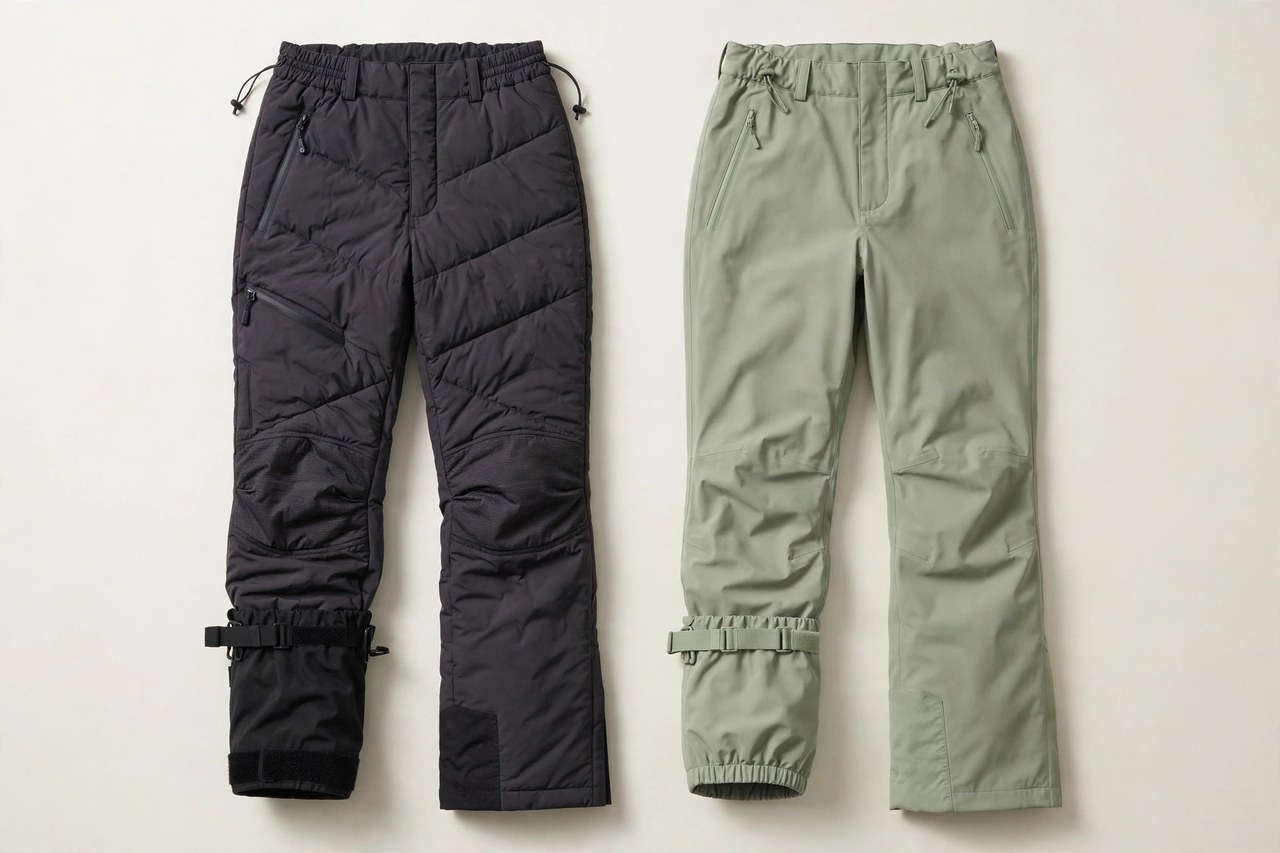
Ski pants are the leg half of skiwear: waterproof trousers designed to keep snow out and warmth in through falling, sitting on lifts, and standing in lift lines in wind. They look like ordinary trousers only from a distance. Up close, every feature answers a condition ordinary trousers never face — a waterproof membrane, sealed seams, gaiters that seal over boots, vents for the climb, and a cut that must bend at the knee for hours without pulling at the waist.
This guide covers ski pants as technical clothing: shell versus insulated construction, bib versus standard waist, how to read waterproof ratings, and how to fit a pant that has to work over base layers and ski boots. The wider system — jackets, gloves and layers — lives on the skiwear page, and general snow pants, made for sledding and snow play rather than skiing, have their own page as well.
Shell Pants vs Insulated Pants
The first decision is where warmth comes from. Insulated ski pants build synthetic fill into the pant itself, typically a light-to-medium layer that suits resort skiers in cold climates who run cold or sit lifts all day. They are simpler — one garment over a base layer — but their warmth is fixed, so they can overwhelm on spring days. Shell ski pants are an uninsulated waterproof layer worn over fleece or insulated leggings you choose each morning; they cost more as a system but adapt from January storms to April slush by changing what goes underneath.
Both constructions share the non-negotiables: a waterproof-breathable membrane or coating, taped seams at least at the critical points, and a durable water repellent finish so the face fabric sheds snow instead of wetting out. Ratings printed as numbers like 10k/10k mean waterproofness and breathability in grams and millimeters; resort skiers are well served at 10k and above, while anyone skiing wet coastal snow or sitting in it often should look higher. A pant that wets through by lunch makes the whole mountain smaller.
Bib Pants vs Standard Waist
Bib ski pants extend the pant into a chest-high front and back held by suspenders. They cannot gap at the waist when you bend, fall or reach, so snow stays out on powder days and deep falls, and the extra layer warms the core. The costs are real too: bibs are warmer overall, slower on bathroom breaks, and fussier to layer under a jacket. Standard-waist pants look cleaner, vent heat faster and pair with any jacket, but they need a belt, an adjustable waist or a jacket with a powder skirt to seal the gap bibs eliminate by design.
Details decide between specific models more than the category does. Look for inner thigh or side vents you can open without removing skis, ideally mesh-lined to keep snow out; articulated knees pre-bent to the skiing position; reinforced cuffs and kick panels where edges and boots abrade; and zippered hand and thigh pockets, because lift tickets, a phone and a snack all need secure homes. Beacon-compatible thigh pockets and RECCO reflectors appear on backcountry-leaning models and cost nothing in weight if you ever want them.
Fit Over Base Layers and Boots
Fit ski pants wearing your base layer and one ski sock, and judge them in a squat, not a mirror stance. The waist should close without the base layer bunching, the seat should allow a full crouch without the waistband diving, and the knee should bend without the cuff riding up the boot. Length is ski-specific: the pant must cover the boot to the ankle buckle zone standing straight, which looks slightly long off the slope and is exactly right on it. Petite, regular and tall inseams exist in this category and are worth hunting down.
The boot gaiter is the feature to test in the store: an elastic inner cuff with a gripper and hook that stretches over the ski boot and seals snow out at the one opening that faces the snow all day. Check that it fits over your boot's bulk, not a display boot's. Cuff zips or snaps that open wide let you dress over boots and adjust buckles without a struggle. A pant that fits the waist but fights the boot will annoy you twice a day, every day, at the exact moments your hands are gloved and cold.
Care That Keeps Pants Waterproof
Ski pants fail by dirt before they fail by wear: a clogged membrane stops breathing and a dirty face fabric stops beading water, so you sweat inside and soak outside in the same afternoon. Wash with a technical detergent or pure soap, never fabric softener, close all zips, and tumble dry low to revive the water repellent finish. Reproof with a spray or wash-in treatment when water stops beading on the thigh, and re-tape or return any pant whose seam tape peels inside the warranty window.
Store ski pants clean, dry and hung by the waist or folded loosely — never balled in a boot bag with damp gloves, the classic way to grow mildew in the lining over one summer. Check cuff reinforcement and gaiter elastic at season's end so repairs happen in October, not on the first morning of a trip. Looked after this way, a good pair of ski pants serves for many seasons, which matters, because you will know by the second day whether you chose well.
Related Women's Guides
More to Explore on Apparel Search
Women’s Clothes Guide by Letter: Women's Apparel Directory N · Women's Clothes Directory O · Women's Clothing Directory P · Women's Apparel Directory Q · Women's Fashion Directory R · Women's Clothes Directory T
Looking for Women's Clothing Stores?
This guide helps you choose women's ski pants. To browse where to buy, visit our women's clothing store directory, where you can find retailers that carry them.