Women's Snowboarding Boots Guide
A snowboarding boot is sport equipment: a stiff, insulated boot with a removable liner that locks into board bindings and translates leg movement into board control.
Shop Women's Snowboarding Boots Now
Shop Women's Snowboarding Boots on Amazon Shop Women's Snowboarding Boots on eBayThe Amazon and eBay links on this page are affiliate links. If you make a purchase through them, Apparel Search may earn a commission.
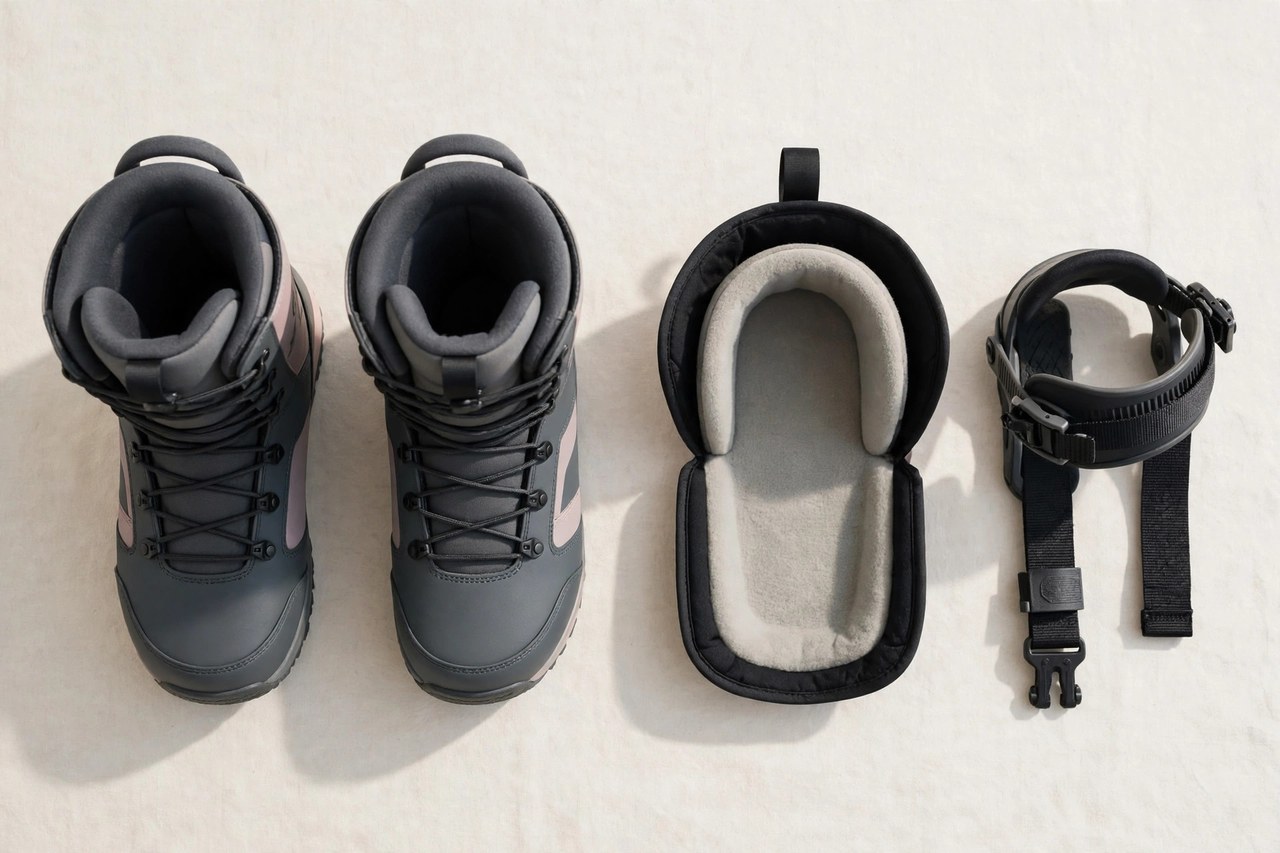
Snowboarding involves descending a snow-covered slope standing on a board attached to the rider's feet, and the boot is the connection in that sentence. A snowboarding boot is not a warm boot you ride in: it is a purpose-built interface between leg and binding, stiff where a walking snow boot is flexible, with a shaped liner, a structured shell and a sole made to lock into a binding rather than to walk any distance.
Visit a specialty shop for fitting: the features that matter are liners, flex, cushioning and heel hold. This guide explains those features so the shop visit goes well: how flex ratings map to riding styles, what liners do, how the three lacing systems differ, and why a snowboarding boot must be fitted with its binding in mind, unlike the general-purpose snow boot on its own page here.
Flex: Soft, Medium and Stiff
Flex is the category's headline specification, rated on a soft-to-stiff scale. Soft-flex boots forgive mistakes, flex at the ankle for freestyle and park riding, and suit beginners, at the cost of response at speed. Stiff boots transmit the smallest leg movement to the board's edge, suiting freeride, carving and steep terrain, and they punish sloppy technique in a beginner. Most riders live in the middle: medium flex, adapted to riders who need reliable hold and support for varied terrain.
Flex is not standardized between brands, so compare within a maker's range and flex boots side by side in the shop, in a riding stance. Flex also changes with temperature and age: a boot feels stiffer on a cold morning and softens over seasons of use, which is one reason experienced riders notice a beloved old boot going vague before it looks worn. Buy for the riding you will do this season, not the riding you might do in three years.
Liners, Heel Hold and Cushioning
Inside the shell sits a removable liner, and it does most of the fitting. Better liners are heat-moldable, shaped to your foot by a shop fitting or by wear; custom-fit liners guarantee fit, softness and extra warmth. Liners also insulate, cushion landings, and come out to dry — essential, since a boot ridden daily accumulates moisture that a sealed shell would otherwise hold against the foot all trip.
Heel hold is the fitting battle. A grippy cat-tongue material in the heels of the liner keeps socks gripped inside the boot for increased heel hold; internal harnesses that lace the liner to the shell do the same job more thoroughly. Heel lift inside the boot blurs board control and rubs blisters, so test it in the shop: in a strapped-in stance on a board if possible, your heel should stay planted as you flex. Superior cushioning in the sole and liner absorbs landing impact and vibration on hard snow.
Lacing Systems: Traditional, Speed and Dial
Three closure systems divide the market. Traditional laces give the most tunable, repairable fit and the slowest entry. Speed-lace systems use pull cords in separate upper and lower zones, fast with gloves on. Dial systems tension a cable by turning a knob, often in one or two zones, and adjust precisely even mid-run through a glove. None is best in the abstract; zone control — being able to set the lower foot and the shin independently — matters more than the mechanism.
Whatever the system, it works with the binding, not instead of it. The boot's outer shape must match your binding size, and highbacks and straps are adjusted to the boot, which is why boots and bindings are best bought or at least checked together. Popular makers in this category include Salomon, Burton, Vans, DC and K2, and each cuts its lasts differently, so brand fit loyalty here is rational and common.
Sizing and Care
Size a snowboarding boot in riding socks, standing with knees bent in an athletic stance rather than bolt upright, since that is the position the boot is built for. Toes should brush or just clear the front standing straight and pull back clear when you flex forward; a boot that starts loose packs out looser as the liner compresses over its first weeks. Specialty retailers such as REI and Dick's Sporting Goods, stock fitting benches and staff for exactly this process.
Care is drying and restraint. Pull liners out after every riding day and air both parts at room temperature; never force-dry liners on heat, which degrades their foams and molded shape. Keep laces and dial cables clean of grit, store boots buckled or laced loosely in shape out of sunlight, and transport them in the board bag's boot compartment rather than crushed under the board. Fitted and dried properly, a boot's flex and liner will hold their tune for many seasons.
Related Women's Guides
Photos

Looking for Women's Clothing Stores?
This guide helps you choose women's snowboarding boots. To browse where to buy, visit our women's clothing store directory, where you can find retailers that carry them.