Women's Sweatpants Guide
Sweatpants are soft knitted trousers born for athletics in the 1920s — now the comfort bottom for training, travel and rest, chosen by waistband, leg and fabric.
Shop Women's Sweatpants Now
Shop Women's Sweatpants on Amazon Shop Women's Sweatpants on eBayThe Amazon and eBay links on this page are affiliate links. If you make a purchase through them, Apparel Search may earn a commission.
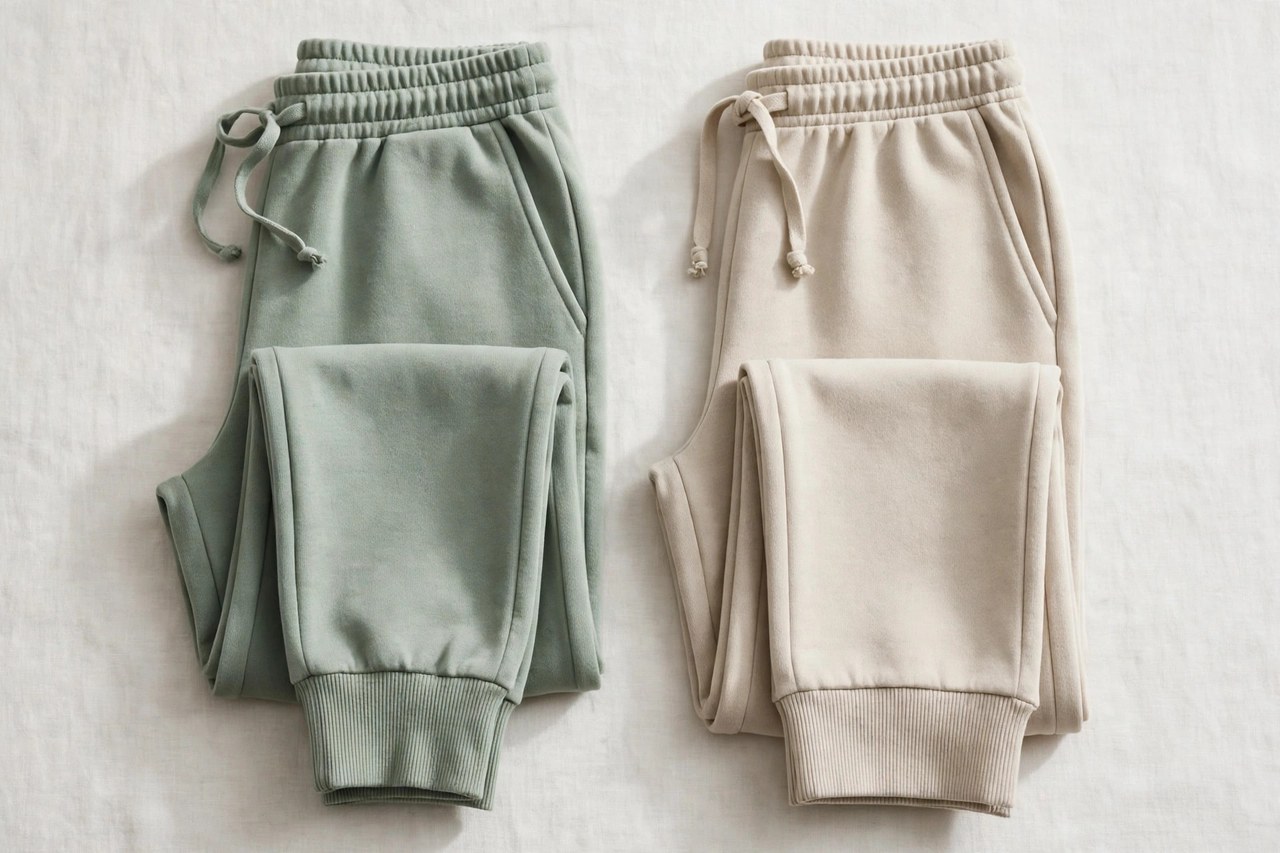
Sweatpants are a casual variety of soft trousers originally intended for comfort or athletic purposes, now worn for many different situations far beyond the gym. They are the bottom half of the fleece family: the sweatshirt's partner, the sweat suit's foundation. This page is about the trousers alone — the one-piece set has its own guide, and the matching top has another — because sweatpants are bought, fitted and replaced on their own more often than any other comfort garment in the closet.
They also have a genuine inventor and a date, which few comfort clothes can claim. The sections below begin with that history, because it explains the sweatpant's design — knitted, gray, loose, elasticated — better than any trend story. From there the guide covers the modern style families from joggers to wide legs, the fabrics and waistbands that decide comfort, and how to fit a garment whose entire promise is ease without sloppiness.
A Short History: Knitted Gray Jersey in the 1920s
The first pair of sweatpants was introduced in the 1920s by Émile Camuset, the founder of Le Coq Sportif. They were simple knitted gray jersey pants that allowed athletes to stretch and run comfortably — a radical idea at a time when sport was played in woven trousers or shorts. The knitted fabric moved with the body, the elastic and drawstring waist needed no belt or tailoring, and the soft gray jersey hid the evidence of training. Every sweatpant since is a variation on Camuset's formula.
From athletics the sweatpant migrated to the warm-up, the campus and eventually the sofa and the airport. The gray marl original never disappeared. Knowing the history clarifies the shopping: a sweatpant is a knitted athletic trouser first, and versions that forget the knitted comfort fail at the founding idea.
Styles: Joggers, Open Hems, Wide Legs and Shorts-Length Cousins
The jogger is the modern default: a tapered leg ending in a ribbed cuff at the ankle, which keeps fabric out of your shoes, shows your footwear, and reads tidy enough for public life. Classic open-hem sweatpants fall straight to the shoe with an elastic or plain hem; they are the warmest and most traditional, and the easiest to wear over trainers. Wide-leg and relaxed sweatpants trade the taper for drape and are styled as soft trousers. Cargo versions add pockets and a utility note; capri and cropped lengths serve warm weather and petite frames.
Construction details sort the good from the forgettable. Pockets should be deep enough to hold a phone without it escaping when you sit — test this in the shop, because shallow pockets are the category's most common betrayal. Side seams that sit straight, a gusset or well-shaped rise for squatting and sitting, and flat or well-finished seams all predict comfort in motion. Printed and collegiate styles treat the leg as a banner; plain and heathered styles treat it as a neutral.
Fabrics and Waistbands: Where Comfort Is Decided
Fabric weights divide the category by season. Brushed fleece is the winter standard, warm and plush inside. French terry, with its looped, unbrushed back, is lighter, smoother and the year-round favorite. Plain jersey makes the lightest sweatpants, close to Camuset's original. Cotton-rich fabrics feel best and breathe, but pure cotton can bag at the knee and stay damp in training; cotton-polyester blends dry faster and hold shape; a little elastane improves recovery everywhere. For actual exercise, blends win; for rest, cotton's softness usually does.
The waistband is the fitting room of the sweatpant. A good one combines wide elastic with a working drawstring — elastic alone eventually stretches into uselessness, and a drawstring alone digs. The rise matters as much: high-rise styles stay put through bending and pair with cropped tops; mid-rise is the classic; drawstring placement inside or outside is a small style choice with a real comfort difference against the skin. Sit, squat and take a few strides in the fitting room. A waistband that needs retying after ten steps will need it ten thousand times.
Fit, Styling Beyond the Gym and Care
Sweatpants fit correctly when the waistband sits without digging, the rise allows sitting without negotiation, and the leg neither twists nor pools. Inseam is the quiet variable: jogger cuffs should land at the ankle bone, open hems should just clear the floor in your usual shoes. Styled deliberately — a fitted top, clean sneakers, a coat over the softness — sweatpants hold their place in travel and weekend dressing. Styled carelessly, they announce that dressing was not attempted.
Care is forgiving, which is part of the point, but two habits preserve the comfort you bought. Wash inside out to protect fleece and prints, and go easy on heat: high dryer temperatures cook elastic waistbands and cuffs, which are always the first parts to fail. Replace a pair when the waistband gives up, the knees stay bagged after washing, or the fleece has thinned to jersey — sweatpants announce their retirement clearly if you listen. Kept in rotation with a second pair, a good pair of sweatpants serves for years as the most honest garment in the wardrobe: built in the 1920s for movement, still doing exactly that job.
Related Women's Guides
Photos

Looking for Women's Clothing Stores?
This guide helps you choose women's sweatpants. To browse where to buy, visit our women's clothing store directory, where you can find retailers that carry them.