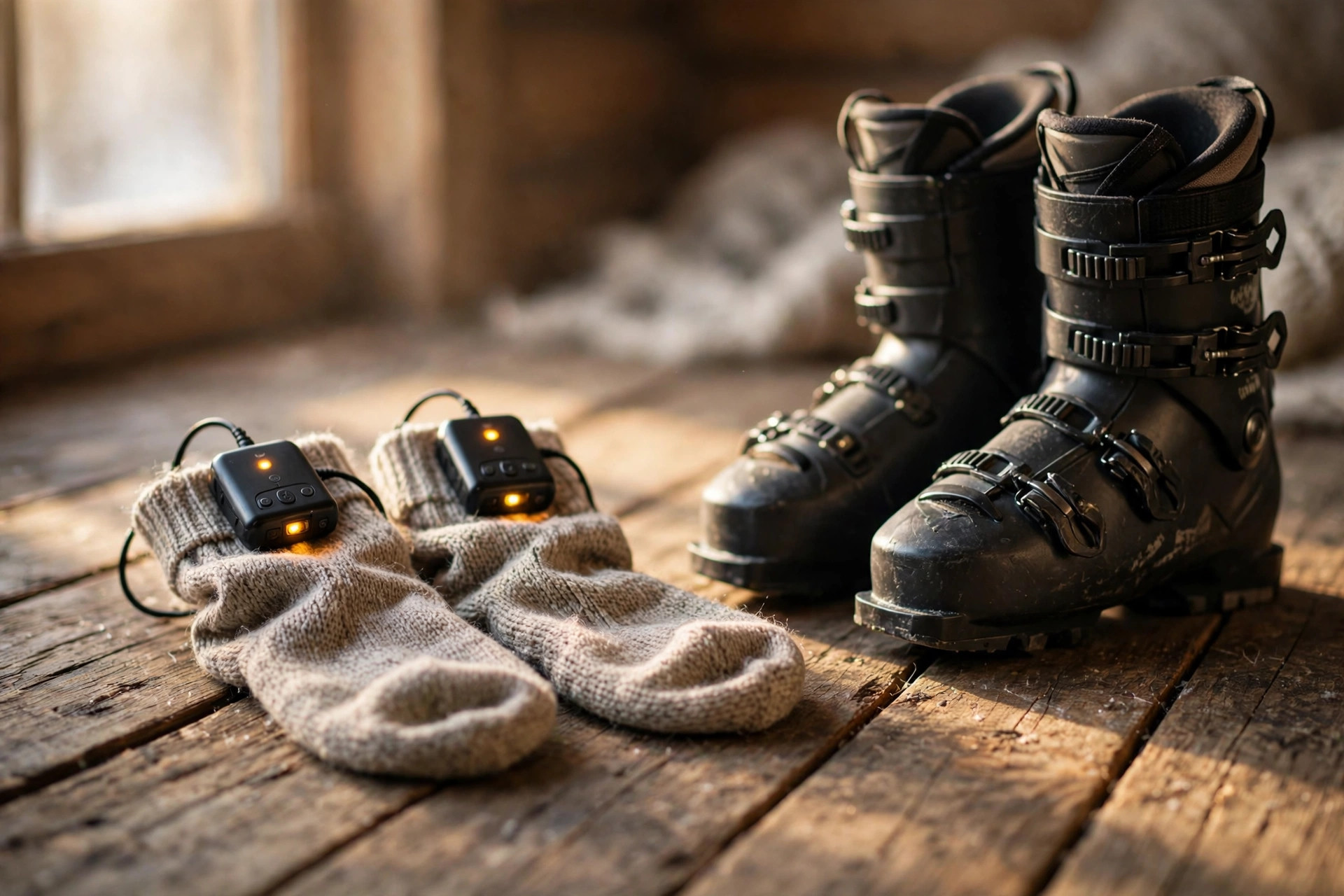
Heated socks are socks with thin electric heating elements woven along the top of the foot and around the toes, powered by a small rechargeable battery pack. They add active warmth exactly where feet need it most: the toes sit farthest from the heart, get the poorest blood flow in cold weather, and are the first part of the body to go numb inside a boot.
How Heated Socks Work
Placement is the whole idea. Rather than heating the sole, most heated socks run their elements along the top of the foot and over the toes, because that is where blood flow is poorest and cold is felt first. The battery pack — one per sock — usually tucks into a small pocket in the cuff; some designs carry it on a separate leg strap above the ankle, which keeps bulk out of a tight boot.
Heat is controlled by a button on the pack or, on app-connected models, from a phone. Most pairs offer two to four heat settings. Realistic runtimes follow the same trade as every heated garment:
- Low: the all-day setting — many pairs are rated for roughly six to ten hours, enough for most of a ski day or a full work shift.
- Medium: a half-day resource, useful for mornings that start bitter and soften by noon.
- High: a few hours only, roughly two to four — spend it on lift rides, in a cold stand, or on the walk back, not as the default.
Cold itself shortens battery life, so treat makers' ratings as fair-weather numbers, and charge the night before rather than discovering flat batteries at the trailhead.
Heated Socks vs Heated Insoles
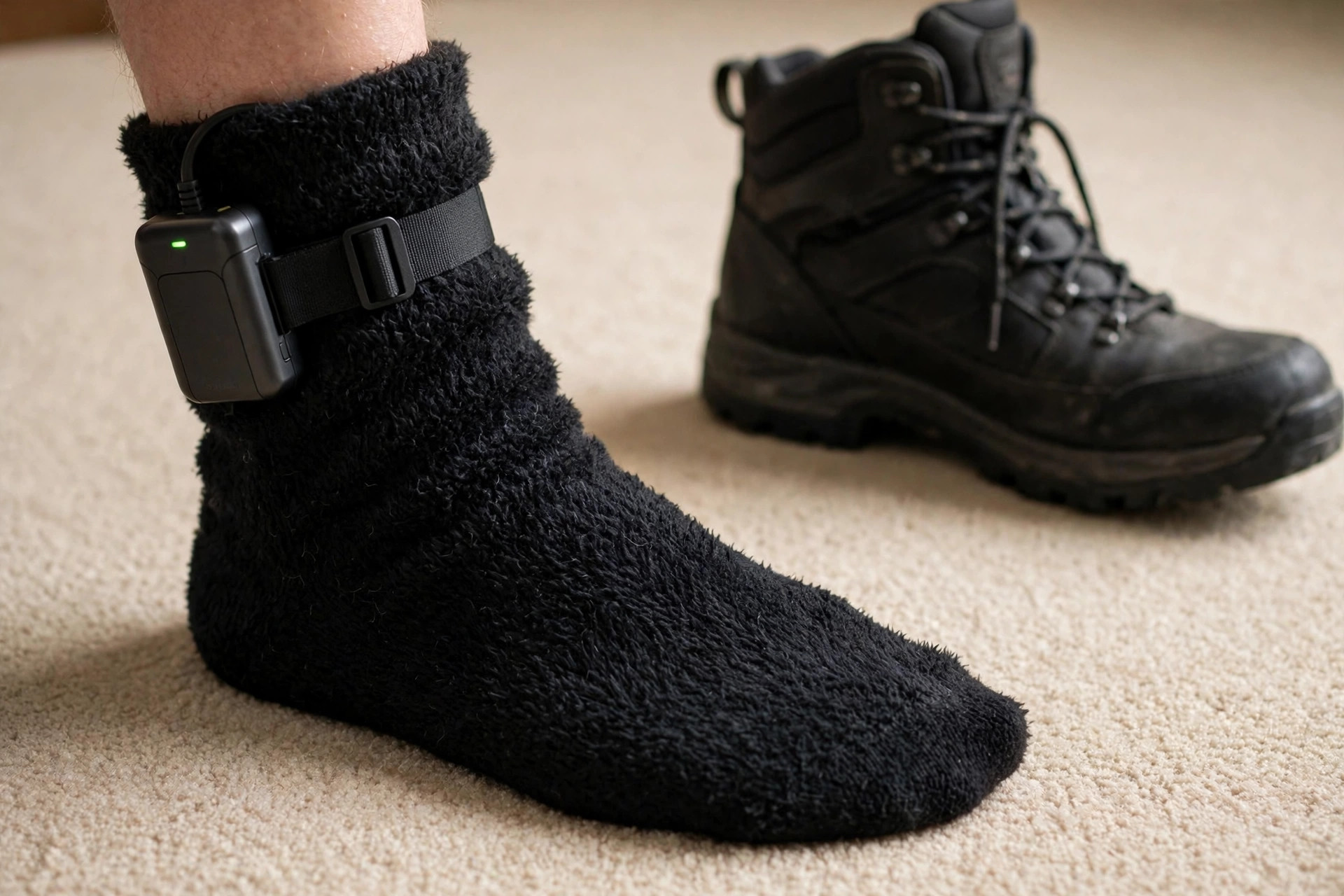
The two products warm opposite sides of the foot. A heated sock warms the top of the foot and the toes and moves with you from boot to boot; it can also be washed, gently, once the batteries are out. A heated insole warms the sole from below and has one practical advantage: it swaps easily between different shoes and boots, so one pair can serve work boots on weekdays and ski boots on weekends.
Choose socks when toes are the problem — they usually are — and insoles when you want one heating system shared across several pairs of footwear and your boots have room for a thicker footbed.
Fit: Thin Enough for Real Boots
A heated sock only works if the boot still fits. Look for thin, ski-specific models rather than thick casual pairs: they must slide into ski boots and snug work boots without crowding the toes, because a squeezed foot loses circulation and ends up colder than a plain sock would have left it.
And never double up. Two pairs of socks inside a ski boot is the classic beginner mistake — the layers bunch, circulation drops, and feet freeze. Wear the heated sock alone, exactly as you would a single pair of ski socks. For the full boot and layering picture, see what to wear skiing.
Who Heated Socks Suit
The natural owners spend long, still hours in the cold or have feet that chill out of proportion:
- Skiers and snowboarders whose toes go numb on the lift.
- Hunters and ice fishers, who sit motionless in deep cold.
- Outdoor workers standing on frozen ground all shift.
- Motorcyclists, whose feet sit in the wind with no chance to move.
- Anyone with persistently cold feet or poor circulation — heated socks warm the toes directly instead of waiting for blood flow, which makes them a genuine comfort aid, though not a medical treatment.
Cold hands instead? The sibling product is heated gloves, and the wider category — jackets, vests, and socks — is covered in the women's heated clothing guide.
Battery and Washing Care
Care is simple but not optional. Always remove the battery packs before washing. Hand wash gently in cool water with mild detergent, never wring the sock — the elements run through it — and air dry flat, away from radiators. Reconnect batteries only when the sock is completely dry.
For the batteries themselves: recharge after long days rather than storing them flat, and put them away for summer partly charged, roughly half, which is where rechargeable packs age slowest. Keep the connector contacts clean and dry, and note which pack belongs to which sock if your pair charges them separately.
Shop for Heated Socks
Common Questions
- How long do heated socks stay warm?
- On the lowest setting, most pairs run most of a day — roughly six to ten hours in makers' ratings. On high, expect a few hours, roughly two to four. Deep cold shortens battery life, so experienced wearers use low as the baseline and save high for lifts, breaks, and the coldest hour.
- Can you wash heated socks?
- Yes, gently, and only after removing the battery packs. Hand wash in cool water with mild detergent, never wring the sock — heating elements run through it — and air dry flat away from heat. Never tumble dry, and reconnect the batteries only when the sock is completely dry.
- Are heated socks better than heated insoles?
- Neither is simply better. A heated sock warms the top of the foot and the toes, where cold bites first, and moves with the foot. A heated insole warms the sole and can swap between different shoes and boots, but leaves the top of the foot to ordinary insulation.
- Can you wear heated socks in ski boots?
- Yes, if they are thin models made for the purpose — that is exactly what they were designed for. Wear one pair only, with no liner sock underneath, because doubling up crowds the boot, cuts circulation, and makes feet colder. Keep the battery pack where the boot cuff will not press on it.
- Do heated socks help with poor circulation?
- Many people whose feet are always cold find them a real comfort, because the toes are warmed directly instead of relying on blood flow to do the job. Treat them as a comfort aid, not a medical treatment, and check with a clinician if cold feet are a new or worsening symptom.
Winter Warmth and Style Series
This guide is part of the Apparel Search Winter Warmth and Style Series: practical guides to dressing well and staying warm through the cold months.