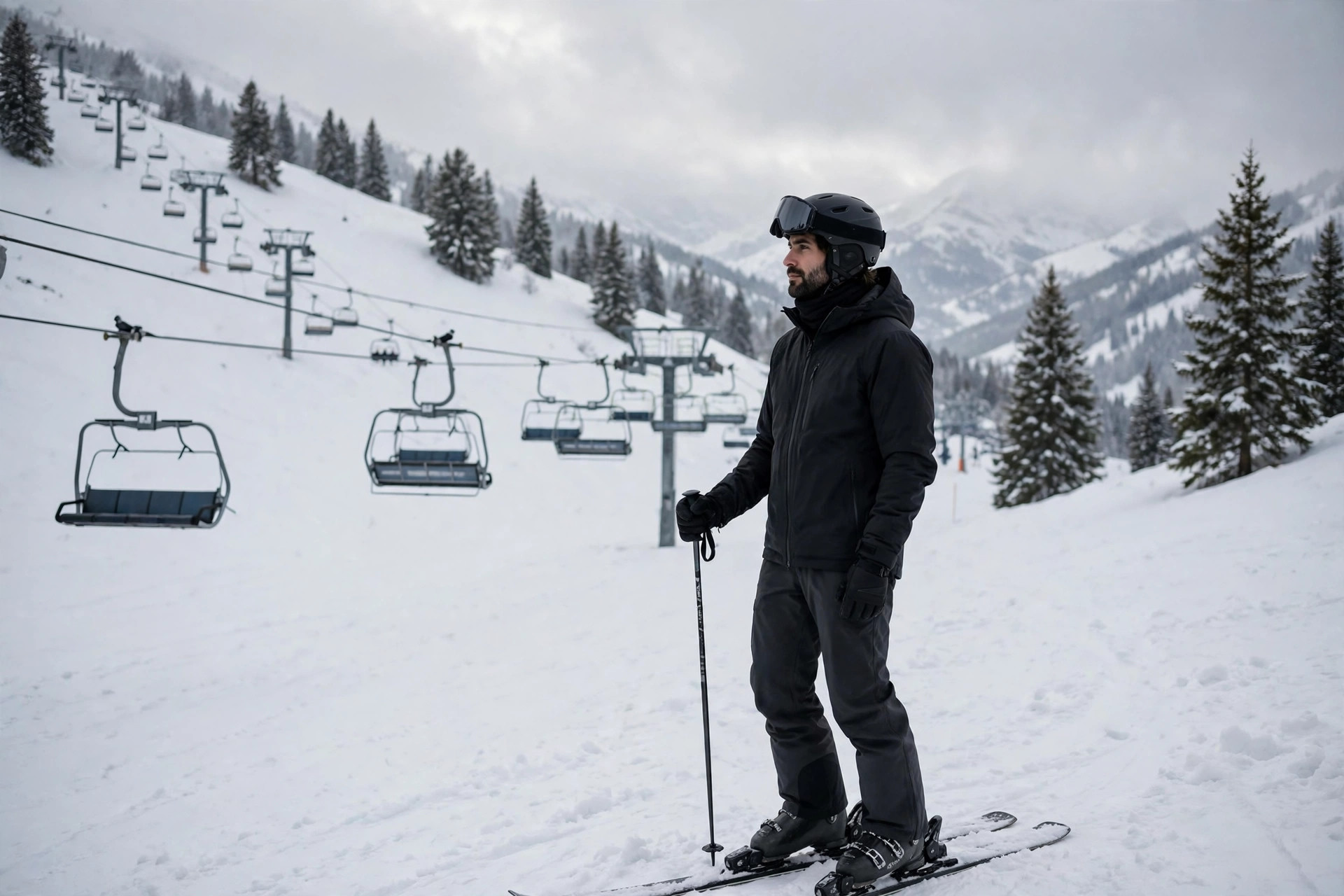
What to wear skiing comes down to a system, not a single warm coat: a wicking base layer against the skin, an insulating mid layer, and a waterproof jacket and pants on top, finished with one pair of ski socks, a helmet, goggles, and waterproof gloves or mittens. Dressed this way, you can adjust for a freezing lift ride and a hard-working run down with a zip or a layer, instead of overheating one hour and chilling the next.
The Three-Layer System
Base layer: move sweat, never cotton
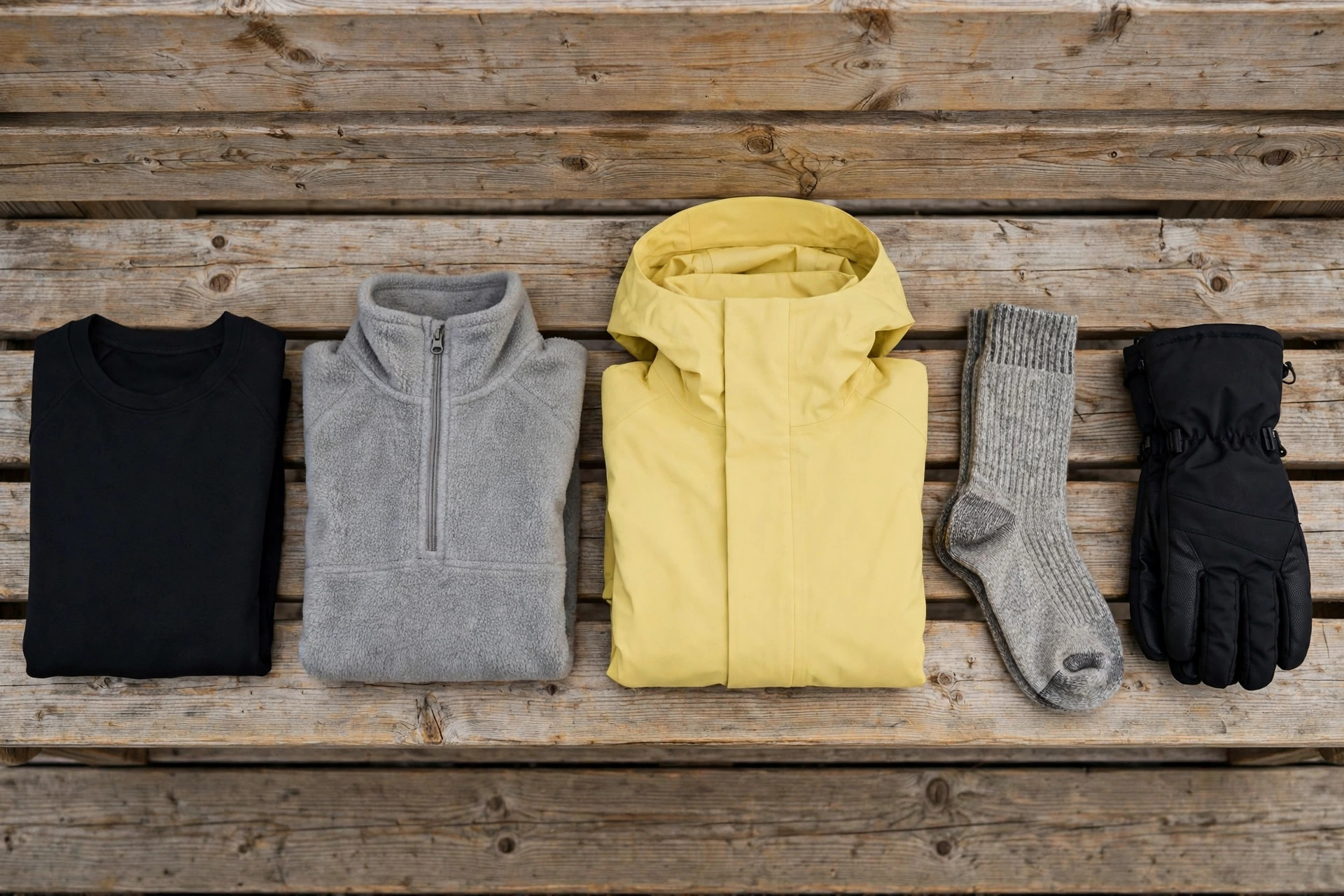
The layer against your skin manages moisture. Choose merino wool, which stays warm and resists odor over a long weekend, or a synthetic such as polyester, which dries fastest and costs less. Fit should be close but not tight. Never cotton: a cotton T-shirt absorbs sweat, holds it against the skin, and chills you on every lift ride. Match the weight to the day using our guide to base layer weights — light for spring, midweight for most resort days, heavy only in serious cold.
Mid layer: trap the warmth
The mid layer is insulation: a fleece jacket, a light down or synthetic puffy, or a heavy sweater made for sport. Its job is to hold warm air, and it is the layer you add or remove as conditions change. Many skiers wear it in the morning, drop it after lunch on a sunny day, and put it back on for the last, shadowed runs.
Outer layer: keep snow and wind out
The shell — jacket and pants — blocks wind and water. Its two printed ratings, such as 10k/10k, give waterproofness first and breathability second. In plain terms, 5,000 mm suits dry, cold resorts; 10,000 mm handles most skiers in most snow; 20,000 mm and up is for wet, heavy snow and long storm days. Pants matter as much as the jacket: beginners sit in the snow constantly.
Socks, Helmet, Goggles, and Gloves
Feet first: wear exactly one thin pair of ski socks, pulled up to below the knee. Ski boots are fitted close, and a thin sock keeps blood moving, which is what actually warms toes. On genuinely bitter days, heated socks are a reasonable upgrade. Cover the gap between jacket and helmet with a neck warmer or balaclava rather than a scarf; it stays put, seals out wind, and pulls up over the chin on the lift.
A helmet is standard now — warm, safer than any hat, and required by many lesson programs. Goggles protect against wind, glare, and falling snow. Hands go in waterproof gloves for dexterity or mittens for warmth, since fingers sharing one space heat each other. If your hands run cold regardless, heated gloves add battery warmth, and a thin liner underneath makes lift-ride phone checks far less chilly.
What Not to Wear
- Cotton anything — jeans, hoodies, T-shirts, cotton socks. Once wet, cotton stays wet and cold for the rest of the day.
- Jeans or everyday snow pants without waterproofing. A classic first-timer mistake: stiff, cold, and soaked by the second fall.
- A long, loose scarf. Dangling ends can catch on lift machinery and drag in the snow. A neck warmer does the same job safely.
- Two pairs of socks. They wrinkle inside the boot, create pressure points, and restrict circulation — the fastest route to numb toes.
- A hat instead of a helmet, and no eye protection. Wind at lift speed makes eyes water until you cannot see the slope.
Renting vs. Buying, and the First Day
First-timers should rent the hardware: skis, boots, and poles are sized and adjusted at the resort, and most rental packages can include a helmet. Renting lets you learn what you like before spending real money. Buy your own clothing first, in this order: base layers, ski socks, and gloves or mittens — the pieces that touch your skin and affect hygiene and fit most. A jacket and pants come next, once you know you will go again.
A lesson day runs on a schedule, so dress for standing around as well as skiing: arrive already in base layers and ski pants, carry the mid layer and shell, and expect the morning to feel colder than the skiing itself — rental lines, boot fitting, and lift instruction all happen standing in snow. Keep sunscreen on exposed skin and a snack in a jacket pocket.
First-day checklist
- Merino or synthetic base layer top and bottoms
- Fleece or insulated mid layer
- Waterproof ski jacket and pants
- One pair of knee-high ski socks
- Helmet and goggles (rented or owned)
- Waterproof gloves or mittens, plus thin liners
- Neck warmer or balaclava, sunscreen, and lip balm
- Lift pass in a zipped pocket, phone, and a snack
When the lifts close, boots come off, the shell opens, and the mid layer becomes the outfit. Our guide to après-ski style covers that transition: what to swap, what to keep, and how to look put together at the lodge.
Common Questions
- Can I ski in a regular winter coat?
- For one mild, dry day, a warm winter coat over proper base and mid layers can work, but everyday coats are often too long, too bulky, or not waterproof, and wet snow soaks them through. A ski shell or insulated jacket that ends at the hip and seals at the cuffs is far more comfortable by midday.
- Do I need special socks for skiing?
- Yes. Ski socks are thin, knee-high, and padded only where the boot presses, so they warm without crowding the boot. Wear one pair only. Thick hiking socks and double socks bunch, cut circulation, and make feet colder, not warmer.
- What should a beginner wear for a first ski lesson?
- Wear a merino or synthetic base layer top and leggings, a fleece mid layer, waterproof ski pants and jacket, one pair of ski socks, waterproof gloves or mittens, and a neck warmer. Rent helmet, boots, skis, and poles at the resort, and wear goggles or sunglasses for lift rides and snowfall.
- How many layers do I need skiing?
- Three: a wicking base layer, an insulating mid layer, and a waterproof outer shell. On very cold days add a second light mid layer or a heavier insulated jacket; on warm spring days many skiers drop the mid layer and ski in base layer plus shell.
- Can I wear leggings skiing?
- Leggings work well as the base layer under ski pants, as long as they are merino or synthetic rather than cotton. On their own they are not enough: they are not waterproof or windproof, and they offer no protection when you sit or fall in snow.
Winter Warmth and Style Series
Part of the Apparel Search winter warmth and style series: the coats, layers, and cold-weather pieces that make winter dressing work.