Women's Golf Gloves Guide
One glove, worn on the lead hand, exists for one reason: grip. How golf gloves work, why cabretta leather and synthetics feel different, and how a glove should actually fit.
Shop Women's Golf Gloves Now
Shop Women's Golf Gloves on Amazon Shop Women's Golf Gloves on eBayThe Amazon and eBay links on this page are affiliate links. If you make a purchase through them, Apparel Search may earn a commission.
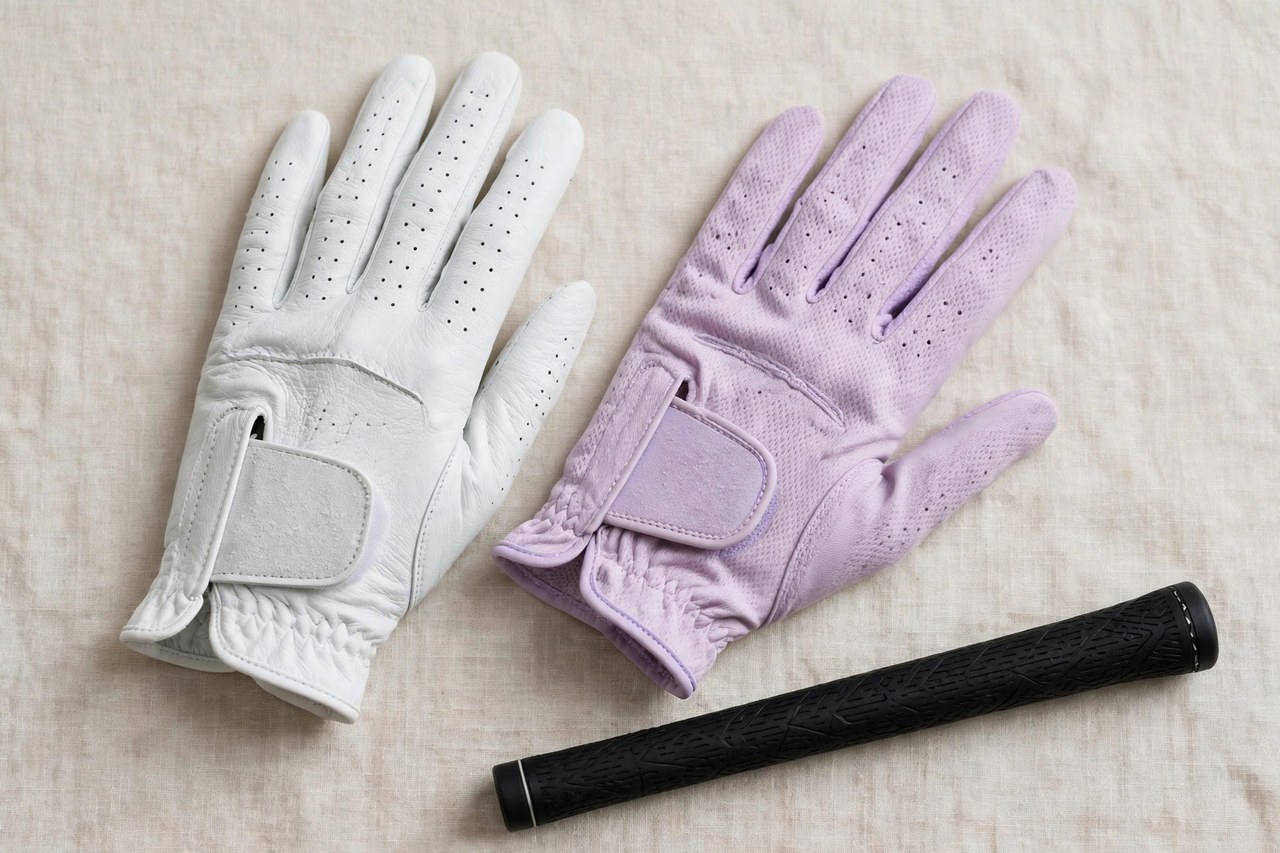
A golf glove is the smallest piece of golf apparel and the only one worn singly. It is worn on the lead hand — the hand at the top of the grip. The general rule is that right-handed women wear the glove on their left hand, and left-handed women wear it on the right. Everything else about the glove follows from that one job: keeping the club from turning in the hand during the swing.
This guide covers the golf glove only. For dress, leather and winter gloves, see our general women's gloves guide — a different category built for warmth and occasion rather than friction.
Why Grip Is the Whole Point
A golf glove is tackier than skin. The leather or synthetic palm creates more friction between hand and grip than a bare hand can, especially once heat and moisture build up over a round. That friction is what stops the club twisting at impact — the fault behind a large share of wild shots — and it lets the player hold the club lighter while it stays secure, which keeps the forearms relaxed and the swing faster.
The glove's second job is protection. A full round plus practice means hundreds of grips; the glove absorbs the rubbing that would otherwise raise blisters on the lead hand's palm and fingers, and it takes the wear that would otherwise polish the club grip smooth.
Cabretta Leather vs Synthetic
Cabretta leather — a soft, thin sheepskin — is the premium golf glove material. It moulds to the hand, gives the closest feel for the grip, and breathes reasonably well, but it wears faster, stiffens if it dries soaked with sweat, and costs the most. Tour players and low-handicap golfers mostly choose cabretta and replace it often.
Synthetic gloves (microfibre and mesh constructions) cost less, survive wet weather and washing better, and increasingly match leather's tackiness when new — their weakness is feel and a slightly thicker palm. Combination gloves split the difference: a leather palm for grip with a synthetic back for durability and ventilation. Cold-weather and rain gloves are sold in pairs and belong to a different drawer entirely.
Fit: Snug Is Correct
A golf glove should fit like a second skin, with no excess material at the fingertips and no loose palm that can bunch under the grip. If you can pinch fabric at a fingertip, the glove is too big; if the Velcro tab closes with most of its adjustment unused, likewise. Sizes follow dress-glove sizing from the hand's circumference, and cadet sizes shorten the fingers for smaller hands.
Women's ranges add a fashion dimension: a wider variety of colours and prints than the men's white-and-black standard, plus practical variants — fingerless gloves and gloves with slits for long fingernails, so a manicure need not choose between the nails and the round.
Care and Replacement
Take the glove off between shots on hot days and rotate two gloves through a round if you can — sweat is what kills cabretta. Air-dry flat, never on a radiator, and store the glove in its sleeve or a case so it keeps its shape. Wash synthetics cool and gently; leather specialists advise against washing cabretta at all.
Replace the glove when the palm polishes smooth or a hole opens at the thumb or heel of the hand — worn smooth, it gives back less grip than the bare hand it replaced. Frequent players treat gloves as a consumable, like balls and tees.
More Golf & Glove Guides
Photos

More to Explore on Apparel Search
Looking for Women's Clothing Stores?
This guide helps you choose women's golf gloves. To browse where to buy, visit our women's clothing store directory, where you can find retailers that carry them.