Women's Golf Shorts Guide
Golf shorts live or die by the inseam: long enough for the strictest dress code, cool enough for August. Lengths, fabrics, and what pro shops actually allow.
Shop Women's Golf Shorts Now
Shop Women's Golf Shorts on Amazon Shop Women's Golf Shorts on eBayThe Amazon and eBay links on this page are affiliate links. If you make a purchase through them, Apparel Search may earn a commission.
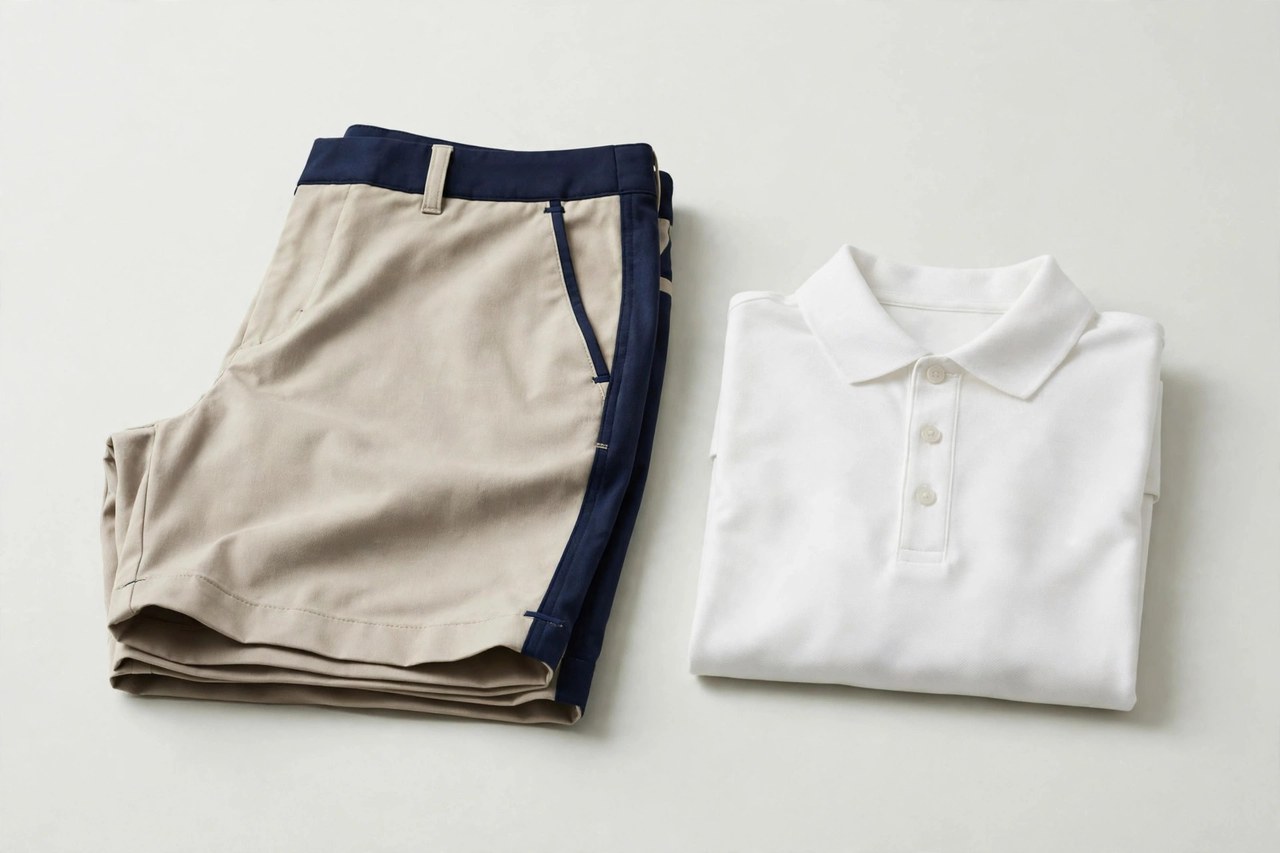
Shorts are the warm-weather half of the golf wardrobe, and the half most likely to be judged at check-in. Golf is a sport with attire etiquette, much of it is common sense, but the specifics belong to each course, and the shorts are where casual wardrobes most often break the rules. This guide covers the lengths, fabrics and styling that pass — and the ones that get sent back to the car.
For the full course wardrobe, start with the golf apparel guide; for tops to pair with shorts, see golf shirts.
The Inseam Rule
Course dress codes rarely ban shorts; they ban short shorts. The traditional standard is the Bermuda length — an inseam of roughly 7 to 9 inches on women's styles, ending just above the knee — in pleated or flat-front form. Many modern clubs accept a mid-thigh 5-inch inseam; very few accept the 3-inch running-short silhouette, gym material, or denim and cargo styles at all.
The practical test is the one the pro shop applies: shorts should look like tailored trousers cut off, not like athletic wear. When travelling to an unfamiliar club, pack the Bermuda pair — it is correct everywhere shorts are allowed at all.
A Short History of Course Dress
The etiquette is older than the shorts. Golf in its early days, around the 17th century, was played in clothing designed to keep players warm and dry in the damp, windy weather of Scotland — heavy, formal dress for a game played through a northern winter. The garments have advanced enormously, but the game's governing instinct never left: pro tournaments like the PGA and LPGA keep very restrictive rules to maintain tradition and decorum, and club codes descend from theirs.
Women's golf shorts are a 20th-century relaxation of the skirt-and-slacks era, which is why they arrived pre-tailored: the category was born obeying the dress code, and it still dresses like it.
Fabrics: Cotton, Technical and Water-Resistant
Cotton remains a common choice, especially in chino-style golf shorts that double for the clubhouse. The modern alternative is the technical woven: polyester or nylon with four-way stretch, a wicking finish and quick drying, cut to look like a chino while behaving like sportswear. Some golfers choose water-resistant shorts for changeable weather — a sensible hedge for links golf.
What to avoid is as fixed as the lengths: workout and gym fabrics, drawstring waists worn visibly, and anything with cargo pockets or denim in its family tree. If it would pass at the gym, it probably fails at the club.
Styling Shorts on the Course
Build the outfit from the code outward: tailored shorts, a tucked or neatly finished collared shirt, a belt, and golf shoes. The belt matters more in shorts than in any other golf outfit — it is the visible proof of tailoring that separates course shorts from beach shorts. Match metal and leather tones loosely and let colour live in the shirt or the shorts, rarely both at full strength.
Check in with course management when planning a tournament outfit — guest days and competitions are where codes are enforced most strictly, and the five minutes is cheaper than a pro-shop replacement pair.
Skorts, Skirts and Capris: The Neighbours
Shorts share the warm-weather slot with three neighbours worth knowing. The skort — a skirt front over built-in shorts — is the most popular women's golf bottom of all, passing the same length rules while reading as a skirt; the golf skirt proper is worn with separate undershorts; and capris and cropped trousers cover the days between shorts weather and slacks. All four obey the same dress-code logic as shorts — tailored, mid-thigh or longer, no gym fabrics — which is why the apparel guides treat them as one family: choose by weather and preference, and the code is satisfied by the cut, not the garment's name.
More Golf Guides
Photos

More to Explore on Apparel Search
Looking for Women's Clothing Stores?
This guide helps you choose women's golf shorts. To browse where to buy, visit our women's clothing store directory, where you can find retailers that carry them.