Women's Golf Shoes Guide
Golf shoes are traction equipment disguised as footwear: soft spikes or spikeless soles, waterproofing for wet grass, and a fit built for five miles of walking and a hundred swings.
Shop Women's Golf Shoes Now
Shop Women's Golf Shoes on Amazon Shop Women's Golf Shoes on eBayThe Amazon and eBay links on this page are affiliate links. If you make a purchase through them, Apparel Search may earn a commission.
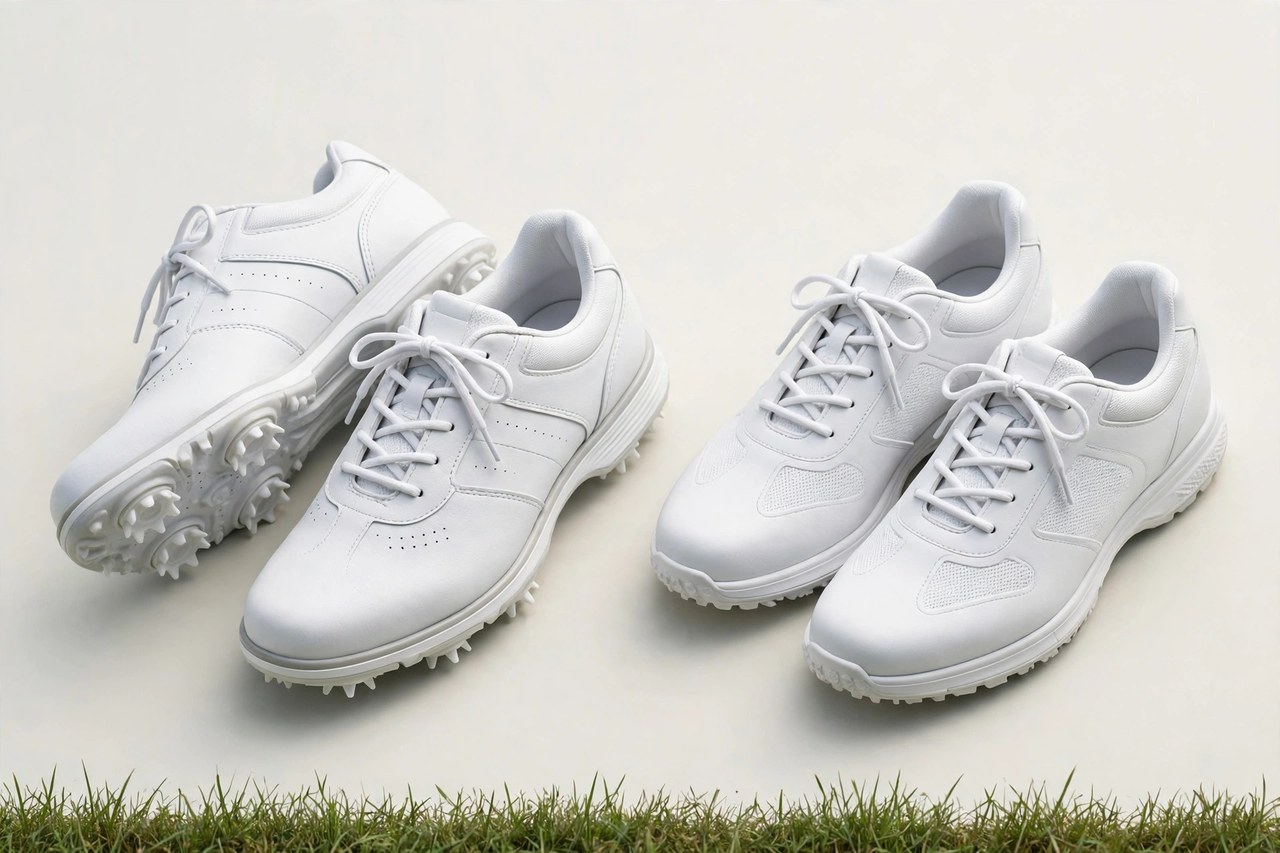
The dictionary definition opens the subject well: a golf shoe is, in Merriam-Webster's words, an oxford-style shoe of waterproof leather with sole spikes or hobnails, worn especially for golfing. Modern shoes have added mesh, trainers' silhouettes and spikeless soles to that description, but the core of it — traction plus waterproofing — has not changed in a century.
For the rest of the course wardrobe, see the golf apparel guide. One footwear warning: whatever you choose, do not try to golf in go-go boots.
Spiked vs Spikeless
Spiked shoes carry replaceable plastic cleats (soft spikes) screwed into the sole. They give the most grip in the swing and on wet slopes, because the cleats bite into the turf rather than resting on it. Spikeless shoes mould their traction into the sole as rubber lugs and nubs: a little less bite in the wet, but more comfort, no cleats to change, and a shoe you can wear into the clubhouse, the car and the street without a thought.
The honest summary: competitive players and wet-climate golfers still lean spiked; social golfers increasingly buy spikeless and never look back. Many players keep one of each and let the weather decide.
Metal Spikes, Soft Spikes and Course Bans
Older golf shoes carried metal spikes, and they are the reason for the signs in locker rooms today. In an attempt to minimise the spike marks metal left on greens, many courses have banned metal spikes entirely, allowing only plastic during play — consult your course for its rules. Plastic soft spikes are the modern standard on spiked shoes and are kinder to greens, paths and clubhouse floors.
Spikes wear down and are meant to be replaceable, attached by one of two common methods — a thread or a twist-lock — detailed in the notes below. A shoe with fresh cleats grips like a new shoe; worn-flat cleats are the commonest hidden cause of slipping in the swing.
Waterproofing and the Walking Fit
Golf is played on watered grass, often at dew-heavy hours, so waterproof shoes — leather uppers or membrane-lined synthetics, usually with a one- or two-year waterproof warranty — are the default choice for regular players. Breathable non-waterproof summer shoes exist for dry climates and afternoon golf.
Fit is a walking fit first: you will cover four to six miles. Look for the secure fit and sturdy lateral support — the foot must not slide sideways in the shoe at the finish of the swing — and for the low-profile heel that keeps the foot closer to the ground for stability while swinging. Try shoes late in the day, in golf socks, and walk the shop's slope if it has one.
Care and Cleat Maintenance
Knock the grass out after the round, loosen the laces, and dry shoes slowly away from radiators with newspaper or a shoe tree inside. Rotate two pairs if you play often; leather needs a rest day to dry fully.
Check cleats monthly: soft spikes wear to nubs faster than players expect, and one missing cleat changes the shoe's balance. Keep a spike wrench and a spare set in the bag — changing a full set of twist-lock cleats takes five minutes on the bench outside the pro shop.
Buying Checklist
When you shop, run the short version of this guide as a checklist. Decide spiked or spikeless by your weather and standard of play. Confirm your course's spike rule if you are buying spiked, and the replacement system (thread or twist-lock) your spares at home use. Take the waterproof warranty seriously if you play mornings. Walk in the shoes, on a slope if the shop allows, in your golf socks. And price the shoe as a system: the pair itself, one spare set of cleats, and the wrench — together they are the actual cost of a season's traction.
More Golf & Footwear Guides
Spike Systems
Spikes on most golf shoes are replaceable, being attached using one of two common methods: a thread or a twist lock. Two sizes of thread are in common use, called a “large thread” and a “small thread”. There are two common locking systems: Q-LOK and Tri-LOK (also called “Fast Twist”). The locking systems use a plastic thread which takes only about a half turn to lock. The spikes themselves exist to increase traction, helping the player keep her balance during the swing and when walking on greens and wet areas of the course — and look for a secure fit that provides sturdy lateral support, with a low-profile heel construction keeping the foot closer to the ground for added stability while swinging.
Photos


More to Explore on Apparel Search
Women’s Clothes Guide by Letter: Women's Clothing Directory H · Women's Fashion Directory I · Women's Apparel Directory J · Women's Fashion Directory K · Women's Fashion Directory L · Women's Fashion Directory M
Looking for Women's Clothing Stores?
This guide helps you choose women's golf shoes. To browse where to buy, visit our women's clothing store directory, where you can find retailers that carry them.