Women's Golf Apparel Guide
Golf apparel is a wardrobe with rules: collars, lengths and fabrics set by a century of course etiquette, rebuilt in modern performance cloth. The umbrella guide to everything worn on the course.
Shop Women's Golf Apparel Now
Shop Women's Golf Apparel on Amazon Shop Women's Golf Apparel on eBayThe Amazon and eBay links on this page are affiliate links. If you make a purchase through them, Apparel Search may earn a commission.
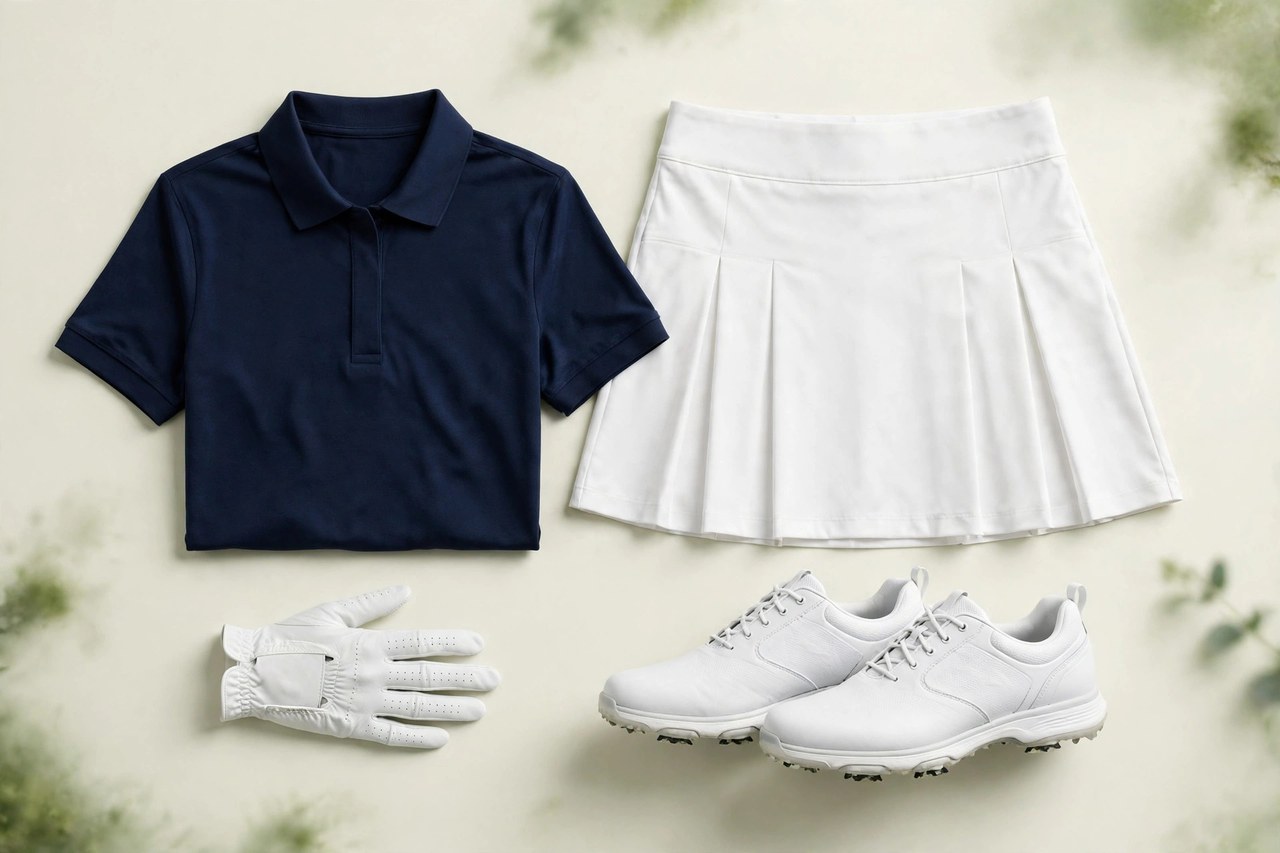
Golf apparel is the umbrella term for everything a woman wears to play golf — and it is one of the few clothing categories where an outside authority, the golf club, still gets a say in what counts as correct. Our other golf guides each take one piece of that wardrobe: golf shirts for the collared tops, golf shorts for warm-weather bottoms, golf shoes for the footwear rules, and golf gloves for the one-glove tradition. This guide is the map of the whole territory.
The through-line is etiquette. Golf began in the damp, windy weather of 17th-century Scotland, in clothing designed to keep players warm and dry, and the modern game kept the instinct for neat, purposeful dress long after the fabrics changed. Professional tours such as the PGA and LPGA enforce restrictive dress rules to maintain that tradition — and most clubs a recreational player will visit take their cue from the tours.
Course Dress Codes, Decoded
Most clubs ask for a collared shirt or a mock-collar golf top, tailored bottoms — slacks, capris, shorts of a respectable inseam, skirts and skorts at an approved length — and golf shoes rather than trainers. Denim, cargo shorts, gym wear, t-shirts and short shorts are the classic refusals. Private clubs publish their code; public courses are more relaxed, but the safe outfit is the traditional one.
Because codes vary, the standing advice is simple: check with the course before you play, especially for tournaments and guest days. A thirty-second look at the club's website saves the embarrassment of being re-dressed in the pro shop.
The Pieces of the Wardrobe
The warm-weather core is a polo or performance top, shorts, a skort or a golf skirt, soft-spike or spikeless shoes, a glove on the lead hand, and a hat or visor. Cooler rounds add slacks or capris, a quarter-zip or sweater, and a wind or rain layer. A golf dress — a one-piece with the collar and length built in — has become a popular shortcut to a code-correct outfit.
Colour is the free variable. Beyond a few traditional clubs, there is no rule against bright colour or print, and women's golf apparel leans into it: the etiquette governs the shape of the clothes, not their palette.
Performance Fabrics
Modern golf apparel is technical clothing wearing traditional clothes' faces. Polyester and nylon knits with elastane wick sweat through an 18-hole summer round, stretch through the swing, and come out of the wash unwrinkled. UPF-rated fabrics matter in a sport played for four or five hours in open sun, and mesh ventilation panels sit where a jacket or hat traps heat.
Cold and wet rounds call for the layering system: a wicking base, an insulating mid-layer that does not restrict the shoulders, and a waterproof or water-resistant shell cut long enough at the back to stay put through the swing. Cotton, the historic fabric, survives in casual ranges but loses to synthetics on a hot or wet course.
Fit for the Swing
Golf clothes are fitted by a movement, not a mirror. Tops need room across the back and shoulders for a full turn; waistbands must stay put through a hundred practice swings; hems are cut to stay at their approved length in the finish position, not just standing still. When you try golf apparel on, mime the swing — and the bend to tee up a ball — before you judge the size.
Build the wardrobe around one code-correct core outfit that works at the strictest club you play, then variations for weather and for the relaxed public course. That core, in better fabric, is where the money belongs.
Photos

More to Explore on Apparel Search
Looking for Women's Clothing Stores?
This guide helps you choose women's golf apparel. To browse where to buy, visit our women's clothing store directory, where you can find retailers that carry them.