Women's Garter Belts Guide
A product guide to the garter belt (suspender belt): how it is built, strap counts and clip types, fitting it to sit correctly, and the stockings it is designed to hold.
Shop Women's Garter Belts Now
Shop Women's Garter Belts on Amazon Shop Women's Garter Belts on eBayThe Amazon and eBay links on this page are affiliate links. If you make a purchase through them, Apparel Search may earn a commission.
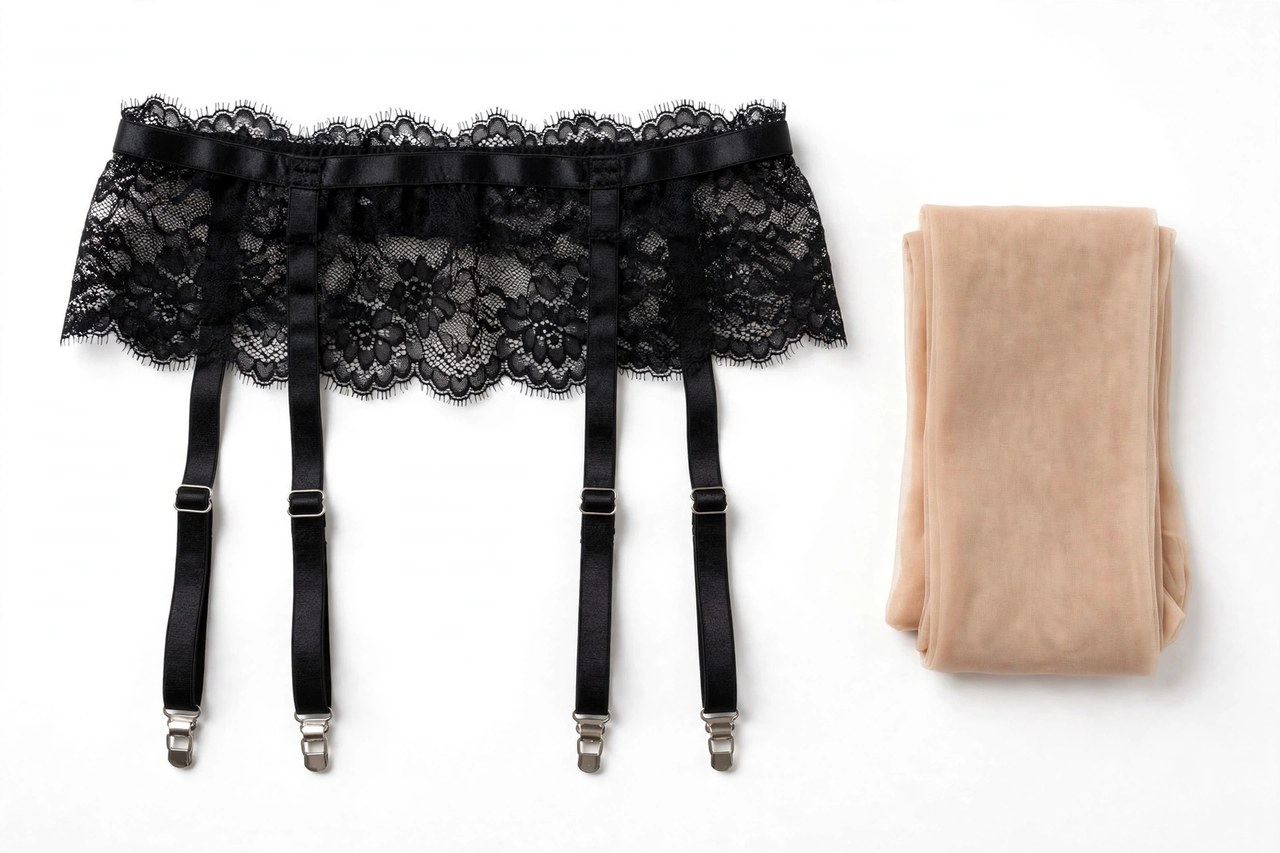
A garter belt — called a suspender belt in British English — is a functional undergarment with one job: holding up stockings. It consists of a belt worn at the waist or hips, from which adjustable straps (garters) hang, each ending in a clip that fastens to the top of a stocking. It is the older of the two stocking systems, predating both elasticated hold-ups and tights, and it survives because for long wear, and with traditional fully-fashioned and seamed stockings, it remains the more secure and adjustable of the options.
This guide treats the garter belt as the product it is: construction, the choices between strap counts and clip types, correct fitting, and the stockings it pairs with.
Construction: Belt, Straps and Clips
The belt is a band of lace, satin, mesh or elasticated fabric, fastened with hook-and-eye closures, wide enough — in practical designs — to distribute the pull of the straps without rolling. Narrow fashion belts of an inch or less look delicate and work adequately for short wear; wider belts of two to four inches are the all-day construction, and the difference is comfort, not appearance.
From the belt hang four straps in the standard design (two per leg, front and back) or six straps (adding one at each side) in the more secure traditional design. Each strap adjusts with a slider, like a bra strap, and ends in the clip: a metal clip with a rubber loop-and-button fastener is the durable classic that grips a stocking welt firmly; plastic clips are lighter, cheaper, and more prone to slipping or snapping under the tension of a full day.
The Stockings It Holds
A garter belt requires stockings made to be held: true stockings with a finished top band (the welt) for the clips to grip. It does not work with hold-up stockings worn as hold-ups — their silicone bands are designed to grip the leg, not a clip — though hold-ups can be worn clipped in a pinch. It does not work with tights or knee-highs at all.
Stocking length must match the wearer and the strap: stockings are sized by shoe size and leg length, and the welt should reach mid-thigh, where the straps meet it with the slider near the middle of its adjustment — a strap at its longest, straining at a short stocking, is a sizing mismatch between the two garments, not a fault in either.
Fitting: Waist, Height and Adjustment
The belt is worn at the natural waist or high on the hips, snug enough that the downward pull of four to six straps cannot drag it down through the day: a belt that migrates is a belt a size large or a style too narrow for its strap count. Sitting is the fit test — straps adjust so the clips stay fastened and the stockings stay smooth seated and standing, which usually means the back straps a touch longer than the front.
Order of dressing is part of the product's use: belt on first, stockings rolled on and clipped front then back, then underwear worn over the belt and straps for practicality — the standard arrangement the design assumes. Most fitting complaints about garter belts trace back to one of these three: a fashion-narrow belt asked to do a wide belt's work, plastic clips at their limit, or stockings a length short.
Fabrics and Care
Belts are made in lace, satin, power mesh and elastic webbing, often in sets matched to other lingerie; the practical variable is the strap elastic, which should be firm with full recovery — tired strap elastic is what retires a garter belt, since the belt fabric itself barely works. Metal clips outlast plastic by years and are replaceable on better-made belts.
Wash by hand or in a mesh bag on a gentle cycle, with the hooks closed and the clips fastened to a scrap of fabric so they do not catch the lace; dry flat. Store with straps untangled and clips closed — a garter belt thrown loose in a drawer tangles itself into next wear's first five minutes.
Photos

Looking for Women's Clothing Stores?
This guide helps you choose women's garter belts. To browse where to buy, visit our women's clothing store directory, where you can find retailers that carry them.