Women's Shearling Gloves Guide
Shearling gloves are five-fingered hand coverings made from sheepskin with the wool inside, giving insulation that adapts to the hand without synthetic fill.
Shop Women's Shearling Gloves Now
Shop Women's Shearling Gloves on Amazon Shop Women's Shearling Gloves on eBayThe Amazon and eBay links on this page are affiliate links. If you make a purchase through them, Apparel Search may earn a commission.
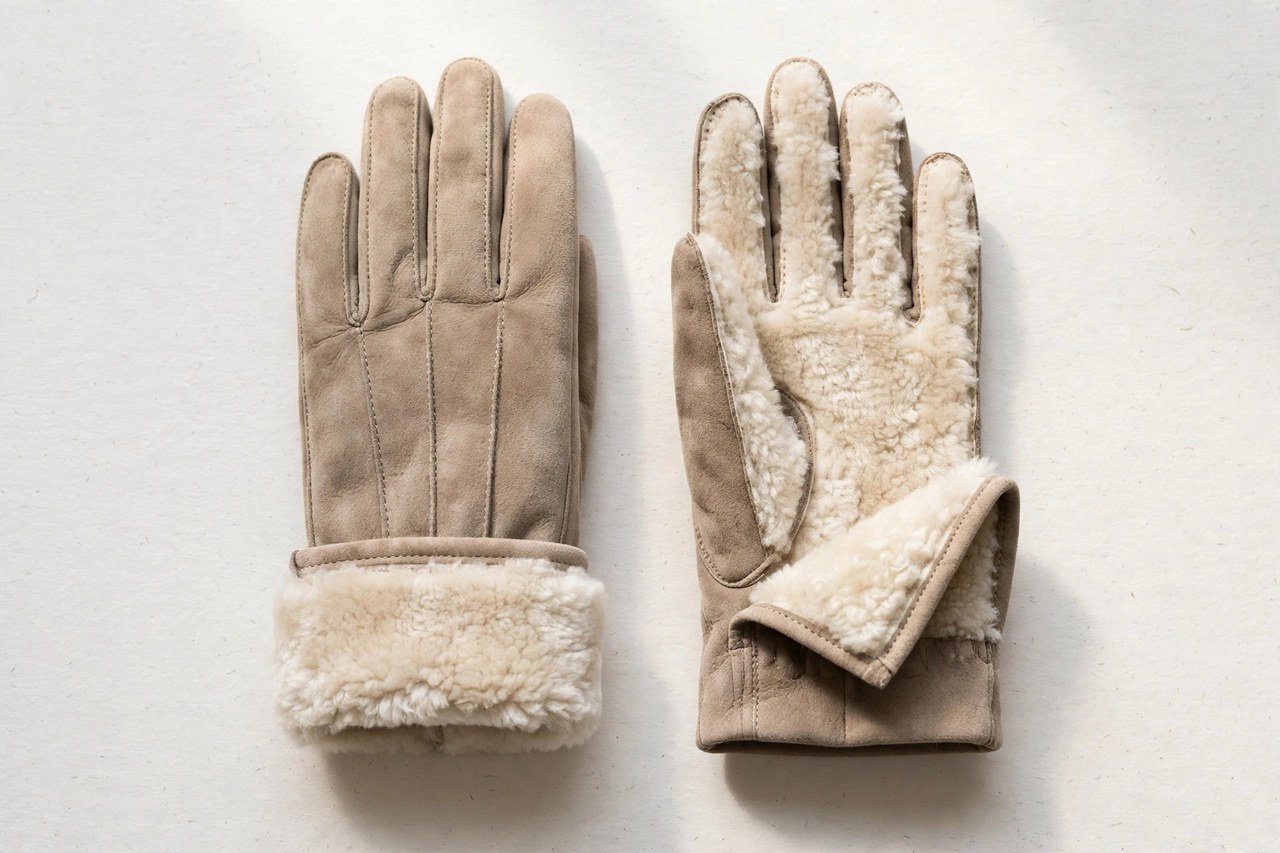
Shearling gloves are five-fingered hand coverings made from sheepskin with the wool inside, giving insulation that adapts to the hand without synthetic fill. Gloves and mittens insulate differently: this page covers the fingered form — dexterity, sizing by hand measurement, and seam placement — on its own terms.
This guide covers shearling gloves in the order a careful buyer needs it: what the garment is made from, how it is constructed, how it should fit, how to choose it for real use, and how to care for it so it lasts. Apparel Search has published guides to women's clothing for decades, and this rebuilt page keeps the subject focused — measurable details, named materials and checks you can perform in a shop or on a parcel's arrival, rather than general fashion language.
The Material: Skin, Wool and Grades
Real shearling is a single sheepskin tanned and dressed with its wool fleece still attached, so the garment's outer surface and its insulation are one continuous material with nothing laminated between them. That is why shearling gloves insulate so efficiently: the wool traps still air in thousands of crimped fibers while the skin side blocks wind. Wool length and density vary by breed and by where on the skin a panel was cut, and reputable makers grade pelts for evenness before matching them into a garment. Toscana shearling carries a longer, silkier fleece; merino shearling is finer and lighter; standard lamb shearling balances warmth, weight and price for most garments.
Judge the material directly. The wool should spring back when pressed, feel dry rather than greasy, and look even in length and color across panels. The skin side should be supple, without cracks, stiff patches or a chemical smell. Seams join panels edge to edge and are the garment's engineered weak points, so inspect them inside and out. Inseam or outseam stitching, wool trimmed so fingers can flex, and a cuff that seals against the coat sleeve are the glove details that matter. Faux shearling, covered in its own guides in this section, imitates the arrangement with synthetic pile on a fabric backing — lighter and washable, but without the skin's windproofing or the wool's moisture handling.
Weight, Fit and Sizing
Shearling is substantial, and fit in shearling gloves must account for the wool itself: the fleece occupies real volume inside the garment and compresses with wear, so a piece that feels snug in the shop usually settles to correct after several outings, while one that feels perfect immediately can end up loose. Allow room for the knitwear you will genuinely wear underneath, and test movement — reaching forward, bending, sitting — because skin does not stretch the way knitted fabrics do. Closures should meet without strain across the fullest point, since every fastening on a shearling garment carries more load than the same fastening on cloth.
Use each brand's measurements rather than assuming your cloth-coat size transfers: shearling pattern allowances differ, and the wool's thickness effectively reduces internal dimensions. For footwear and gloves, the same compression rule applies — fit with the socks or liners you will actually use. Weight is part of fit too. A long, dense-wool garment can tire the shoulders over a full day, and lighter skins or shorter lengths exist precisely to solve that. The right shearling is the warmest garment you own that you still reach for on an ordinary Tuesday, not only on the coldest day of the year.
Choosing and Wearing
Choose shearling gloves by climate honesty. Shearling's natural range is cold, dry weather: the wool insulates deeply and breathes, but prolonged rain soaks skin and adds great weight, so a household in a wet winter climate should plan how the garment will be rotated with waterproof outerwear. Within that range, nothing synthetic matches the combination of warmth, wind resistance and longevity — a well-kept shearling garment is routinely worn for decades and can be repaired by specialists, which reframes its high price as cost per year rather than cost per season.
Styling shearling is mostly about proportion and texture. The material has visual weight, so one shearling piece per outfit is the reliable rule, set against smoother, quieter fabrics that let its texture register. Color choices run from natural honey, tan and chocolate to dyed black and fashion colors; natural shades show the material's character best and age most gracefully. In practice, rank the checks above in the order your own use demands — frequency of wear first, then weather, washing facilities and budget — because that order differs by household, and it is the real reason two careful buyers can correctly choose differently from the same shelf. Buy from sellers who state the skin type, wool length and country of finishing, and treat vague descriptions as a warning: shearling quality is variable enough that information is part of the product.
Care, Weather and Storage
Real shearling asks for restraint in cleaning. Shake and air garments after wear, brush the wool with a soft brush to lift dust and restore loft, and let a damp garment dry slowly at room temperature, away from radiators, reshaping it as it dries. Light surface marks on the skin side often yield to a suede eraser and brush. Full cleaning belongs to a specialist shearling or leather cleaner — ordinary dry cleaning can strip the skin's conditioners and leave it board-hard — and most garments need it only every few seasons if they are aired and brushed between wears.
Store shearling in a breathable garment bag, on a broad hanger that supports its weight, in a cool, dry place out of sunlight. Never seal it in plastic, which traps moisture against the skin, and keep it away from moths by storing it clean — wool is a moth food, and prevention is far easier than repair. Condition the skin side only with products made for shearling, sparingly, and never apply them to the wool. Faux shearling, by contrast, usually tolerates gentle machine washing per its label — one of its genuine advantages. Follow the version of care that matches the material in your hands.
Related Women's Guides
More to Explore on Apparel Search
- Women's Gloves
- Women's Shearling Accessories
- Women's Shearling Fashion Guide
- Clothes
- Fashion
- Clothing Retail Stores
- Fashion Designers
- Popular Brands
- Apparel
- Women's Clothing Stores
- Women's Clothing Wholesalers
- Women's Fashion
- Women's Leather Gloves
- Shearling Definition
- Gloves Definition
- Fashion Videos
- Fashion Calendar
- Celebrity Fashion
- Fashion Designer Directory
Women’s Clothes Guide by Letter: Women's Apparel Directory N · Women's Clothes Directory O · Women's Clothing Directory P · Women's Apparel Directory Q · Women's Fashion Directory R · Women's Clothes Directory T
References & Further Reading
Looking for Women's Clothing Stores?
This guide helps you choose women's shearling gloves. To browse where to buy, visit our women's clothing store directory, where you can find retailers that carry them.