Women's Go-Go Boots Guide
White, low-heeled and mid-calf in 1964; an icon ever since. The history of the go-go boot — Courrèges, the miniskirt, Nancy Sinatra — and how the style is worn today.
Shop Women's Go-Go Boots Now
Shop Women's Go-Go Boots on Amazon Shop Women's Go-Go Boots on eBayThe Amazon and eBay links on this page are affiliate links. If you make a purchase through them, Apparel Search may earn a commission.
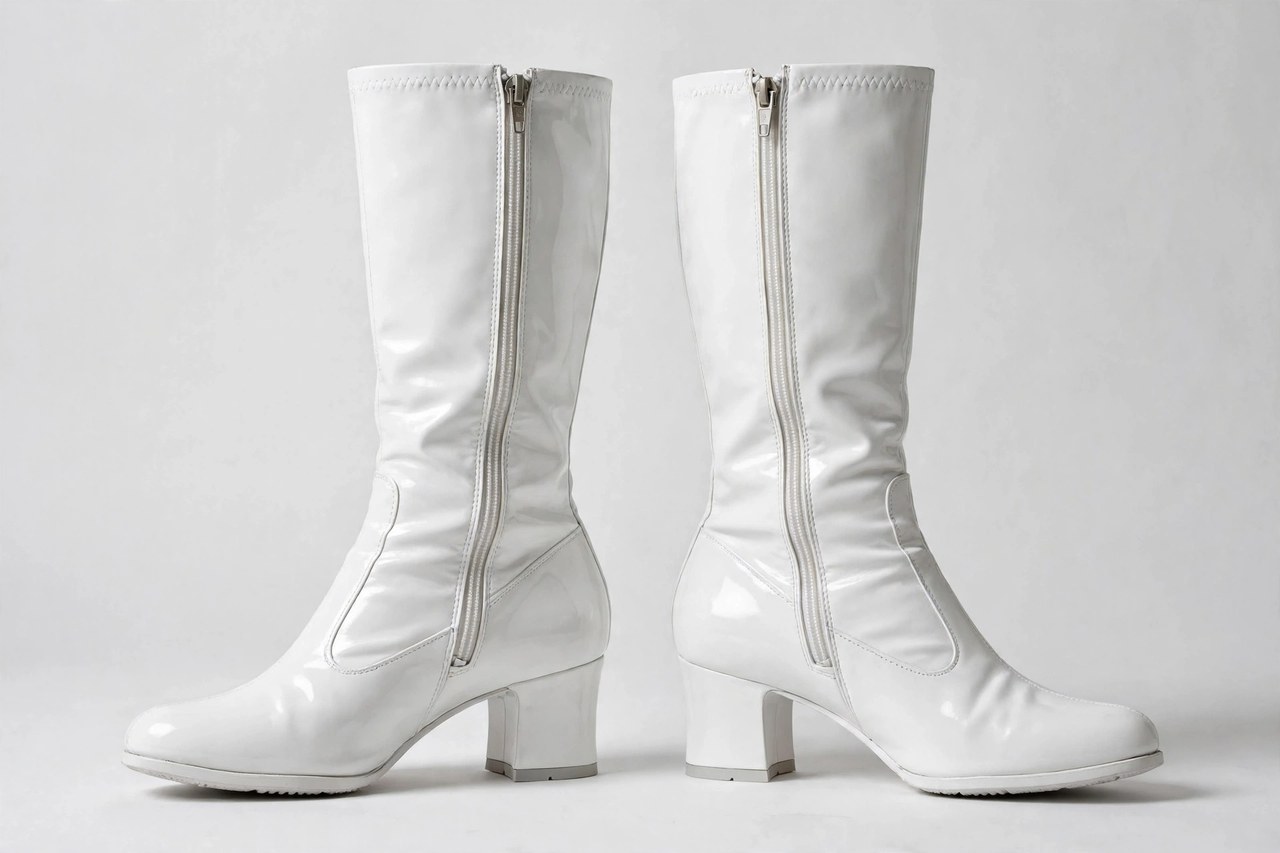
The go-go boot is one of the few garments that can be dated to a designer, a year and a description. Originally, go-go boots were white, low-heeled, and mid-calf in height — a specific style defined by André Courrèges in 1964, sometimes simply called the Courrèges boot. Everything the name has covered since — knee-high versions, square toes, kitten heels, every colour — descends from that one white boot.
Even the name is 1960s energy: go-go derives from the French expression à gogo, meaning “in abundance, galore”, itself from the ancient French la gogue — joy, happiness. The boot was named for the dancing it was made to be seen in.
The 1960s: Miniskirts and Walking Boots
Courrèges was the futurist of Paris fashion, designing streamlined clothes from modern fabrics, and — with Mary Quant — one of the designers credited with inventing the miniskirt. The go-go boot was the miniskirt's footwear: as hemlines rose, boots rose to meet them, and the white mid-calf boot with its low heel became the uniform of a new, mobile, deliberately modern femininity.
In 1966 the song “These Boots Are Made for Walkin'” was released, performed by a go-go-boot-wearing Nancy Sinatra, who is credited with popularising the boot far beyond fashion's capitals. Through the later 1960s and into the 1970s the term widened to the knee-high, square-toed boots with block heels that remain the style's second classic shape.
Variations: Kitten Heels and Revivals
The family kept growing: kitten-heeled go-go boots — the kitten heel being the short, slender heel with its slight curve, inherited from 1950s shoes — plus versions in black, red and every colour the original white excluded. And in the mid-1990s, as part of a general revival of 1960s fashion, go-go boots came back into style, this time as knowing retro rather than space-age news. They have cycled in and out ever since, most recently on the back of the 1960s and mod revivals that recur every few seasons.
What makes a boot a go-go boot today is the silhouette's signature: a clean shaft, a low-to-medium block or kitten heel, a rounded or square toe, and a leg-conscious height from mid-calf to knee. Stiletto, platform and slouchy boots belong to other families.
Wearing Go-Go Boots Now
The boot's native habitat is still the short hem: miniskirts and short dresses show the full shaft the design exists for, and the 1960s styling — A-line shapes, shift dresses, bold colour — remains its most convincing context. White boots are the authentic statement; black are the wearable-everywhere version, working with opaque tights and longer skirts as a clean, mod-inflected alternative to ankle boots.
Fit the shaft to the calf: the classic look is a close, smooth line without gaping or squeezing, in leather or a good synthetic with enough structure to stand. The go-go boot is a timeless accessory, and sixty years of revivals have yet to prove it wrong.
Materials, Then and Now
The original Courrèges boot was a product of its decade's material optimism: white leather or early synthetics with a clean, wipeable surface, built like the era's furniture. Modern versions divide between leather — softer, longer-lived, moulding to the calf — and synthetic uppers that hold the white brighter and shrug off rain, at some cost in breathability. The white boot in particular is a maintenance commitment: white leather wants regular cleaning and a polish made for white shoes, because a scuffed white boot reads as tatty where a scuffed black one reads as character. Whatever the material, store go-go boots standing with their shafts supported — boot trees or rolled magazines — since a shaft that has folded and creased at the ankle rarely stands straight again, and the go-go line depends on standing straight.
Photos

More to Explore on Apparel Search
Looking for Women's Clothing Stores?
This guide helps you choose women's go-go boots. To browse where to buy, visit our women's clothing store directory, where you can find retailers that carry them.