Women's Cashmere Pants Guide
Trousers that feel like a blanket and look like tailoring — knit lounge pants, joggers, and proper cashmere trousers.
Shop Women's Cashmere Pants Now
Shop Women's Cashmere Pants on Amazon Shop Women's Cashmere Pants on eBayThe Amazon and eBay links on this page are affiliate links. If you make a purchase through them, Apparel Search may earn a commission.
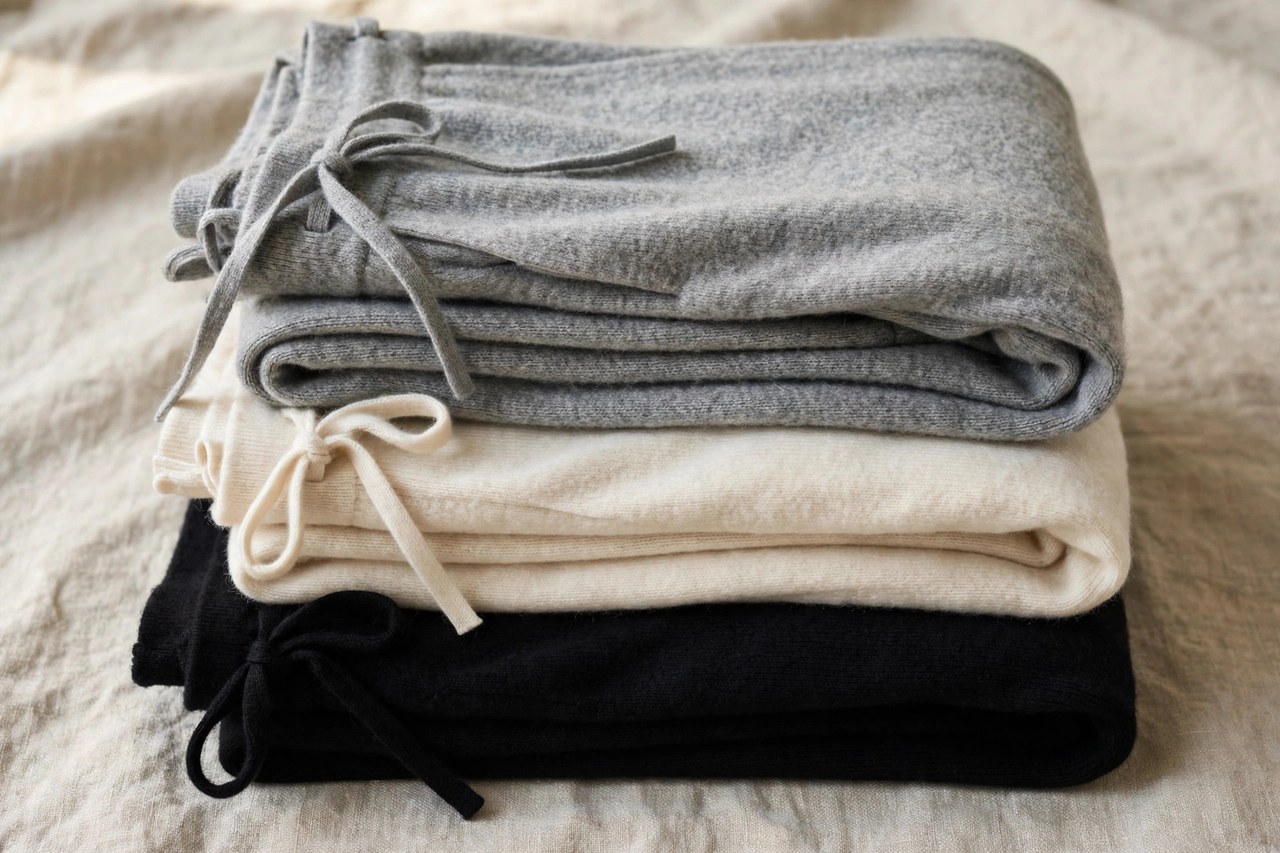
Cashmere pants sound like an extravagance until you wear them through a winter: trousers with the warmth of wool, the weight of almost nothing, and a softness that makes ordinary pants feel like an obligation. They come in two distinct families — knitted pants, which behave like elevated loungewear, and woven tailored trousers, which behave like suiting — and choosing between them is the first decision this guide unpacks. We also deal honestly with cashmere pants' famous weakness, knee-bagging, and explain which constructions resist it. Add fit and styling guidance, a realistic view of prices, and the care routine that keeps knit pants from thinning at the seat, and you have everything needed to buy the most comfortable trousers in the winter wardrobe with your eyes open.
Two Kinds of Cashmere Pants
Knitted cashmere pants are made like sweaters for the legs: flat-bed knitted panels joined into joggers, wide-leg lounge pants, and slim knit trousers, usually with a drawstring or elastic waist, sometimes with ribbed cuffs. They drape softly, stretch gently, and are the natural home of the fiber — this is the pair you live in at home, travel in, and style with a matching sweater as a knit set. Woven cashmere trousers are tailored from cashmere or cashmere-blend suiting cloth, with zips, waistbands, and creases like any fine trouser; they read as formal clothing and are usually blended with wool for structure and wear. The knit pair is about comfort, the woven pair about polish, and a wardrobe can hold both. Just do not expect the knit pair to keep a crease or the woven pair to feel like pajamas; each is honest to its construction.
Warmth, Drape, and the Knee Problem
Cashmere pants' warmth is real but should be understood: the knit traps air and insulates beautifully in still conditions, while wind cuts through an open knit more than through dense wool suiting, so knit pants are at their best indoors, in cars, and under coats on calm days. The famous issue is bagging at the knees, where knit fibers relax into a permanent pouch after a day of sitting. Quality resists it three ways: tighter knitting at a slightly higher gauge, a small percentage of elastane or strong silk in the yarn, and honest fiber length, since long fibers recover their shape better. Test in the fitting room by sitting and standing five times and checking the knees in the mirror. A pair that bags in the shop will only get worse; a well-built pair springs back and stays respectable through the day, needing only its overnight rest to recover completely.
Fit and Lengths
Fit cashmere pants by the seat and thigh first: knit trousers should skim without clinging, because cashmere knit under tension wears thin at friction points and shows every line beneath. The waistband, whether drawstring, elastic, or tailored, should sit securely without a belt's rescue — a slipping waist on a knit pant only worsens as the day relaxes the knit. Lengths follow the shoe: joggers and ribbed cuffs end at the ankle, wide-leg knits should just brush the shoe, and tailored trousers take a classic break. For knit sets, buy the pants and top in the same dye lot when matching as a set matters, since cashmere shades can vary subtly between batches. Petite and tall ranges genuinely matter in pants in a way they do not in sweaters, because the rise and knee placement must land correctly; seek them out rather than altering knit hems, which is possible but rarely invisible.
Styling Cashmere Pants
The knit set — matching cashmere pants and sweater in one color — is the headline look, and it works because tonal knit dressing reads as an outfit, not as pajamas, especially with a coat, real shoes, and one piece of jewelry. Separates give more range: charcoal knit pants with a crisp white shirt and a blazer; cream lounge pants with a navy turtleneck and loafers for travel; wide-leg cashmere with a fitted fine-gauge top to balance the volume. Woven cashmere trousers style exactly like fine wool trousers — with blouses, knit shells, and tailoring — and bring an unmatched softness to formal winter dressing. The styling rule for all cashmere pants is structure somewhere: a tailored coat, a firm shoe, a tucked top. Softness everywhere at once drifts toward the sofa, and these pants deserve better company.
Care: Resting, Washing, and Storage
Cashmere pants ask for a rhythm: wear a day, rest a day, folded or draped over a padded hanger bar rather than hung by the waistband clips that bite the knit. Rest is genuinely restorative for knees and seat, letting fibers recover their set. Wash by hand in cool water or dry-clean woven tailored pairs; dry knits flat, reshaping the legs as they dry, and never tumble, which felts and shrinks. Watch the seat and inner thigh for early thinning or pilling — a cashmere comb handles pills, and a tailor or knitwear repair service can reinforce a thinning seat if caught early. Store pants clean and folded with tissue at the folds, cedar nearby, since the seat of stored pants is a favorite moth address. Pants are the hardest-working cashmere you own; this light routine is simply how you thank them.
Related Women's Guides
Photos

Looking for Women's Clothing Stores?
This guide helps you choose women's cashmere pants by knit and cut. To browse where to buy, visit our women's clothing store directory, where you can find retailers that carry them.