Women's Cashmere Socks Guide
The smallest luxury in the drawer — and the garment where a smart blend beats pure cashmere every time.
Shop Women's Cashmere Socks Now
Shop Women's Cashmere Socks on Amazon Shop Women's Cashmere Socks on eBayThe Amazon and eBay links on this page are affiliate links. If you make a purchase through them, Apparel Search may earn a commission.
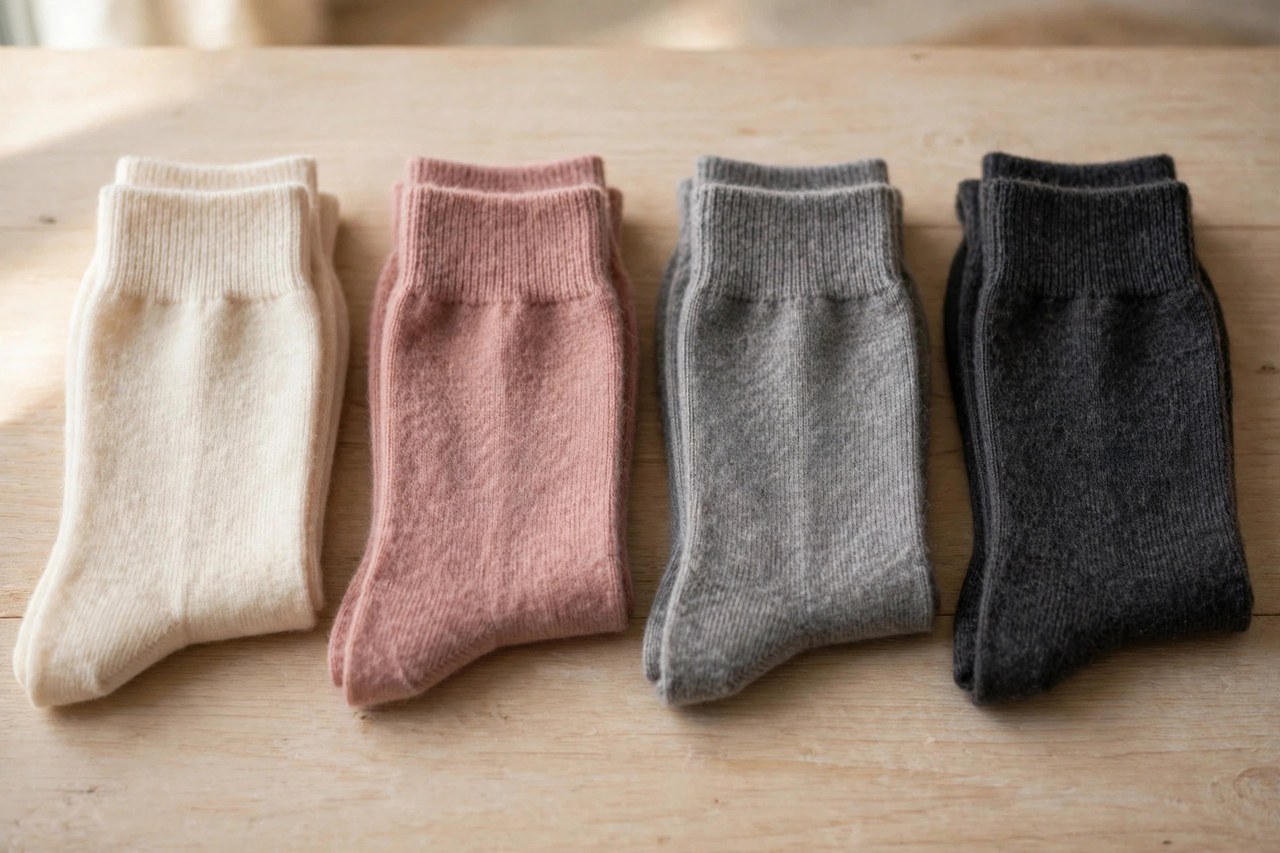
Cashmere socks are the purest small luxury in clothing: an invisible comfort that turns cold floors, long flights, and winter boots into pleasures. They are also the one garment in this entire section where the honest advice is to avoid 100 percent cashmere. A sock lives a life of friction that no sweater ever faces, and pure cashmere, for all its virtues, abrades through at the heel in a matter of wears. This guide explains the blends that make cashmere socks genuinely good — and how much cashmere a sock needs to deserve the name — along with cushioning and height choices, fit, a realistic account of how long they last and what they cost, and the washing and rotation habits that stretch their lives from a treat into a staple.
Why Cashmere Socks Are a Little Luxury
Feet regulate the whole body's sense of comfort, and they do it in the coldest zone of the house, the last few inches above the floor. Cashmere's fine hollow fibers insulate that zone in a sock thin enough to fit inside ordinary shoes, where a thick wool sock demands a size up. The softness is functional, too: cashmere does not prickle or rub, so it suits sensitive feet, long days standing, and sleeping in cold rooms, where a pair of cashmere bed socks is a small and famous pleasure. Cashmere also breathes and resists odor better than synthetics, so feet stay dry-feeling through a day. None of this requires the sock to be all cashmere — it requires enough cashmere, in the right places, supported by fibers that handle the violence of walking. That partnership is the whole design problem, and good makers solve it well.
Cashmere Blends: Why Pure Isn't Always Best
The classic quality recipe is a majority of cashmere — commonly 50 to 85 percent — reinforced with nylon, typically at the heel, toe, and sole where wear concentrates, and sometimes a thread of elastane for a cuff that stays up. Some makers knit the cashmere over a nylon core, so the foot feels only cashmere while the skeleton is synthetic. Silk blends appear at the dressy end for sheen and strength. Read labels skeptically at the extremes: a sock boasting 100 percent cashmere is a short-lived indulgence for bed and sofa, lovely but honest only if sold as such, while a sock with 15 percent cashmere is a nylon sock wearing a cashmere name tag. The sweet spot for a working sock — one you will wear in boots weekly — is a stated majority cashmere content, reinforced construction you can see at heel and toe, and a maker willing to print the full recipe.
Cushioning, Height, and Fit
Cushioning runs from fine dress socks, smooth and thin for shoes, through terry-loop cushioned soles that pad the whole footbed for boots and long days. Match cushion to footwear: a padded sock in a snug shoe is a blister machine, and a dress sock in a hiking boot is a cold one. Heights are ankle socks for shoes and mild days, crew for everyday boots and trousers, and knee-high for skirts, tall boots, and maximum winter coverage — knee-high cashmere under a skirt is one of cold weather's best-kept secrets. Fit should be close without constriction: the heel pocket should sit on your heel, not under it, and the cuff should hold by structure rather than by squeezing, since a tight band marks the leg and a loose one travels south. Sized socks fit better than one-size; if you fall between sizes, choose the smaller for dress socks and the larger for cushioned ones.
Price and How Long They Last
Cashmere socks cost more than any other socks you own and less than almost any other cashmere you can buy — the pair is typically priced like a good lunch at the entry end and like a fine bottle of wine at the top. Lifespan is the honest variable. Worn weekly in shoes and washed gently, a well-blended pair serves one to three winters of regular use before the heel thins; bed socks, spared friction, last far longer. You extend life chiefly by rotation — never the same pair two days running — and by matching sock to shoe so no pair is doing boot duty in dress shoes. When a heel finally thins, darning is quick and genuinely effective in knit this fine, and many devotees mend a favorite pair twice before retiring it to bed-sock duty. Judged per wear, the arithmetic is kind; judged per purchase against cotton socks, it looks steep until the first cold floor of January.
Washing and Rotating
Wash cashmere socks by hand or in a mesh bag on a wool cycle, in cool water, and dry them flat or draped — never tumble-dried, which shrinks and hardens the fibers, and never wrung, which twists the heel out of shape. Because cashmere resists odor, socks need washing less often than synthetics worn the same days; airing them overnight between wears handles most of the job. Rotation is the master habit: three pairs in rotation outlast four pairs worn in a desperate sequence, because rested fibers recover their loft and abrasion resistance. Keep toenails smooth — an unglamorous tip that prevents the most common sock death of all, the toe poke-through. Store the season's socks clean in a drawer with cedar, since small undisturbed knits are moth favorites. This is the whole liturgy: gentle washing, patient rotation, flat drying. Follow it, and the little luxury becomes a long one.
Related Women's Guides
Photos

More to Explore on Apparel Search
Looking for Women's Clothing Stores?
This guide helps you choose women's cashmere socks by blend and height. To browse where to buy, visit our women's clothing store directory, where you can find retailers that carry them.