Women's Cashmere Apparel Guide
One fiber, a whole wardrobe — an overview of every kind of cashmere apparel and what each piece does best.
Shop Women's Cashmere Apparel Now
Shop Women's Cashmere Apparel on Amazon Shop Women's Cashmere Apparel on eBayThe Amazon and eBay links on this page are affiliate links. If you make a purchase through them, Apparel Search may earn a commission.
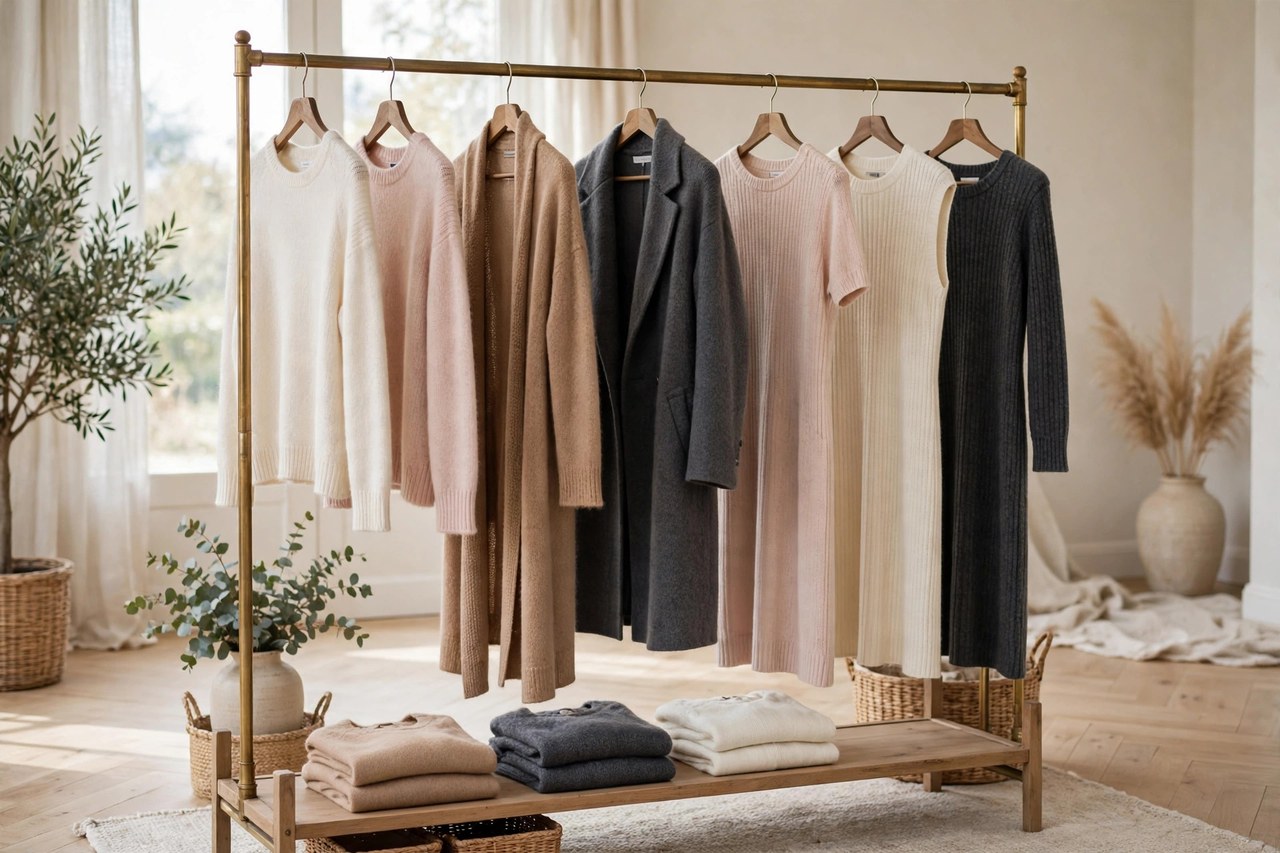
Cashmere apparel means the full family of garments made from the fiber, and it is wider than most shoppers expect. Beyond the famous sweater, cashmere is knitted and woven into cardigans, twinsets, dresses, skirts, pants, coats, capes, robes, and a complete shelf of accessories. As an overview, this guide maps the range so you can see where each category sits: which pieces are everyday workhorses, which are occasion luxuries, and which are the smartest first purchase. The individual guides in this section then take each garment in depth. If you are new to cashmere, read this page as a menu — it will help you spend on the pieces that fit your climate, your wardrobe, and the way you actually dress, instead of simply defaulting to another pullover.
The Full Range of Cashmere Apparel
Knitwear dominates: crew-necks, V-necks, turtlenecks, mock necks, cardigans, and sweater dresses, knitted in gauges from whisper-fine 16-gauge shells to chunky 5-gauge weekend sweaters. Woven cashmere covers coats, overcoats, scarves, shawls, and some tailored pants and skirts, where the fiber is loomed into cloth rather than knitted. Between the two sit the hybrids — knit dresses, knit skirts, and lounge sets that behave like clothing but feel like knitwear. Accessories complete the range: gloves, hats, headbands, and socks, small pieces that use little fiber and deliver a disproportionate amount of comfort. Prices scale with the amount of fiber involved, which is why a scarf or a pair of gloves is the traditional, affordable doorway into cashmere apparel.
Warmth Without Weight
The reason cashmere spreads across so many garment types is its warmth-to-weight ratio. Because the fibers are hollow and finely crimped, they hold insulating air in a layer that can be remarkably thin. A cashmere cardigan under a coat replaces a bulky mid-layer; cashmere knit pants feel like loungewear but insulate like wool trousers; a woven cashmere scarf outperforms a thick acrylic one at a third of the bulk. This matters most in travel and transitional weather, where wardrobes are built in layers. When you compare cashmere apparel against wool equivalents, judge by warmth per gram rather than thickness: the plumper garment is not necessarily the warmer one, and the lighter cashmere piece is often the more versatile across a season.
What Drives the Price
Price in cashmere apparel follows fiber first, construction second, and branding third. Long-staple, tightly spun fiber costs more and performs better; multi-ply knits use more of it; fully-fashioned knitting, where panels are shaped on the machine and linked by hand, costs more than cut-and-sew production from knitted yardage. Woven pieces price by cloth weight and finishing. Expect a sensible ladder: accessories at the foot, sweaters and tops in the broad middle, dresses and multi-ply knits above them, and coats at the summit. Beware the bottom of the market: very cheap cashmere apparel is almost always short-fiber, loosely knitted, or blended down while the label still leads with the word cashmere. The percentage on the label and the density of the knit in your hand will tell you more than the price tag's original figure before discount.
Building a Cashmere Collection
A thoughtful way to build cashmere apparel is to start where the fiber touches you most. For many women that is a mid-weight crew or V-neck sweater in a neutral that matches everything already in the closet, followed by a scarf for the coat they wear daily. From there, add by gap rather than by whim: knit pants if your weekends run cold, a fine-gauge top for layering under blazers, a cardigan if you live in variable office temperatures. Buy fewer, better pieces, because cashmere's cost-per-wear falls beautifully across years of use, while a drawer of thin, pilling bargains satisfies no one. Rotate pieces, rest them between wears, and your small collection will quietly outperform a large one bought carelessly.
Care Essentials for Every Piece
The care rules rhyme across the whole apparel range. Hand-wash knits in cool water with a gentle wool wash, reshape and dry flat, and never hang a wet sweater. Woven coats and shawls prefer professional cleaning, sparingly. De-pill with a cashmere comb where friction builds — under arms, at hip bones, where a seatbelt crosses. Store everything clean, folded, and protected from moths with cedar or lavender and breathable cotton bags; plastic tubs trap moisture and invite mildew. Give each piece a day of rest between wears so fibers spring back. These habits are not fussiness; they are the maintenance schedule of a fiber that, treated this way, regularly outlasts a decade of winters. The garment guides in this section spell out the specifics for each piece.
Related Women's Guides
More to Explore on Apparel Search
- Apparel
- Cashmere
- Cashmere Clothes
- Cashmere Clothing
- Cashmere fiber
- Cashmere Headwear
- Cashmere Moc Turtleneck
- Cashmere Overcoats
- Cashmere Shawls
- Cashmere Shirts
- Cashmere Skirts
- Cashmere Socks
- Cashmere Turtleneck Sweaters
- Cashmere Turtlenecks
- Cashmere Wool Products Labeling
- Women's Apparel
- Women's Apparel Stores
- Women's Apparel Wholesalers
- women's cashmere fashion
- Women's Clothes
Looking for Women's Clothing Stores?
This guide helps you choose women's cashmere apparel by piece and price. To browse where to buy, visit our women's clothing store directory, where you can find retailers that carry them.