Women's Cashmere Shirts Guide
The shirt, softened — fine-gauge knit shirts, cashmere polos, and button-front knits that wear like tailoring and feel like knitwear.
Shop Women's Cashmere Shirts Now
Shop Women's Cashmere Shirts on Amazon Shop Women's Cashmere Shirts on eBayThe Amazon and eBay links on this page are affiliate links. If you make a purchase through them, Apparel Search may earn a commission.
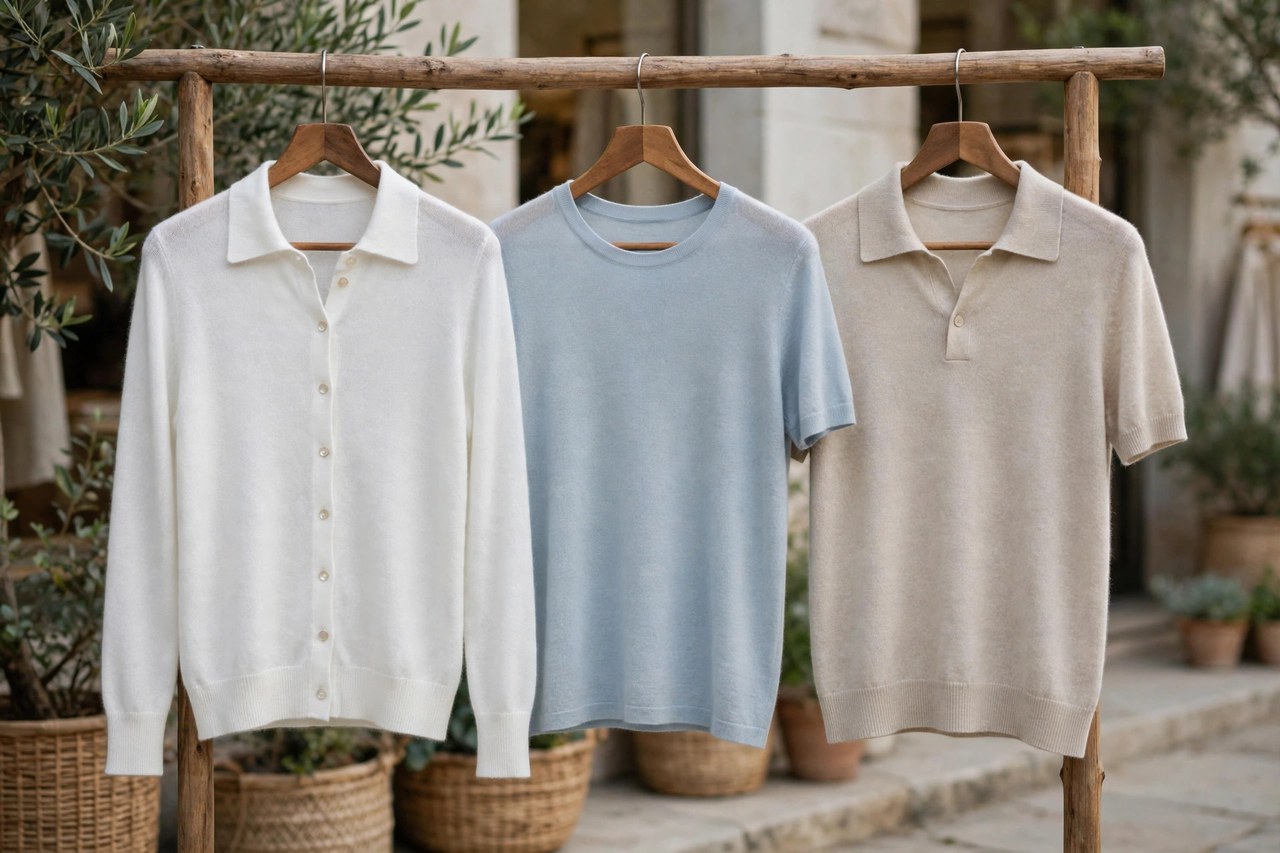
A cashmere shirt is the tailored end of cashmere knitwear: a fine-gauge knit made into shirt forms — collars, plackets, button fronts, polo necks — so that it reads as a shirt in an outfit while feeling like the softest knit you own. It is the piece that smuggles cashmere into settings where a sweater looks too casual: under a suit, at a desk, at any occasion that wants a collar. This guide explains what counts as a cashmere shirt, why fine gauges and smooth finishes define the category, the main styles and how to wear them, fit and layering logic, and the quality checks and care that fine knits demand. If the sweater is cashmere's heart, the shirt is its manners — and for many professional wardrobes it is the most useful cashmere purchase of all.
What Counts as a Cashmere Shirt
The category has three branches. Knit shirts proper are fine-gauge pullovers and button-fronts knitted with collars and cuffs, including the cashmere polo shirt, short or long sleeved, which dresses a knit up with a collar and placket. Knit tees and henleys in cashmere take the T-shirt form into luxury territory and belong here in spirit. The third branch is woven: shirts cut from featherweight cashmere or cashmere-blend shirting cloth, rare and expensive, tailored exactly like fine cotton shirts but with a matte, warm hand. All three share the shirt's defining traits: a structured neckline or collar, a finish smooth enough to sit under a jacket, and a silhouette that tucks cleanly. What separates a cashmere shirt from a thin sweater is intention — the shirt is designed to be seen as shirting, framed by collars and cuffs, and to anchor an outfit's formal level.
Fine Gauges and Smooth Finishes
Cashmere shirts live at the fine end of the gauge scale, typically 14 to 18 gauge, where stitches are small enough that the surface reads almost as fabric. That smoothness is functional: it slides under a blazer without catching, shows no knit texture through a jacket's line, and takes the sharp details — collar points, placket edges, button bands — that shirts require. Fine-gauge knitting is also a quality revealer, because there is nowhere for uneven yarn to hide; tension flaws and thin spots show immediately, which is why good cashmere shirts come from serious knitwear makers. Some add a small silk content for surface sheen and strength, or mercerize-like finishing for a cleaner face. In hand, a quality cashmere shirt feels cool, dense, and silk-smooth rather than fluffy; save fluffy for sweaters. If a shirt's surface looks hairy in the shop, it is telling you the fiber is short, and the pills will arrive early and often.
Styles: Knit Polos, Button-Fronts, and Tees
The long-sleeve cashmere polo is the category's champion: dressier than any sweater by virtue of its collar, easier than a woven shirt by virtue of its knit give, and endlessly compatible with trousers, skirts, and tailoring. Short-sleeve polos and knit tees serve the warm end of the year and layer invisibly under jackets. Button-front knit shirts — essentially cardigans cut with a shirt's posture, or true shirt patterns knitted — wear beautifully open over a shell or closed and tucked. Mock-collar and band-collar knit shirts offer the structure without the formality. Colors follow shirting logic: white, pale blue, and soft neutrals first, then navy and black as the evening versions. Fit them like shirting too — clean through the shoulder, smooth at the buttons, long enough to tuck — and a cashmere shirt will quietly become the hardest-working top in the wardrobe.
Fit and Layering
Fit matters more in a shirt than in a sweater because the style promises neatness. Shoulders should sit true, the collar should lie flat and frame the neck without gaping, and a button-front should close without pulling across the bust — fine knits show strain mercilessly in horizontal wrinkles. Sleeves should reach the wrist bone; knit shirt cuffs, unlike sweater cuffs, look sloppy pushed up the forearm for long. As a layer, the cashmere shirt is superb in both directions: thin enough to sit under a jacket or even under a sleeveless dress as a warm, elegant underpinning, and substantial enough alone with trousers. Under knitwear it replaces the cotton shirt as the skin layer for women who feel the cold. One caution: fine cashmere under a rough tweed or an unlined jacket will abrade at the shoulders, so keep a smoother layer between them in the rotation.
Care for Fine Knits
Fine-gauge knits ask for the gentlest handling in the cashmere wardrobe. Hand-wash in cool water with a brief soak, support the whole garment when lifting it wet, and dry flat on a towel, easing the collar, placket, and cuffs back into line as it dries — fine knits remember how they dried. Button-fronts dry buttoned to hold their shape. Pilling appears first where a seatbelt, bag strap, or desk edge rubs, and a light pass with a fabric shaver or cashmere comb keeps the smooth face that is the style's whole point. Rest shirts a day between wears and store them folded, never hung, since fine knits grow on hangers. With that routine, a good cashmere shirt holds its polished surface for years — and its surface is its value, so the routine is the price of the polish.
Related Women's Guides
Photos

More to Explore on Apparel Search
Looking for Women's Clothing Stores?
This guide helps you choose women's cashmere shirts by style and gauge. To browse where to buy, visit our women's clothing store directory, where you can find retailers that carry them.