Women's Petite Outerwear Guide
Petite outerwear is the umbrella category of coats and jackets re-cut for women 5'4" and under — shorter bodies and sleeves, raised waists and scaled details, so a winter layer fits instead of swallowing.
Shop Women's Petite Outerwear Now
Shop Women's Petite Outerwear on Amazon Shop Women's Petite Outerwear on eBayThe Amazon and eBay links on this page are affiliate links. If you make a purchase through them, Apparel Search may earn a commission.
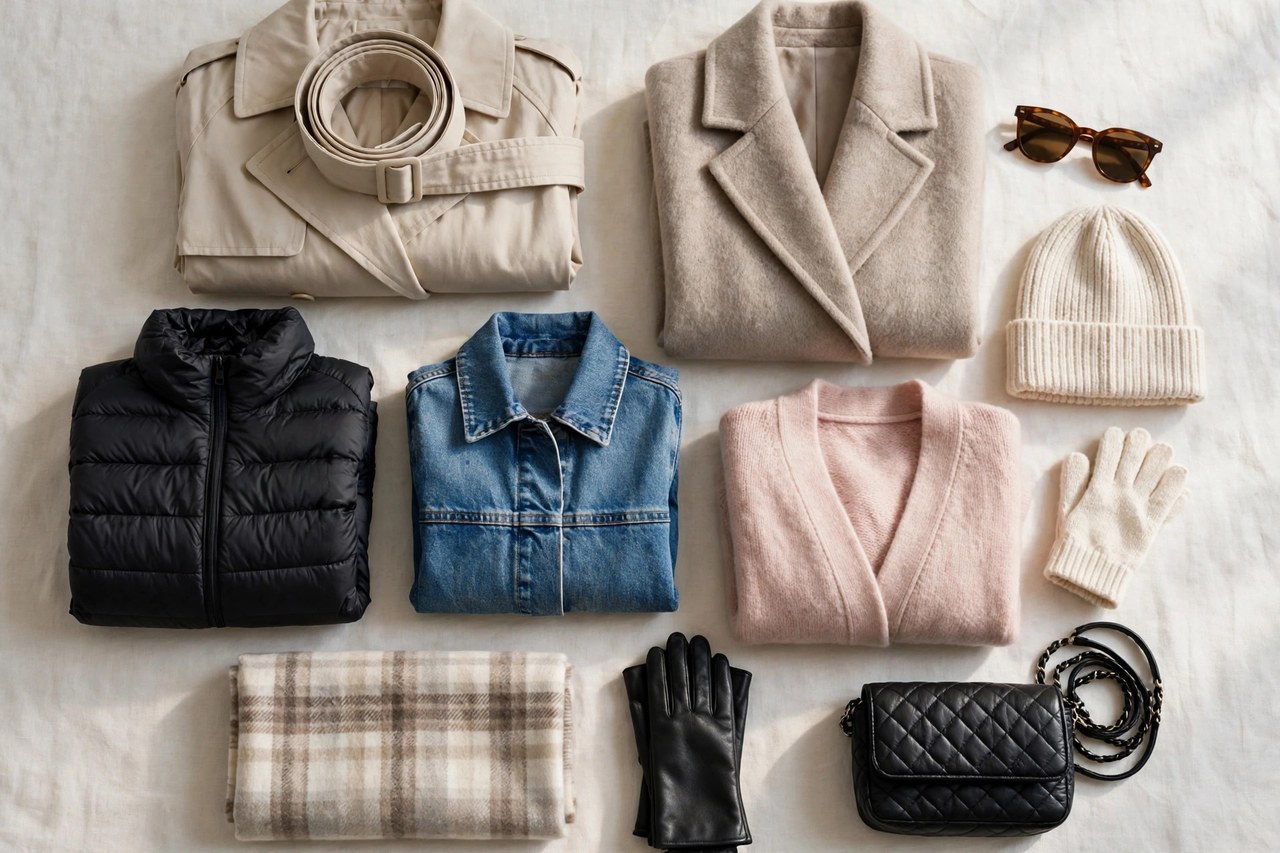
Outerwear is the umbrella term for everything worn as the outermost layer against the weather: wool coats, parkas, puffer jackets, trenches, rain jackets and more. This guide treats that whole category through one lens — petite proportion. For a woman 5'4" and under, a regular coat is not merely long: its waist seam, pockets, buttons, collar and cuffs all sit in the wrong places, and no amount of hemming relocates them. Petite outerwear is patterned from the start for a shorter frame.
The stakes are practical as well as visual. A coat body that ends at the right point keeps hems out of slush and car doors, sleeves cut to the wrist keep hands free instead of buried, and a raised waist or belt line keeps the silhouette defined under insulation. Below, the main outerwear families are surveyed in petite terms, followed by insulation and fabric choices, the fit checks that matter most, and care that keeps a major purchase working for winters to come.
The Outerwear Families in Petite Cuts
Wool and tailored coats are the polished end: single- and double-breasted overcoats, wrap coats and pea coats, covered in their own guides. Parkas and puffers are the warmth end, using down or synthetic fill in quilted channels; petite versions shorten the body so a mid-thigh parka does not become a knee-length one, and scale the quilting narrower so the fill warms without adding visual bulk. Trench coats and rain jackets handle wet weather, with petite belts that buckle at the real waist instead of the hip.
Lightweight jackets — denim, utility, bomber and quilted barn styles — fill the shoulder seasons, and here petite cutting shows in cropped bodies that end at the high hip, ribbed cuffs that stay at the wrist, and collars that stand without overwhelming a shorter neck. The umbrella point is simple: whatever the family, the petite version should look like the same coat designed for you, not the same coat with the bottom cut off.
Insulation and Shell Fabrics
Down fill offers the most warmth for the least weight and compresses for travel, measured by fill power; it loses insulation when wet and costs more. Synthetic fill is heavier for the same warmth but keeps working when damp and suits wet climates and easy care. Wool and wool-blend coatings insulate by fiber structure and a dense weave, breathe well, and carry tailored styles; they need more care and weigh more. Shell fabrics over insulation are usually nylon or polyester, sometimes with a water-resistant finish that sheds light rain and snow.
Petite shoppers should weigh insulation literally: a long, heavy regular coat fatigues a small frame through a day of wear, while a correctly shortened petite parka distributes the same warmth over less fabric. Check that hoods are scaled too — an oversized hood falls over the eyes and turns into a sail in wind. Removable hoods and liners add versatility, letting one petite coat cover fall through spring with layers adjusted underneath.
Fit Checks: Length, Sleeve, Shoulder and Closure
Run four checks in the mirror. Body length: a petite coat's intended hem — hip, mid-thigh or knee — should match its label; if a mid-thigh style reaches your knee, it is regular stock mislabeled or mis-sized. Sleeves should end at the wrist bone with arms down, showing a sliver of sweater cuff, not covering the knuckles. Shoulders should sit at your shoulder point even over a mid-weight layer; dropped seams on a tailored coat signal a regular cut.
Closures tell the same story: buttons and zippers should fasten without pulling when you sit, the belt or waist seam should meet your natural waist, and pockets should be reachable without stooping — pockets placed for a taller torso sit awkwardly low on a petite frame. Finally, test movement: drive, climb a step, carry a bag. Outerwear is worn in motion, over layers, for months; a petite coat that passes those tests will be reached for daily, and one that fails them will hang unworn however warm it is.
Care and Buying Tips
Care follows the shell. Down needs occasional washing with down-specific detergent and thorough low-heat drying with dryer balls to restore loft; synthetic fills wash more simply. Wool coats want brushing, airing and rest between wears, with dry cleaning kept occasional. Re-proof water-resistant finishes when water stops beading on the shell. Store outerwear on wide hangers that support the shoulders, in breathable bags, with cedar or lavender against moths for wool.
Buy outerwear at the intersection of your climate and your calendar: one genuinely warm petite parka or coat, one rain-capable layer and one light jacket cover most lives. Shop petite ranges first for tailored and long styles, where proportion errors are largest, and try coats over your thickest sweater. A correct petite coat is a multi-year anchor purchase — getting the length, sleeve and waist right once beats altering regular coats every season and never quite fixing them.
Related Women's Guides
Looking for Women's Clothing Stores?
This guide helps you choose women's petite outerwear. To browse where to buy, visit our women's clothing store directory, where you can find retailers that carry them.