Women's Petite Leather Jackets Guide
A petite leather jacket shortens the body and sleeves and raises the hardware to a shorter torso — because leather, unlike cloth, cannot be altered cheaply when the proportions are wrong.
Shop Women's Petite Leather Jackets Now
Shop Women's Petite Leather Jackets on Amazon Shop Women's Petite Leather Jackets on eBayThe Amazon and eBay links on this page are affiliate links. If you make a purchase through them, Apparel Search may earn a commission.
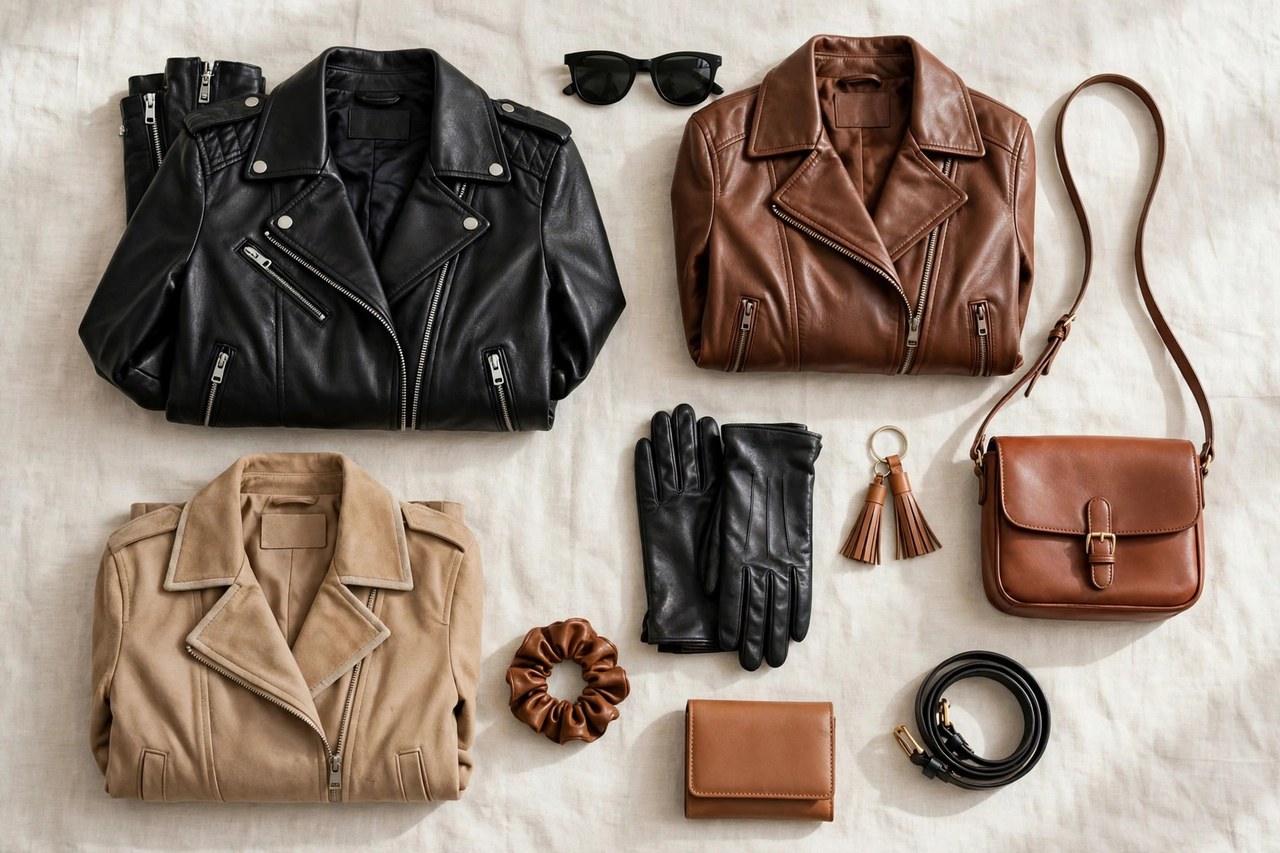
A leather jacket is the least forgiving purchase a petite woman makes, for one practical reason: leather alterations are expensive, limited and sometimes impossible. A cloth jacket's waist can be re-shaped; a leather jacket's zips, snaps and panel seams are punched into a hide that shows every needle hole forever. So the petite version — body, sleeves and hardware placed for a torso of 5'4" and under from the first cutting — is not a luxury preference. It is the only reliable route to a leather jacket that fits.
This guide concentrates on leather specifically: how the classic styles translate to petite cutting, how the leathers differ, where the hardware must land, and how to judge fit in the store, since a leather jacket is a decade-long purchase that should be made once and made correctly. For non-leather styles, see the general petite jackets guide.
Petite Cutting: Body, Sleeve and Hardware Placement
A petite leather jacket is typically one to two inches shorter in the body than its regular counterpart, so a moto ends at the waist or high hip — the line that gives the style its edge — rather than at mid-hip, where it reads as a coat and blurs the waist. Sleeves shorten by about an inch, ending at the wrist with the zippered cuff, where fitted, sitting on the wrist rather than swallowing the hand. Shoulders narrow so the epaulettes, if the style has them, sit on the shoulder instead of sliding down the arm.
Hardware placement is the petite signature in leather. The diagonal zip of a moto should cross a petite torso corner to corner; on a regular jacket worn by a petite woman, it wraps too far and the collar sits wrong. Belted styles must belt at the natural waist to function. Snap-down lapels should be scaled a touch smaller, pockets placed at the hip bone rather than the thigh, and quilting or panel seams should map to the wearer's actual shoulder and elbow. Run your eye over those points in the mirror: they separate a re-graded petite pattern from a regular jacket with a shorter hem more reliably than any label.
Styles: Moto, Blazer, Bomber and Racer
The moto (asymmetric zip) is the defining leather style and the most placement-sensitive; in a true petite cut it is also the most flattering, because its diagonal lines and waist-length body suit a short torso exactly. The leather blazer translates the tailored blazer into leather: button stance at the petite waist, hip-length body, and a softer hand than suiting leather suggests — a genuine office option in black or deep colors. Its fit rules are the blazer's: shoulders and waist right off the rack, sleeves as the only planned alteration.
The leather bomber needs its ribbed hem at the waist or high hip on a petite frame; lower, it erases the waist the style is meant to show. The cafe racer, with its clean center zip and minimal hardware, is the quietest style and the most forgiving in fit, since there is less placement to get wrong — a sensible first leather jacket. Suede jackets follow the same cuts with a softer, more casual register and slightly more delicate care. In all styles, petite versions also tend to scale collar size down, which keeps stand collars and lapels in proportion to a smaller neck and face.
Leathers: Lambskin, Cowhide, Goatskin and Suede
Lambskin is the dress leather: buttery, light and fine-grained, it drapes closest to the body and suits petite frames because it never adds visual bulk. It is also the most delicate. Cowhide is the durable classic of moto jackets — heavier, stiffer at first, breaking in over seasons into a personal fit; on a petite frame, prefer mid-weight cowhide so the jacket does not stand away from the body like armor. Goatskin splits the difference, with a pebbled grain, good strength and natural suppleness, and is an underrated petite choice.
Suede — lamb or goat, brushed to a nap — reads softer and more casual, shows color richly, and asks for weather respect and a protector spray. Whatever the hide, leather quality shows in consistency of grain and color across panels, clean edge finishing, and a lining that lets the jacket slide over knits. On a petite jacket, panel count matters: more, smaller panels usually mean a closer, better-graded fit, because the maker is shaping the hide to a smaller frame rather than cutting one big piece down.
Fit Checks, Breaking In and Care
Fit a leather jacket zipped, over a mid-weight sweater, and move in it: steer an imaginary car, hug, reach a shelf. It should feel snug and structured, never strained at the zip or across the back; leather gives about a quarter size in the wearing-in, mostly across the back and at the elbows, but it does not lengthen, shrink up or move its hardware. Sleeves a fraction long will crease-settle at your wrist; sleeves an inch long will annoy you for ten years. When between sizes, the smaller that still zips comfortably is usually right in lambskin, the reverse in stiff cowhide.
Care is simple and non-negotiable: condition once or twice a year, keep the jacket on a wide padded hanger so the narrow petite shoulders hold their line, store it breathable and out of sunlight, and never seal it in plastic. Rain spots on lambskin and suede should be left to dry naturally, away from heat. Buy the best petite leather jacket your budget reaches, in the style your wardrobe uses — cost per wear over a decade makes it one of the cheapest garments you own, provided the proportions were right on day one.
Related Women's Guides
Looking for Women's Clothing Stores?
This guide helps you choose women's petite leather jackets. To browse where to buy, visit our women's clothing store directory, where you can find retailers that carry them.