Women's Petite Rainwear Guide
Rainwear is the whole waterproof wardrobe — jackets, coats, pants, ponchos and accessories — and in petite sizing every piece is scaled so weather protection fits a 5'4"-and-under frame instead of engulfing it.
Shop Women's Petite Rainwear Now
Shop Women's Petite Rainwear on Amazon Shop Women's Petite Rainwear on eBayThe Amazon and eBay links on this page are affiliate links. If you make a purchase through them, Apparel Search may earn a commission.
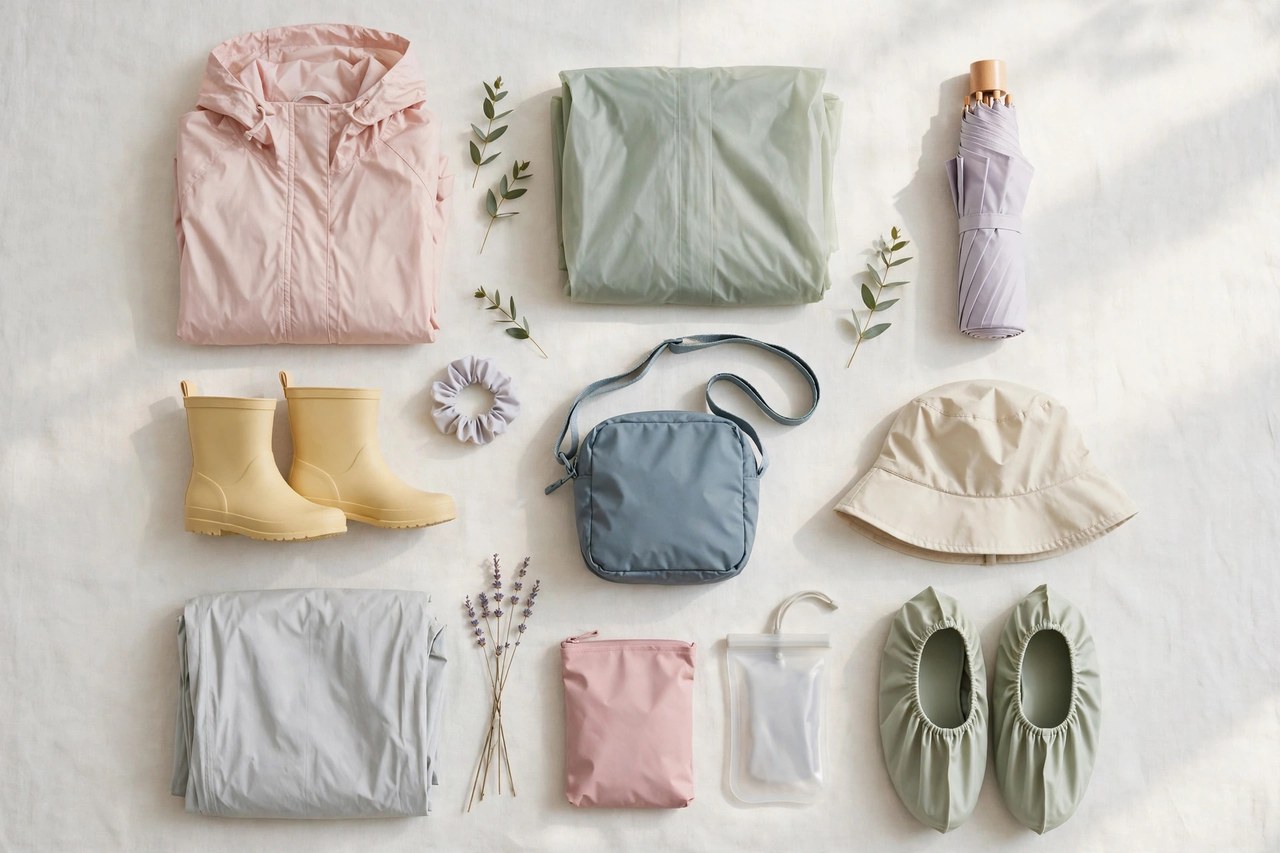
Rainwear is the umbrella category for every garment designed to keep rain off: rain jackets, rain coats, rain pants, ponchos, waterproof hats and boots. Where the rain coat guide covers one garment, this guide covers the system, in the petite versions made for women 5'4" and under. Petite rainwear matters because weather gear is engineered with margins — longer shells, bigger hoods, roomier cuts for layering — and on a small frame those margins compound until the gear itself becomes the obstacle.
Properly scaled petite rainwear keeps the engineering and drops the excess: shells that end at the hip or mid-thigh as designed, rain pants with petite inseams that do not drag in puddles, hoods that frame the face, and ponchos whose hems clear the ground. What follows surveys the category piece by piece, explains waterproof ratings and layering, and gives the fit and care rules that keep a petite rain kit working together.
The Rainwear Wardrobe, Piece by Piece
The rain jacket is the most-used piece: a hip-length waterproof shell with a hood, worn over everything from tees to blazers. Petite rain jackets end at the hip as intended, with sleeves to a shorter wrist and drawcords that cinch at a real waist. The rain coat, covered in its own guide, extends that shell to the knee for maximum leg coverage. Rain pants pull over regular pants for commutes, hikes and sidelines; petite versions with 27- to 29-inch inseams and shorter rises are the difference between protection and a sodden, dragging hem.
The rain poncho is the simplest rainwear: a hooded cape that covers the wearer and a bag at once, and in petite lengths it ends safely above the ground and clear of bicycle wheels and escalators. Waterproof hats and rain boots finish the system — boots in shorter shaft heights suit petite calves, and a brimmed rain hat protects glasses and hair when a hood is too much. Most women need two or three pieces, not the whole catalog: a jacket, plus pants or a coat depending on how they travel.
Waterproof Ratings and Breathability
Serious rainwear is rated by waterproofness, measured in millimeters of water pressure the fabric withstands before leaking: around 5,000 mm handles light rain, 10,000 mm steady rain, and 20,000 mm and above driving storms. Breathability ratings describe how much perspiration vapor escapes; higher is more comfortable in motion. Everyday fashion rainwear often publishes neither rating and relies on a water-repellent finish, which is honest equipment for showers and short exposures but not for hours outdoors.
Construction multiplies or wastes those numbers. Taped seams, waterproof zippers or storm flaps, and hoods that seal at the face decide whether a rated shell actually keeps you dry. For petite shoppers, proportion interacts with performance: an oversized hood channels water onto the neck, an overlong sleeve wicks rain up the arm, and rain pants that pool at the ankle pump puddle water with every step. Correct petite sizing is therefore not cosmetic in this category — it is part of how the waterproofing works.
Layering and Petite Fit as a System
Rainwear works as the outer shell of a layering system: a moisture-moving base layer, an insulating mid-layer when it is cold, and the waterproof shell over both. Petite rain shells are cut with layering room graded to a smaller frame, so a fleece underneath fits without the shell ballooning. Check the system together in the fitting room: shell over your thickest sweater, hood up over your usual hairstyle, arms raised, and a seated test for coats and pants.
Fit each piece by its own petite logic. Jackets: hem at the hip, cuffs at the wrist, hood with clear side vision. Rain pants: a rise that sits at the waist over your regular pants, an inseam that clears your rain boots without dragging, and side zips or snaps that let you pull them on over shoes. Ponchos: a hem safely off the ground and snaps or a belt to control billowing on a small frame. When one brand's petite rainwear fits you, its system pieces are designed to work together, which simplifies replacement shopping later.
Care and Buying Tips
Keep rainwear performing by keeping it clean: dirt and body oils degrade water-repellent finishes and clog breathable membranes. Wash shells with technical detergent, skip fabric softener, and refresh the repellent finish when water stops beading; low tumble heat reactivates many finishes where labels allow. Dry every piece fully before storing, store uncompressed and out of sunlight, and never leave a wet poncho or rain pant wadded in a bag, which is how coatings delaminate and mildew starts.
Build the kit around your wettest regular activity: a commuting jacket and rain pants for transit riders, a long coat for dog walkers and sideline watchers, a packable poncho for travel. Buy petite sizes in the pieces where length is structural — pants, coats, ponchos — and save money on hats and boots, which scale more forgivingly. Test hoods and cuffs in the store with your head turning and your arms up. Rain gear is bought for the worst day of the season, and on that day a petite kit that fits is the difference between weather endured and weather ignored.
Related Women's Guides
Looking for Women's Clothing Stores?
This guide helps you choose women's petite rainwear. To browse where to buy, visit our women's clothing store directory, where you can find retailers that carry them.