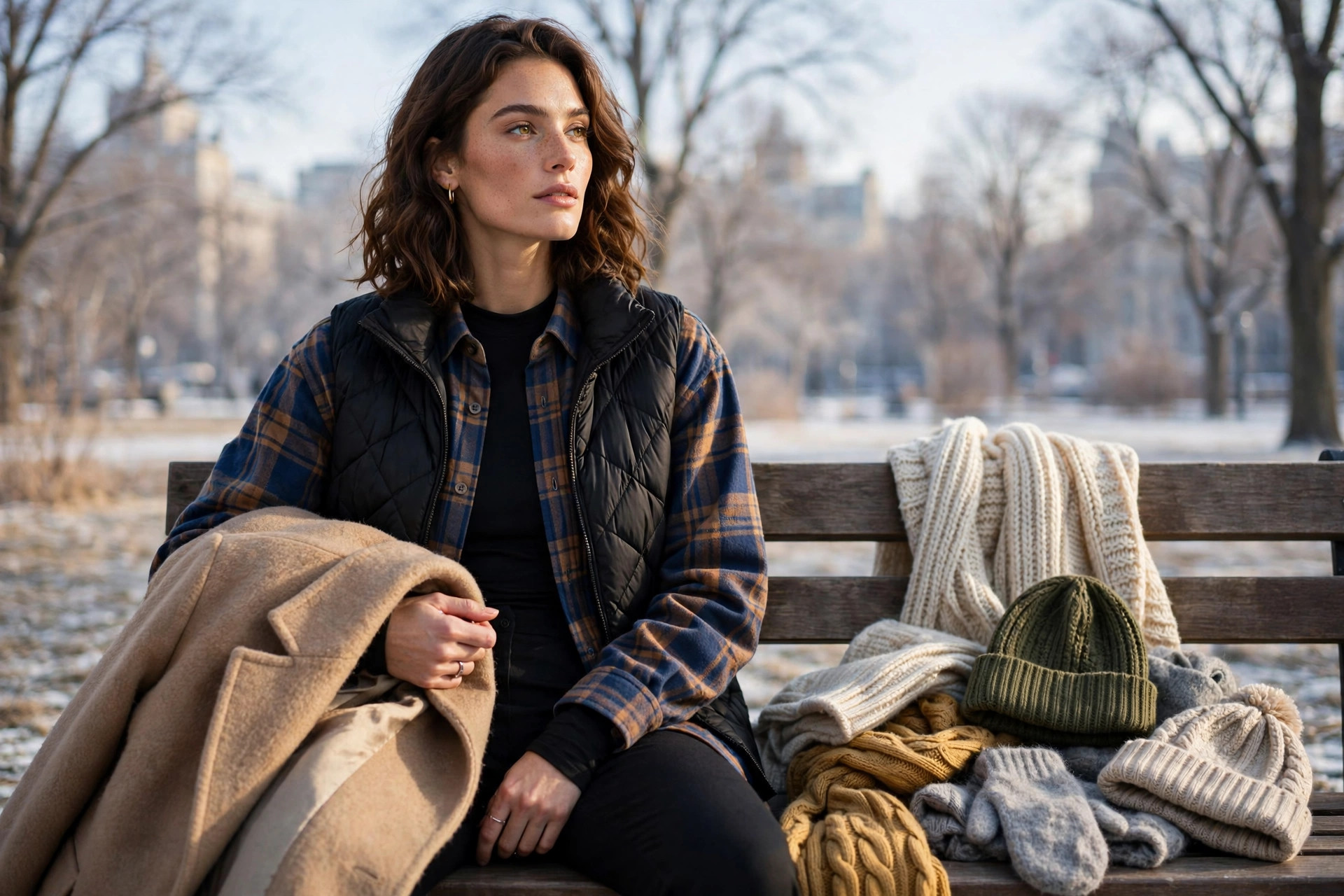
Layering is dressing in several garments that work as a system: a close base layer against the skin, an insulating mid layer, and a protective or finishing outer layer. Outdoors, the system manages moisture and temperature — the technical side is covered in the base layer guide and its companion pieces on mid layers and shells. In everyday dressing the same three-part structure is a styling tool: each visible layer adds colour, texture and shape, and layers can be added or removed as the day changes instead of betting the whole outfit on one garment.
The Three-Layer System, Translated for the Wardrobe
Every layered outfit, technical or fashionable, has the same anatomy. The base is thin, close and smooth — a fitted tee, a fine turtleneck, a camisole, a thermal top — and it sets the neckline and sleeve the other layers frame. The mid layer carries the warmth and most of the visible interest: a cardigan, a sweater, an overshirt, a hoodie, a quilted vest. The outer layer finishes the outline — a coat, blazer, trench or jacket whose hem and shoulders define the silhouette. The system fails when two layers compete for the same job: two bulky knits fight, two long loose pieces lose the waist. Give each layer one role and the outfit reads as composed rather than piled on. For fine knits as the base of the stack, how to style a turtleneck is the natural starting point.
- Thin to thick: each layer out should be equal or heavier in weight.
- Short over long, or long over short: hems should step, not collide.
- One volume piece: only one layer should be oversized.
- Show each layer: a cuff, collar or hem of every layer should be visible somewhere.
Proportion Rules That Stop Layers Looking Bulky
Bulk comes from trapped air in the wrong places, not from the number of layers. Keep the base fitted so the mid layer drapes instead of floating, and choose mid layers in flat knits or smooth quilting under coats with tailored shoulders. Step the hemlines: a cropped jacket over a longer knit, or a long coat over everything with the inner hems finishing well above it — layers that end at the same point stack into a single thick band. Collars and cuffs are the display points: a turtleneck collar above a crew knit, a shirt cuff below a sweater sleeve, a hood over a coat collar. How to style a cardigan covers the open-front mid layer in depth, and how to style a hoodie covers the casual one. Colour works in layers too — a tonal stack of one family reads slim and deliberate, while contrast is best spent on one layer only, usually the mid.
Layering by Season
Winter is the full system: thermal or fine-knit base, sweater or fleece mid, long coat outer, with scarves and hats as removable extras — the outdoor version of this stack, with fabric weights and shell choices, is the base layer series linked from this page. Autumn and spring are layering's home seasons: a tee or shirt base, a cardigan, overshirt or hoodie mid, and a trench, denim jacket or blazer as the outer, adjusted hourly. Summer layering is about air and coverage rather than warmth: an open loose shirt or kimono layer over a tank and shorts, linen over cotton, nothing synthetic against the skin. In every season the test is the same — remove the outer layer and the outfit underneath should still be complete. If taking your coat off ruins the look, the mid layer was decoration, not clothing.
Common Questions
- How many layers should an outfit have?
- Three is the working maximum for most outfits — base, mid and outer — plus accessories such as a scarf. Beyond three, layers stop being visible individually and start reading as bulk, unless the extra layer is very fine, like a thermal under a shirt.
- How do you layer clothes without looking bulky?
- Keep the base layer fitted, let only one layer be oversized, step the hemlines so they do not stack at one point, and show a sliver of each layer at the cuffs, collar or hem. Flat knits and smooth fabrics layer slimmer than chunky or brushed ones.
- What order do layers go in?
- Thinnest and closest first, heavier and looser as you move out: fitted base, insulating mid, structured or weatherproof outer. A thick layer trapped under a thin one wrinkles, bunches and loses its insulating air.
- Can you layer in summer?
- Yes — summer layering uses one light open layer for coverage, sun protection or air-conditioning: an open linen shirt, a loose button-up or a light kimono over a tank or tee. The fabrics breathe and the layer comes off easily, which is the point.
How to Style Series
This guide is part of the Apparel Search How to Style series. Browse the full series below for outfit formulas covering denim, knitwear, tailoring, layers and shoes.
- How to Style Hub — every guide in this series on one page
- How to Style Wide-Leg Jeans
- How to Style Barrel Jeans
- How to Style Jorts
- How to Style a Denim Dress
- How to Style a Denim Shirt
- How to Style an Oversized T-Shirt
- How to Style a Satin Skirt
- How to Style Loafers
- How to Style Ballet Flats
- How to Style a Blazer
- How to Style a Cardigan
- How to Style a Slip Dress
- How to Style Boots
- How to Style a Loose Button-Up Shirt
- How to Style Layers
- How to Style Leggings
- How to Style a Leather Jacket
- How to Style a Trench Coat
- How to Style a Hoodie
- How to Style a Turtleneck
- How to Style Sneakers
- How to Style Knee-High Boots
Apparel Search: explore the women's clothes guide for more garment guides, outfit ideas and clothing directories. For the business side of fashion, see the How To Guides for the Fashion Industry.