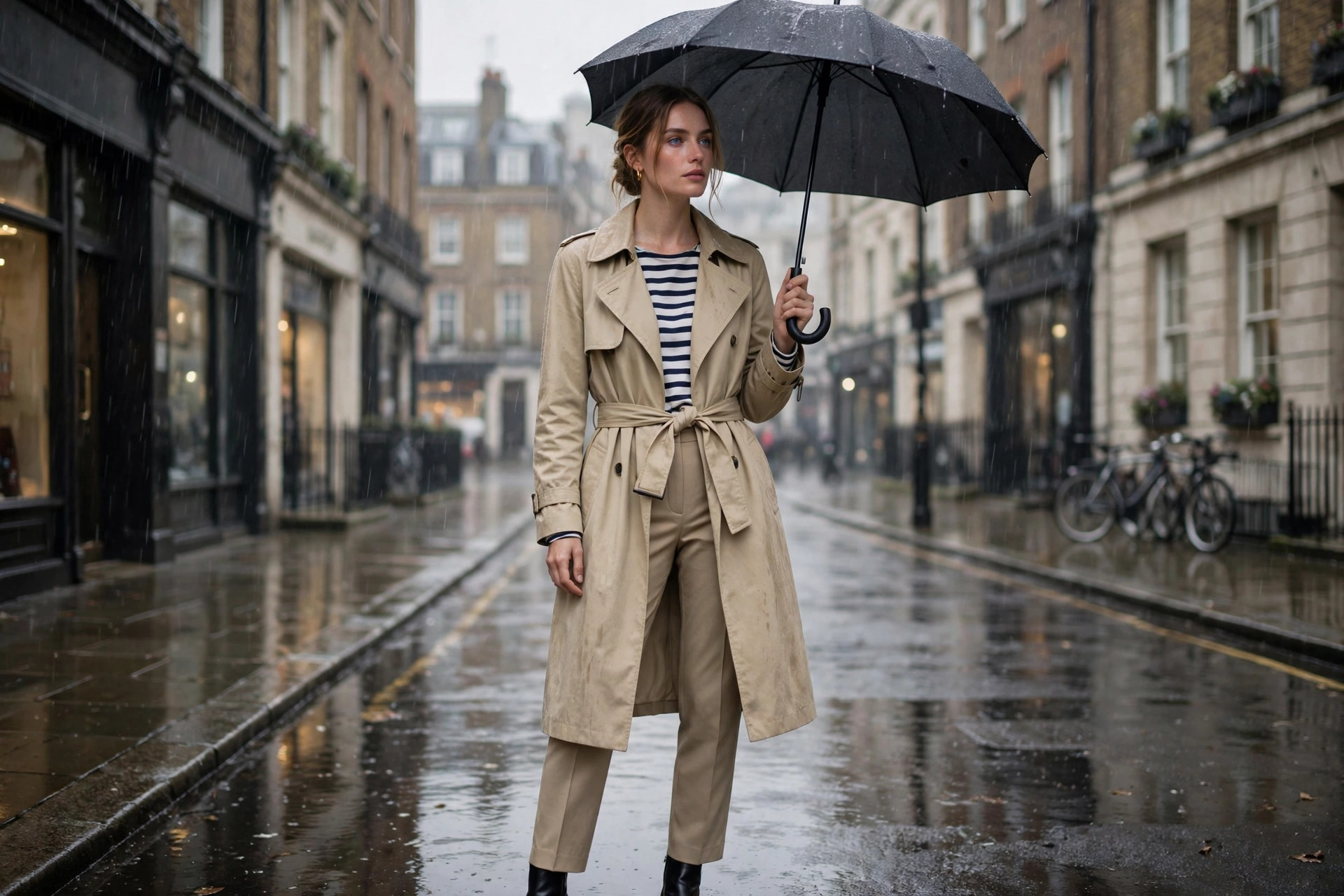
A trench coat is a belted raincoat, traditionally in cotton gabardine, with a double-breasted front, storm flap, epaulettes and a hem that falls at or below the knee. It is the most neutral outer layer in the wardrobe — formal enough for tailoring, relaxed enough for trainers — and most of its styling is in how it is worn: belted and buttoned for structure, open and loose for movement. Fabrics, lengths and the classic specification are covered in the women's trench coat guide and the men's trench coat guide.
Belted, Open or Knotted: The Three Ways to Wear It
Belted properly — buckled at the waist, not tied — the trench is a tailored coat: it defines the waist over dresses and wide trousers and reads as the outfit's structure. Knotted behind — belt tied at the back, coat worn open — gives the tailored front a relaxed drape and is the default for casual outfits with denim. Fully open and unbelted, the trench becomes a long layer whose job is line and movement; it needs a complete, tidy outfit underneath because everything shows. Length decides the register: knee-length is the classic and suits most heights, mid-calf adds drama and needs a longer line underneath, and cropped trench jackets behave like blazers. The trench and the blazer solve similar problems at different lengths, which is why the formulas in how to style a blazer translate directly.
Outfits for Women
With dresses: belted over a midi dress with the coat hem close to the dress hem, the trench is the standard spring and autumn evening layer; open over a slip or knit dress it frames rather than covers. With denim: the knotted-back trench over straight-leg jeans, a striped top and loafers or ballet flats is the outfit the coat is famous for. With tailoring: a trench over a suit or wide-leg trousers lengthens the whole line — keep the trousers full length so the silhouette runs unbroken to the shoe, and finish with boots in wet weather or loafers in dry. Colour: classic stone and beige work over everything except matching beige tailoring, where navy, black or olive trenches give the contrast instead. In summer, lightweight unlined trenches in cotton or fluid fabrics layer over dresses in the evening without warmth.
Outfits for Men and Seasonal Notes
For men, the trench sits over both suits and casual wear, which is its original purpose. Belted over a suit it is the business raincoat; worn open with the belt knotted behind, over knitwear and chinos or dark denim, it covers most smart-casual ground. The fit rules are strict because the coat is long: shoulders must sit true or the whole coat slumps, sleeves should show a sliver of shirt cuff, and the hem should fall at or just below the knee — shorter reads as a car coat, longer needs height to carry. Seasonally, the trench is a spring and autumn garment first: too light alone for deep winter, where it layers over knitwear as a wind and rain shell on milder days, and too warm for high summer except in unlined evening versions. Store it buttoned on a sturdy hanger so the shoulders and belt keep their shape.
Common Questions
- Should a trench coat be worn belted or open?
- Both. Buckle the belt for a tailored, defined shape over dresses and tailoring; knot the belt behind and wear the coat open for casual outfits. Tying the belt in a bow at the front is the one option to skip — buckled or knotted always looks more deliberate.
- What shoes go with a trench coat?
- Loafers, ballet flats, ankle boots and clean trainers all work, chosen by the outfit underneath rather than the coat. The trench is neutral enough to sit above any of them; heeled boots dress it up, trainers dress it down.
- What length trench coat should I choose?
- Knee-length is the most versatile and suits most heights. Mid-calf lengths add presence and pair with longer hems and trousers. Petite frames usually do better at or above the knee, where the coat does not overwhelm the line.
- Can a trench coat be worn in winter?
- On milder winter days, yes — layered over knitwear it blocks wind and rain well. In deep cold it is not warm enough alone, because classic gabardine has no insulation; a padded or wool coat takes over, with the trench returning in spring.
How to Style Series
This guide is part of the Apparel Search How to Style series. Browse the full series below for outfit formulas covering denim, knitwear, tailoring, layers and shoes.
- How to Style Hub — every guide in this series on one page
- How to Style Wide-Leg Jeans
- How to Style Barrel Jeans
- How to Style Jorts
- How to Style a Denim Dress
- How to Style a Denim Shirt
- How to Style an Oversized T-Shirt
- How to Style a Satin Skirt
- How to Style Loafers
- How to Style Ballet Flats
- How to Style a Blazer
- How to Style a Cardigan
- How to Style a Slip Dress
- How to Style Boots
- How to Style a Loose Button-Up Shirt
- How to Style Layers
- How to Style Leggings
- How to Style a Leather Jacket
- How to Style a Trench Coat
- How to Style a Hoodie
- How to Style a Turtleneck
- How to Style Sneakers
- How to Style Knee-High Boots
Apparel Search: explore the women's clothes guide for more garment guides, outfit ideas and clothing directories. For the business side of fashion, see the How To Guides for the Fashion Industry.