Apparel Search Consumer Guides
Teacher Outfit Formulas, Season by Season
Repeatable formulas for the fall term, the winter term and the spring term, the small rotating wardrobe underneath them, and the step-up for conferences and parent nights.
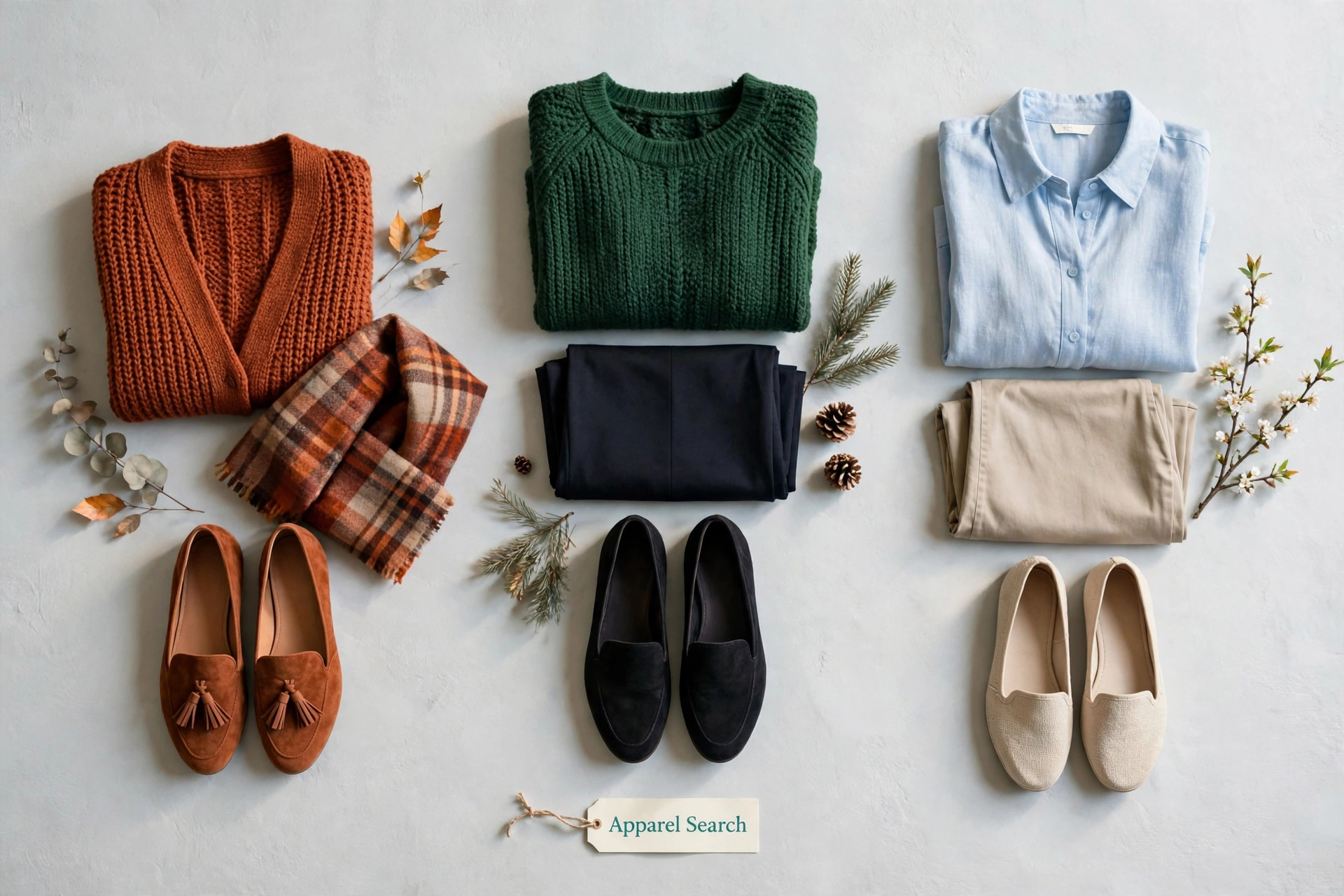
The hub of this guide, our teacher outfits guide, works out what classroom dressing demands. This page turns those demands into formulas: fixed combinations that can be assembled in the dark, in a hurry, for a full term at a time. The school year divides into three dressing seasons that ignore the retail calendar — it starts in August heat and ends in June heat, with winter in the middle — so the formulas are organised by term. Underneath them sits one small rotating wardrobe, planned the way our capsule wardrobe guide plans any small wardrobe: few pieces, one palette, everything combining with everything.
The Rotating Wardrobe Underneath
Stock this first; the formulas are just its combinations. Everything washable, everything in one palette — navy, charcoal, black and one or two colours you like — so that any top meets any bottom at 6 a.m.
- Bottoms (4–5): washable trousers in two colours, a second pair in the first colour (the hardest-working item earns a duplicate), a midi skirt, and chinos or a second skirt for spring.
- Tops (6–8): knit tops and blouses in the palette, short-sleeved and long-sleeved, at least two with real pockets or a chest pocket for the pen that works.
- Layers (3): two cardigans and one unstructured blazer — one cardigan lives at school permanently.
- Dresses (1–2, optional): only if they pass the floor-sitting test described in the hub guide.
- Shoes (2–3 pairs): cushioned flats or loafers in two colours, plus ankle boots for the winter term — rotated daily, never worn five days straight.
Fall Term Formulas (August to October)
The fall term opens in the hottest classrooms of the year and ends in sweater weather; the formulas lean light and layer upward.
Trousers + Breathable Top + Cardigan Carried
The September default. Short-sleeve knit or blouse, lighter-weight trousers, flats — and the cardigan over your arm or on the chair, because the room that is warm at 8 a.m. may be air-conditioned by 10. Works from the first day to the first frost with the sleeves changing length.
Midi Skirt + Knit Top + Flats
The dressed-up weekday formula. A skirt at midi length keeps floor work and playground duty dignified, a knit top survives the reaching, and the combination reads a notch more formal than trousers — useful on days with observations or assemblies.
The One-Piece Morning: Dress + Cardigan
For the mornings with nothing left to decide: one dress that passed the floor test, one cardigan, one pair of flats. Keep it for the days the week runs short; its simplicity is the point.
Winter Term Formulas (November to March)
Sweater + Trousers + Ankle Boots
The winter spine: a fine-gauge sweater over washable trousers, boots that handle a wet playground and corridor duty. Add the blazer on presentation days; the formula takes it without changing anything else.
Layered Knit + Skirt + Tights
A long-sleeve knit under a cardigan, midi skirt, opaque tights, boots. The classroom microclimate rules this term — overheated rooms, cold corridors — and the layered version of the formula is the one that adjusts: cardigan off at the desk, on for the hallway. Our dressing for the climate guide calls this the layering habit; school is where it earns its keep indoors.
Spring Term Formulas (April to June)
Chinos + Short-Sleeve Blouse + Loafers
The spring default as the building warms up: lighter bottoms, breathable tops, the cardigan back to living on the chair.
Skirt + Knit Top + Cardigan
The fall formula returning in lighter fabrics — and the end-of-year events formula besides: concerts, awards and moving-up ceremonies all sit comfortably inside it with the better shoes swapped in.
Wash Night Is Part of the System
A rotation is a promise the laundry has to keep. The workable rhythm for most teachers is one midweek load of tops and a full weekend wash, with the duplicate trousers covering the gap. Pieces are chosen for it: everything in the stock list goes through the home wash and comes out ready, which is why the hub guide bans dry-clean-only garments from the school wardrobe. Our laundry guide covers the sorting and settings, and how to sort and wash clothes is the quick version for Sunday night.
Stepping Up: Conferences and Parent Nights
Evening events do not need a second wardrobe; they need the same one finished harder. Put the blazer over the day’s top or change into the reserved blouse, swap the everyday flats for the better pair, add the watch or necklace that lives in the desk drawer for exactly this, and check the whole outfit sitting down — conferences are close-range, seated conversations, and the business casual standard steps up by finish, not by costume. The outfit a parent meets should look like the teacher, on her best-organised day.
Common Questions
How many outfits should a teacher own for work?
Enough for a two-week rotation without repeating a full outfit: roughly twelve to fifteen core pieces — three or four bottoms, six to eight tops, two or three layers, and two or three pairs of shoes. Because the pieces share one palette, the combinations run well past the piece count, and no student sees the same outfit twice in a fortnight.
What is the easiest teacher outfit formula?
Washable trousers, a knit top and a cardigan. It fits inside nearly every staff dress code, survives bending, reaching and floor work, layers up or down with the classroom temperature, and every part of it goes through the home wash. It is the formula the rotation returns to whenever a morning runs short.
How do teachers dress for hot classrooms in September?
In the breathable end of the same wardrobe: short-sleeve knits and blouses, lighter trousers or midi skirts, flats instead of boots, and the cardigan carried rather than worn until the room proves it is cold. September classrooms often run hotter than the street outside, so the layer waits on the back of the chair.
What do teachers wear to parent-teacher conferences?
The same rotation, stepped up one notch: the blazer over the usual top, the better shoes, a watch or necklace added, everything checked sitting down — conferences are seated conversations at close range. The wardrobe does not change; the finish does.
Related Guides
Teacher Outfits
The hub guide: the classroom’s demands — postures, dress codes, fabrics, pockets, shoes and the layer — worked through piece by piece.