Modest Swimwear Guide
Modest swimwear covers more — with long-sleeve swim tops, tunics, swim leggings and skirted bottoms made from proper swim fabric — so you can swim, paddle and sit on the beach comfortably. This guide is strictly about the garments: what they are, what they are made of, and how to choose them.
Shop Modest Swimwear Now
Shop Modest Swimwear on Amazon Shop Modest Swimwear on eBayThe Amazon and eBay links on this page are affiliate links. If you make a purchase through them, Apparel Search may earn a commission.
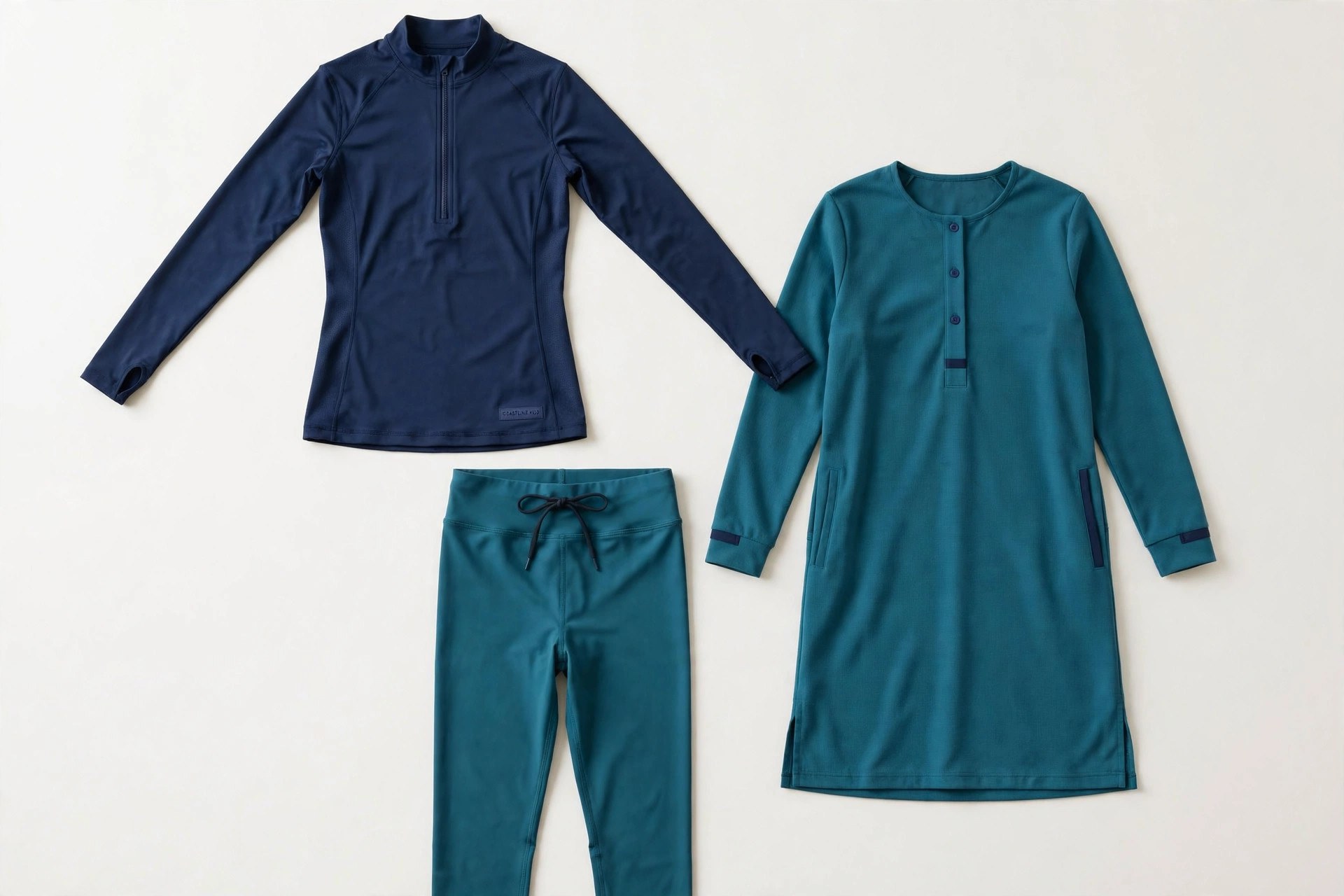
The Main Full-Coverage Swim Pieces
A long-sleeve swim top, often sold as a rash guard, covers the arms and torso and pairs with whatever bottom you prefer. A swim tunic extends that top to mid-thigh or knee length and is worn over swim leggings or swim shorts. Swim leggings, made from the same stretch fabric as swimsuits, come in cropped and full lengths and stay in place while swimming far better than ordinary leggings, which are not made for water, become heavy when wet and can turn sheer.
Skirted swim bottoms and swim dresses add a skirt panel over a fitted brief or short. Two-piece sets that combine a tunic top with leggings are the most flexible option, because each piece can be sized separately and the top can be worn with different bottoms. One-piece full-coverage suits also exist, usually with sleeves and a higher leg or a legging-style lower half. Whatever the combination, check that every piece is sold as swimwear: the fabric, not the silhouette alone, is what makes a garment work in the water.
Fabrics, Fit and Staying in Place
Look for nylon or polyester blended with elastane, labelled for swim use and, ideally, chlorine resistant if you swim in pools often. Polyester generally holds colour and resists chlorine longer; nylon feels softer and dries fast. Purpose-made swim fabric is opaque when wet — test pale colours by stretching the fabric, because thin swim knit can lighten when stretched even if it looks solid on the hanger. Avoid cotton and ordinary activewear, which absorb water, sag, and take hours to dry.
Fit should be close but not restrictive: full-coverage pieces are cut to move with the water rather than balloon in it, and tunics often have an internal fitted layer or a drawstring or snap that connects the top to the bottom so it does not float up while swimming. Zips should be plastic or coated metal rated for swim use, with a guard at the chin on high-neck styles. If you swim lengths rather than paddle, prioritise secure fastenings and a close fit; if your time is mostly on the beach or by the pool, a looser tunic over leggings is comfortable and dries in the sun between swims.
Sun Protection and Care
Coverage and sun protection go together. A long-sleeve swim top covers skin that sunscreen washes off first — shoulders, back and the backs of the arms — and many swim fabrics carry a UPF rating, with UPF 50 the common top rating, meaning the fabric blocks about 98 percent of UV radiation. A UPF rating only applies where the fabric actually covers, and it weakens as fabric stretches thin or wears out, so sunscreen is still needed on exposed skin and on skin under old, faded swimwear.
Rinse every piece in clean water after swimming to remove chlorine and salt, which break down elastane. Wash gently by hand or on a delicate cycle, dry in shade rather than direct sun or a hot dryer, and avoid sitting on rough pool edges in delicate knits, which pill and snag. Rotating two sets extends the life of both, because elastane recovers its shape better with a full day of rest between wears. With that basic care, a good full-coverage set should last several seasons of regular swimming.
Common Questions
What is the difference between modest swimwear and regular clothes worn for swimming?
Purpose-made swimwear uses nylon or polyester with elastane that stays opaque when wet, resists chlorine and salt, dries quickly and stays in place in the water. Ordinary leggings and t-shirts absorb water, become heavy and saggy, can turn sheer, and take hours to dry.
Does full-coverage swimwear protect against the sun?
It protects the skin it covers, and many swim fabrics are rated UPF 50, blocking about 98 percent of UV radiation. The rating weakens as fabric stretches or wears thin, and exposed skin still needs sunscreen, so treat covered swimwear as strong sun protection rather than a complete substitute for it.
How should modest swimwear fit?
Close enough to stay in place and not balloon in the water, without restricting your stroke or breathing. Tunics that connect to the bottom with a snap, loop or drawstring, and leggings with a secure waist drawstring, are the details that keep a set comfortable while actually swimming.
All Guides in Modest Fashion
Every page in this section:
Continue exploring modest fashion on Apparel Search.
Next: Modest Wedding Guest Attire — dress codes in coverage-friendly silhouettes