Women's Cheongsam Guide
Also called the qipao: a close, elegant silhouette defined by its mandarin collar, frog closures and side slit.
Shop Cheongsam & Qipao Dresses Now
Shop on Amazon Shop on eBayThe Amazon and eBay links on this page are affiliate links. If you make a purchase through them, Apparel Search may earn a commission.
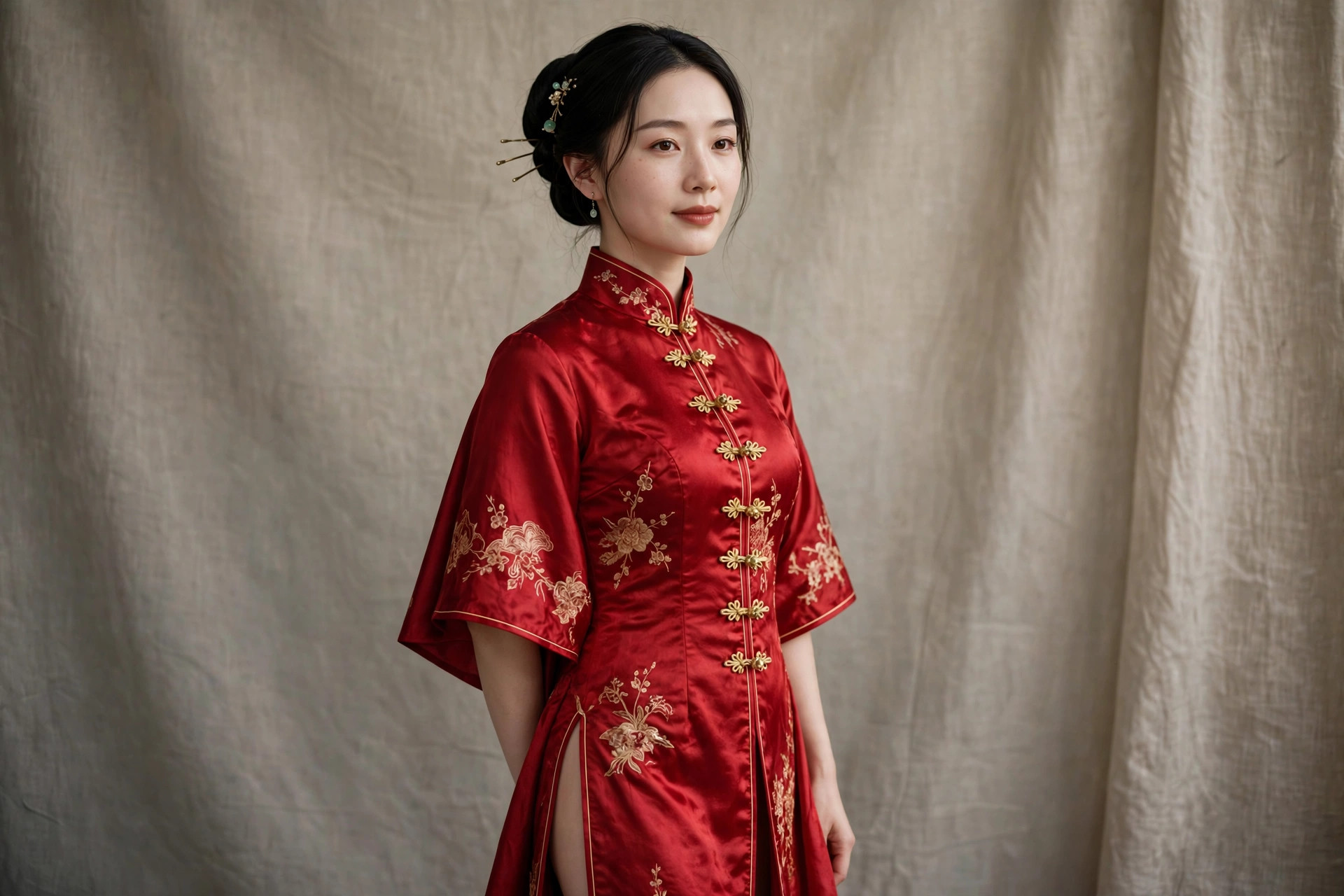
The cheongsam — known in Mandarin as the qipao — is one of the most recognisable silhouettes in Chinese dress: a close-fitting, one-piece dress with a standing mandarin collar, an asymmetric front fastened with frog closures, and high side slits that make its long line wearable. Its modern form took shape in Shanghai in the 1920s, when an originally loose, straight garment was tailored closer to the body, blending Chinese construction with Western dressmaking. Today the cheongsam is worn for weddings, Lunar New Year, formal dinners and celebrations across China and the Chinese diaspora.
Defining Details: Collar, Frogs and Slit
Three details identify a cheongsam at a glance. The mandarin collar is a short standing band, traditionally a few centimetres high, that frames the neck and fastens at the front. The frog closures — knotted cord buttons passed through loops — secure the diagonal front opening and double as decoration, often in contrasting or self fabric. And the side slit, cut into one or both sides of the skirt, allows movement in an otherwise close dress; its height varies from modest to dramatic with the occasion and the wearer's taste. Sleeves range from sleeveless to full length, shaped to the season and formality.
Fabrics and Patterns
Silk is the classic cheongsam fabric, especially silk brocade woven with traditional motifs — peonies, plum blossom, dragons and phoenixes for celebrations, bamboo and orchids for quieter elegance. Velvet cheongsam suit winter formality, lace and embroidered styles are bridal favourites, and cotton or linen versions serve everyday wear. Colour speaks clearly in Chinese dress: red signifies luck and joy and dominates weddings and New Year, gold adds prosperity, and deep jewel tones — jade, royal blue, plum — carry formal evening wear. A bride may change between several cheongsam during her wedding day, each richer than the last.
Fit: The Case for Made to Measure
More than most dresses, a cheongsam rewards precise fit. The collar should stand close without pressing, the diagonal closure should lie flat with no gaping between frogs, and the body should skim rather than strain — the traditional ideal is smooth and poised, never tight for its own sake. This is why cheongsam are so often made to measure by tailors who draft to the individual figure, a craft tradition still strong in Shanghai, Hong Kong, Taipei and diaspora communities. Ready-made cheongsam can work well, but try before an event: sit, walk and climb a step to test the slit and hem behaviour.
Wearing and Care
Style a cheongsam simply: the dress is the ornament. Low heels or elegant flats, hair worn up or smoothly back to honour the collar line, and one piece of jewellery — jade is the classic partner — complete the look without competition. For Lunar New Year, weddings and formal photographs, a cheongsam communicates celebration and respect for the occasion. Care follows the fabric: silk brocade and embroidered pieces belong with a specialist cleaner and should be stored hanging in a breathable cover, away from light; cotton everyday styles can usually be gently hand-washed as the label directs.
Choosing a Cheongsam: Style by Occasion
Match the cheongsam to the occasion first. For weddings and Lunar New Year, silk or brocade in red, gold or rich jewel tones with traditional motifs is the celebratory standard, and a bride's family often coordinates colours across the day's outfit changes. For formal dinners and evening events, velvet, lace or dark silk with restrained embroidery carries the most elegance. Daytime and cultural events suit cotton, linen or lighter silk in softer colours with a lower slit and longer or three-quarter sleeves. Consider the collar honestly: the classic high mandarin collar is the most formal and the most demanding, while lower collars suit longer necks and warmer weather. Sleeve length changes the dress's character as much as its fabric — sleeveless reads modern and evening, capped sleeves soften, and full-length sleeves are the traditional formal choice. Finally, plan hair and shoes with the dress, not after it: an updo honours the collar, and a moderate heel balances the long line better than a very high one, especially through a long celebration.
Common Questions
Are cheongsam and qipao the same garment?
Yes — two names for the same dress. Qipao is the Mandarin name; cheongsam comes from the Cantonese for 'long shirt' and is the name most common in English. Regional styles differ in detail, but the collar, frog closures and slit define both.
Why does a cheongsam have a side slit?
For movement. The cheongsam's close, long skirt would restrict walking without it. Slit height is a style choice — lower for daytime and conservative occasions, higher in evening and fashion versions.
Should a cheongsam be tight?
It should be smooth and close, not strained. The traditional standard is a tailored fit that follows the figure with closures lying flat and the collar comfortable. Made-to-measure tailoring is the surest route to that fit.
Traditional & Cultural Dress Guides
Traditional and cultural dress from around the world — every guide in this cluster:
More to Explore on Apparel Search
Continue with South Asia's three-piece classic of tunic, trousers and dupatta.
Next: Women's Salwar Kameez Guide: South Asia's three-piece classic »Looking for Women's Clothing Stores?
This guide helps you understand and choose cheongsam styles with confidence. To browse where to buy, visit our womens clothing store directory, where you can find retailers that carry them.