Apparel Search Consumer Guides
Lunar New Year Outfit Guide
The largest dressing occasion on earth: red and gold, everything new, and family rounds from the reunion dinner to the last red envelope.
Lunar New Year — the Spring Festival in China, Seollal in Korea, Tết in Vietnam, and a homecoming across the world's diaspora — falls between late January and mid-February and is, by participation, the largest dressing occasion on earth. Families travel home, elders are visited in order, children receive red envelopes, and everybody, by long custom, wears something new. This guide covers the colours, the garments and the symbolism; the principles that apply at every festival are in our cultural and festival outfit guide.
Red and Gold: The Colours of the Season
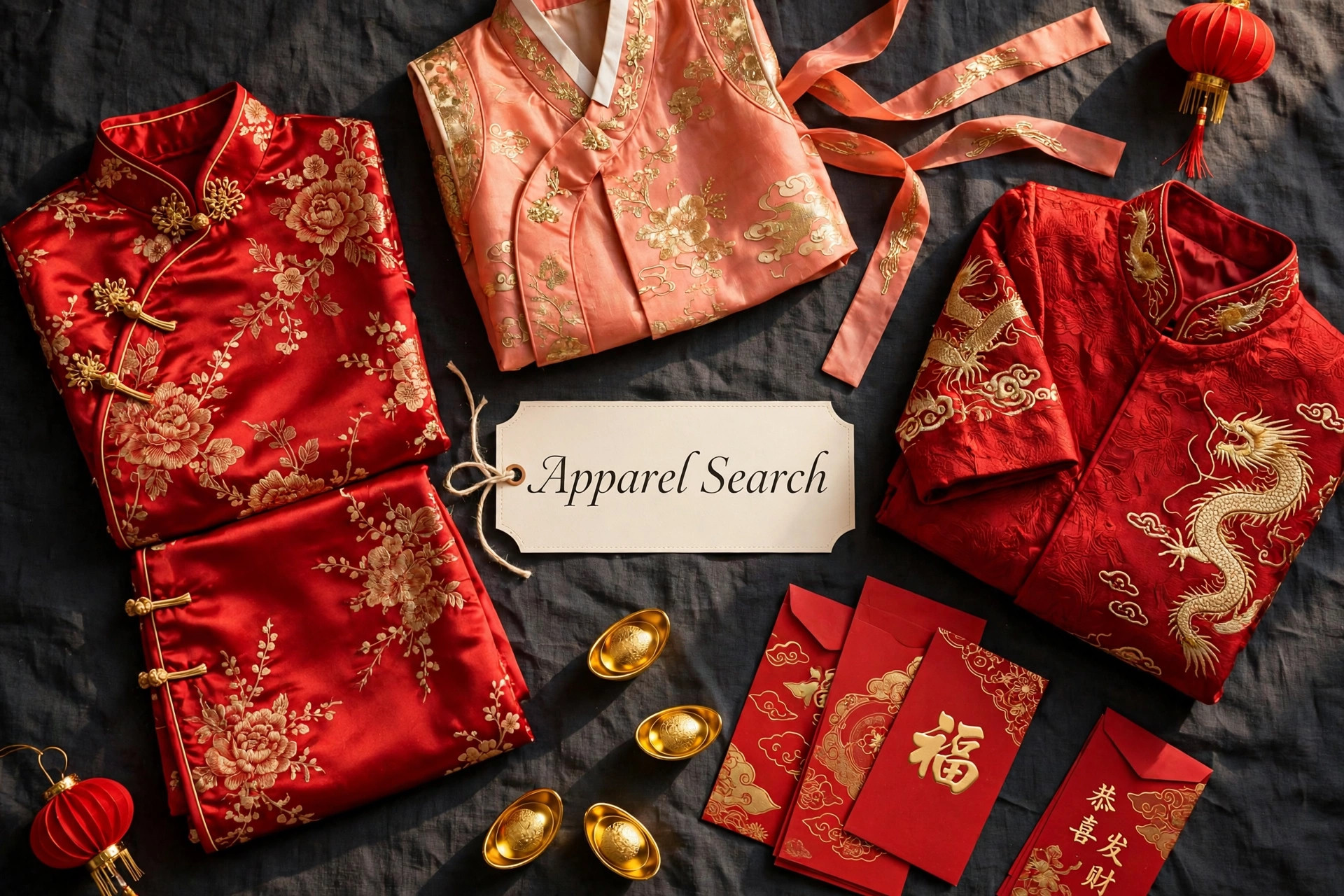
No festival on earth has a clearer colour code. Red is luck, joy and protection — legend gives the colour its job: Nian, the beast of the old year, was driven away by red, noise and light, and red has guarded the new year ever since. Gold — and its clothing cousin, bright yellow — is wealth and prosperity. Between them they cover the season's wardrobe: red dresses and jackets, gold embroidery and jewellery, red sweaters on every child in the family photograph. Our red clothing guide shows the colour's full range if you are building an outfit around it.
New Clothes for a New Year
The new-clothes custom at Lunar New Year is symbolism worn on the body: the year starts fresh, so the clothes do too. Children traditionally get new outfits head to toe; adults buy at least something new, and the shops do their briskest trade of the year in the weeks before. One charming survival: people whose Chinese zodiac sign matches the incoming year — their ben ming nian — traditionally wear red every day of it for luck, down to red socks, belts and underwear, often given by their elders. You do not need a zodiac reason to join the red, but if it is your year, the family will expect to see it.
The Great Garments
Qipao and cheongsam. The mandarin-collared, frog-fastened dress — qipao in Mandarin, cheongsam in Cantonese — is the season's signature for women, in festival red and gold brocade above all. Our cheongsam and qipao guide covers its construction, fit and fabrics; a matching embroidered jacket, the tangzhuang, is the men's traditional counterpart.
Hanbok. For Seollal, Korea's Lunar New Year, the hanbok comes out: the cropped jeogori jacket and full chima skirt for women, jeogori with baji trousers and often a vest or overcoat for men, in the garment's famous saturated colours. Seollal includes sebae, a formal bow to elders — a hanbok is designed to kneel and rise in, which tells you something about dressing for the day's actual movements.
Áo dài. Vietnam's Tết is dressed in the áo dài — the long, split tunic worn over loose trousers, in reds, golds and floral prints for the season. It is worn by women and men alike, and Tết photographs are a river of them.
What to Avoid
The avoid-list is short, symbolic and worth respecting because your hosts observe it. Worn, faded or torn-looking clothes contradict the fresh start the festival is about — distressed denim can sit this one out. Head-to-toe black or white echoes mourning dress in several of these traditions; either colour as an accent is unremarkable, but a full monochrome outfit reads funereal at a new year table. And on the day itself, the custom is to keep the new clothes' luck intact — which is one more reason the season's photographs show nobody in yesterday's laundry.
Family Rounds and Photographs
The practical shape of the day: a reunion dinner the night before, then days of visiting — elders first, in order of seniority — with children dressed up to receive red envelopes and everyone dressed to be photographed, constantly. Neat, respectful and bright serves every stop on the round; formal traditional dress serves the big family gatherings. Guests join where they are invited, dressed as for any festival in this series: festive, considered, and glad to be there. For the other New Year on the calendar, our New Year's Eve outfit guide covers December 31 in the same spirit.
Shop Lunar New Year Outfits on Amazon
Qipao dresses, festive red clothing for the whole family and gold-tone jewellery are all stocked on Amazon ahead of the season.
Shop Clothing on AmazonProduct links are kept in one place on the Apparel Search Amazon shopping guide, so this page can stay a guide rather than a catalogue.
Common Questions
Why does everyone wear red at Lunar New Year?
Red is the festival's colour of luck, joy and protection. Tradition traces it to the legend of Nian, a beast said to have been driven off by red banners, loud noise and bright light — the ancestors of today's red decorations and firecrackers. Wearing red carries that good fortune into the new year, and gold alongside it speaks of wealth and prosperity.
Are qipao and cheongsam the same garment?
Yes — they are two names for the same close-fitting, mandarin-collared dress: qipao in Mandarin, cheongsam in Cantonese. Our cheongsam and qipao guide uses both names and covers the garment's details — collar, frog fastenings and side slit — along with fit and fabric advice.
Do guests need to wear traditional dress at Lunar New Year?
No. Guests are welcomed in their own neat, festive clothes, and a red accent — a scarf, a tie, a dress, a child's sweater — is a cheerful way to join the spirit of the day without wearing a traditional garment. If your hosts suggest a qipao, hanbok or ao dai, or lend you one, wearing it is a pleasure, not an obligation.
What should I avoid wearing at Lunar New Year?
Two things, for symbolic reasons many families observe. Old, worn or torn-looking clothes run against the new year's fresh start — the custom is new clothes, or at least your best. And dressing head to toe in black or white echoes the colours of mourning in several of these traditions; an accent is fine, but a full black-and-white outfit is better saved for another day. When in doubt, ask your hosts.
Cultural & Festival Outfit Guide
The parent guide: the customs that touch your clothes at every festival — coverage, shoes, head coverings and colour symbolism.