Women's Ao Dai Guide
Vietnam's graceful long tunic: a fitted silk dress split into flowing panels, worn over loose trousers.
Shop Ao Dai Now
Shop on Amazon Shop on eBayThe Amazon and eBay links on this page are affiliate links. If you make a purchase through them, Apparel Search may earn a commission.
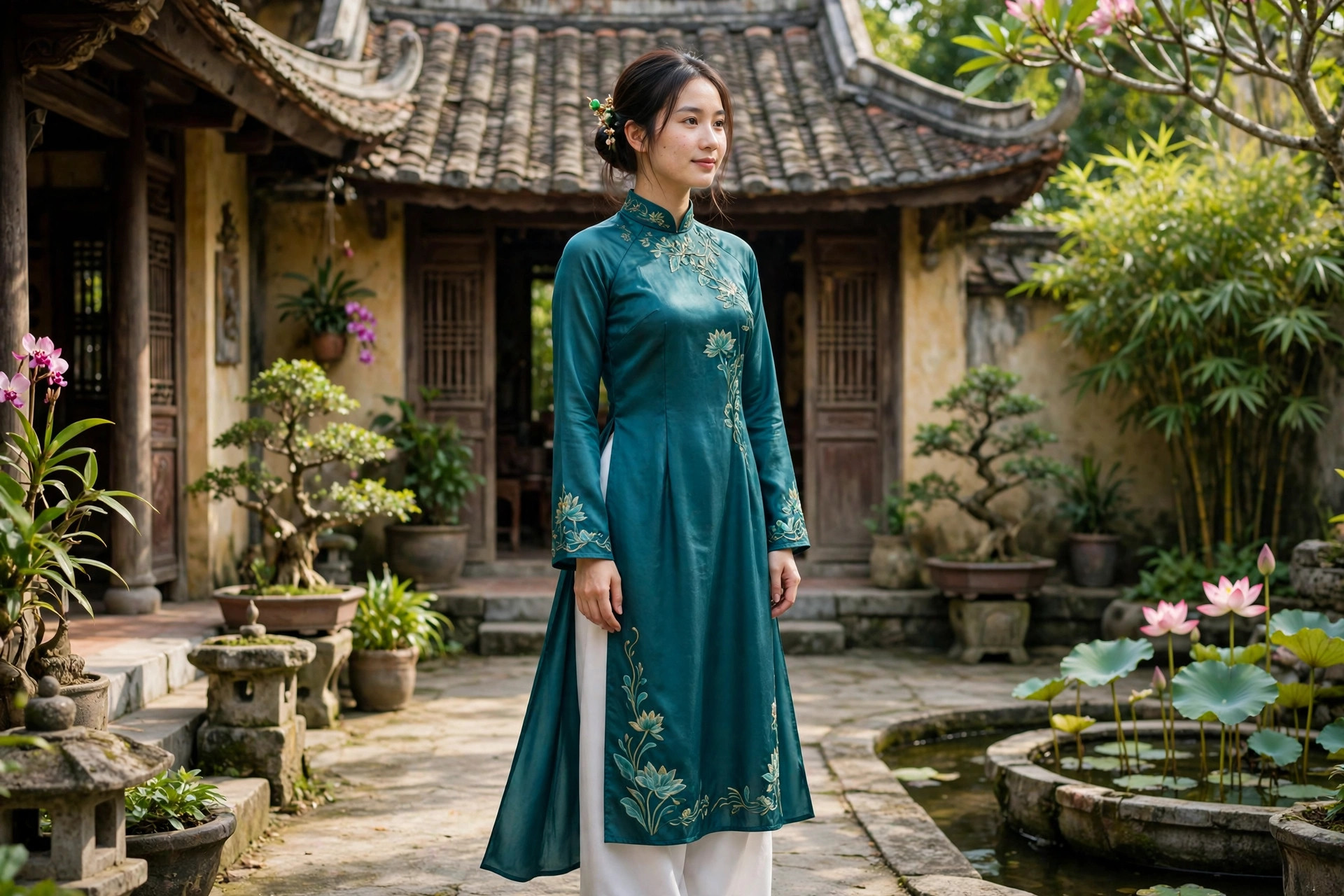
The ao dai is Vietnam's best-known traditional garment: a long, close-fitting tunic that splits into front and back panels from the waist, worn over loose trousers. Its elegance comes from proportion — a smooth, tailored bodice that opens into panels floating over the trousers as the wearer moves. The ao dai is worn today for Tet (Lunar New Year), weddings, school and formal occasions, and as a uniform in some workplaces, and it remains a powerful symbol of Vietnamese identity at home and abroad.
Construction: Panels, Collar and Closures
A traditional ao dai is cut with a high Mandarin-style collar, long fitted sleeves and a bodice that follows the body's lines to the waist, where the skirt of the tunic divides into two panels, front and back. Closures run along one side — historically buttons or snaps from neck to waist — so the tunic opens where the panels begin. The trousers beneath are cut loose and straight, traditionally in a contrasting or matching fabric, and are essential to the design: the ao dai is always a tunic-and-trousers outfit, never a dress worn alone.
Fabrics and Decoration
Silk is the classic ao dai fabric, valued for fluid drape, with brocade and patterned silk reserved for celebrations and weddings. Modern ao dai also comes in chiffon, velvet, lace and breathable synthetic blends for daily wear. Decoration ranges from hand-painted and embroidered motifs — lotus flowers, peonies, cranes and landscapes are favourites — to printed patterns and subtle tone-on-tone weaving. Bridal ao dai are often red or gold with elaborate embroidery, while the white ao dai worn by schoolgirls in Vietnam represents purity and is an iconic image of the garment.
Fit and Modern Styling
Fit is everything in an ao dai: the bodice should be smooth without strain at the closures, the collar neat at the neck, and the panels long enough to sweep elegantly — traditionally to the ankles. Because the silhouette depends on precision, ao dai are frequently made to measure. Modern designers refresh the form with shorter panels, three-quarter sleeves, lower or open necklines, and trousers in denim or cropped cuts for fashion wear, while keeping the panel construction that defines the garment. A conical non la hat is the classic outdoor pairing, and simple jewellery keeps the neckline clean.
Wearing and Care
To wear an ao dai well, posture and movement matter: the panels are meant to flow, so walk rather than stride, and sit by smoothing the back panel to one side. Choose trousers long enough to just clear the shoe, and undergarments that leave the bodice line smooth. Silk and embroidered ao dai should be professionally cleaned or gently hand-washed according to the maker's instructions, dried in shade, and stored hanging or loosely folded away from direct light. A well-kept ao dai in good silk holds its shape and colour for many celebrations.
Choosing an Ao Dai: Ready-Made, Tailored and Colour
Ao dai are sold ready-made in Vietnam and in Vietnamese communities worldwide, and offered made-to-measure by tailors who specialise in the garment — for a first ao dai intended for an important occasion, tailoring is worth it, because the bodice has nowhere to hide a poor fit. When trying one on, raise your arms, sit down and walk: the closures should stay smooth, the collar comfortable, and the panels should swing freely rather than catching on the trousers. Colour choice follows the occasion and the wearer: reds and golds for weddings and Tet, soft pastels for spring celebrations, deep jewel tones for evening events, and white reserved traditionally for students and for its own symbolic purity. Floral patterns scale with the wearer — smaller figures carry fine, scattered motifs best, while bold, large-scale painting suits taller frames. Whichever you choose, buy the trousers as part of the outfit rather than an afterthought: their width, length and fabric weight are designed against the tunic, and the pairing is what makes an ao dai look finished.
Common Questions
Is the ao dai a dress?
No — the ao dai is a long tunic worn over loose trousers. The tunic's panels split from the waist and flow over the trousers, which are an essential part of the outfit, not an optional layer.
What occasions is the ao dai worn for?
Tet (Lunar New Year), weddings, engagements, formal ceremonies and celebrations. White ao dai are traditional school uniform for girls in Vietnam, and ao dai are also worn as staff uniforms and for national celebrations.
Why are ao dai often made to measure?
Because the design depends on a smooth, precise fit through the bodice with panels that fall cleanly from the waist. Made-to-measure cutting keeps the closures strain-free and the collar neat, which ready sizes cannot always achieve.
Traditional & Cultural Dress Guides
Traditional and cultural dress from around the world — every guide in this cluster:
Next, the Alpine outfit of bodice, blouse, skirt and apron — and its famous bow.
Next: Women's Dirndl Guide: The Alpine classic in four parts »Looking for Women's Clothing Stores?
This guide helps you understand and choose ao dai styles with confidence. To browse where to buy, visit our womens clothing store directory, where you can find retailers that carry them.