Men's Barong Tagalog Guide
The Philippines' national formal shirt: luminous piña or jusi cloth, hand embroidery, and a silhouette always worn untucked.
Shop Barong Tagalog Now
Shop on Amazon Shop on eBayThe Amazon and eBay links on this page are affiliate links. If you make a purchase through them, Apparel Search may earn a commission.
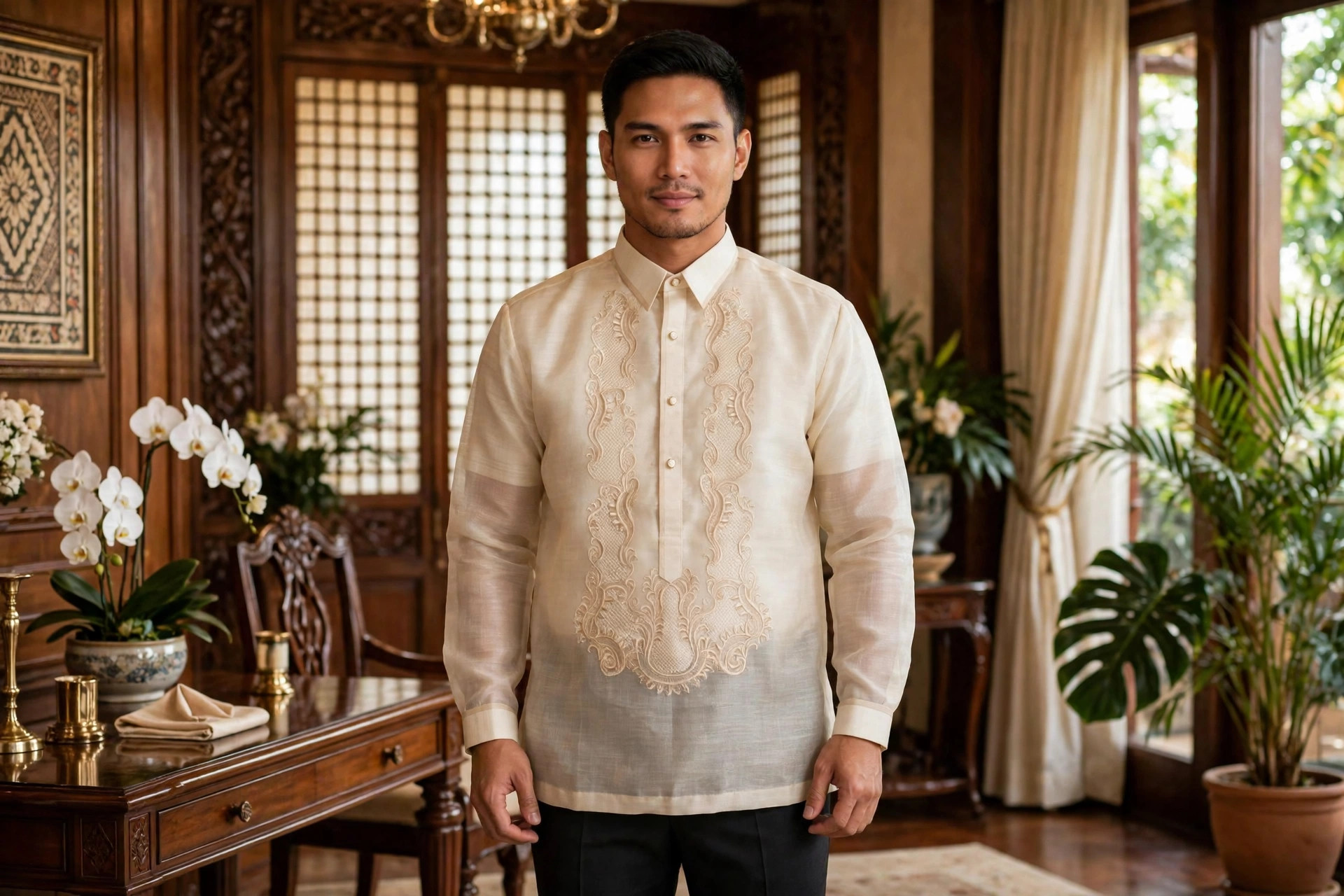
The Barong Tagalog — barong for short — is the formal shirt of the Philippines and one of the world's most distinctive pieces of menswear: a long-sleeved, embroidered shirt of sheer, luminous fabric, worn untucked over trousers at weddings, state occasions, office formality and celebrations. It is the Philippine answer to the suit and tie in a tropical climate — full ceremonial dignity without the weight — and it carries centuries of Filipino craft in its cloth, much of it woven and embroidered by hand.
The Fabrics: Piña and Jusi
The finest barong are cut from piña cloth, woven from the leaf fibres of the pineapple plant: feather-light, naturally lustrous and labour-intensive, since the fibres are scraped, knotted and loomed by hand. Piña is the prestige fabric, reserved for weddings and heirloom pieces. Jusi, traditionally woven from banana fibre (abacá) and now often silk-organza blends, offers a slightly firmer, more uniform sheer at a more accessible price, and is the standard for quality everyday formal barong. Modern polyester organza versions serve uniforms and large events. All share the defining translucency that makes the barong's embroidery float over the undershirt beneath.
Embroidery: Calado and Design
Embroidery is the barong's art. Calado is the traditional openwork technique, in which threads of the woven cloth are drawn and stitched into lace-like patterns — a craft centred in Lumban, Laguna, the barong embroidery capital. Designs range from classic floral and vine scrolls down the front panels and around the cuffs, to pechera patterns concentrated on the chest, and modern geometric or fully embroidered fronts. Buttons are often fabric-covered or pearl, running half or full length. Because the shirt is sheer, embroidery placement is the design: balanced panels that frame the torso and read clearly at a distance in photographs and processions.
Why the Barong Is Worn Untucked
The barong is always worn untucked, its straight hem falling over the trousers — this is rule, not preference. The cut is designed for it: a clean, finished hem, side vents for ease, and a length that covers the waistband completely. Beneath it, a plain white undershirt (camisa de chino style or a simple white tee in modern practice) provides the ground the sheer cloth requires. Trousers are formal and dark — black is the classic partner — with dress shoes; for weddings, the groom's barong is the finest piña, often with the fullest embroidery, matched in spirit by the bride's terno in the same cloth tradition.
Occasions, Fit and Care
Barong Tagalog is correct anywhere a suit would be: weddings, christenings, graduations, government and corporate formality, funerals and national celebrations, and Filipino formal events worldwide. Fit should be comfortable through the shoulder with sleeves to the wrist — the barong is tailored, not blousy — and length should cover the waistband by several inches. Piña and jusi are delicate: specialist dry-cleaning or careful hand-washing as the maker directs, storage flat or on padded hangers away from light, and never wringing the embroidery. A fine piña barong, cared for, is handed down as an heirloom — the natural fate of a garment this well made.
Choosing a Barong: Fabric, Embroidery and Budget
Choosing a barong means choosing its fabric first, because fabric sets both price and purpose. Piña is the heirloom choice — for grooms, honoured guests and pieces meant to be kept — priced for the weeks of handwork in its weaving. Jusi is the connoisseur's everyday formal fabric, with a slightly firmer hand and beautiful clarity for embroidery, at a price that allows a man to own more than one. Quality organza versions serve office uniforms, choirs and large celebrations honourably. Next, judge the embroidery: calado openwork should be even and delicate with no broken threads, front panels balanced, and cuffs finished as carefully as the chest, because cuffs show in every handshake and photograph. Finally, consider the pattern's formality — full-front embroidery for weddings and state occasions, classic panel embroidery for general formal wear, and minimal designs for the office. Bought from reputable Filipino makers, many of them family workshops, a barong supports a living craft tradition as directly as any garment in the world.
Common Questions
Why is the Barong Tagalog worn untucked?
By design and tradition. The barong is cut with a finished straight hem and side vents to be worn over the trousers, covering the waistband. Tucking it in is simply incorrect — the untucked silhouette is the garment's identity.
What is piña cloth?
A sheer, luminous fabric handwoven in the Philippines from pineapple leaf fibres. It is light, naturally glossy and very labour-intensive, making it the prestige fabric for wedding and heirloom barong.
What do you wear under and with a barong?
A plain white undershirt beneath the sheer cloth, dark formal trousers — black is classic — and dress shoes. No tie and no jacket are worn with it; the barong is complete formal dress on its own.
Traditional & Cultural Dress Guides
Traditional and cultural dress from around the world — every guide in this cluster:
More to Explore on Apparel Search
The cluster circles back to Korea's jeogori and chima — begin the tour again.
Next: Women's Hanbok Guide: Korea's traditional dress »Looking for Men's Clothing Stores?
This guide helps you understand and choose barong styles with confidence. To browse where to buy, visit our mens clothing store directory, where you can find retailers that carry them.