Men's Lederhosen Guide
Alpine leather breeches built to last a lifetime: deerskin or goatskin, embroidered suspenders, and a shirt, socks and shoes that complete the Tracht.
Shop Lederhosen Now
Shop on Amazon Shop on eBayThe Amazon and eBay links on this page are affiliate links. If you make a purchase through them, Apparel Search may earn a commission.
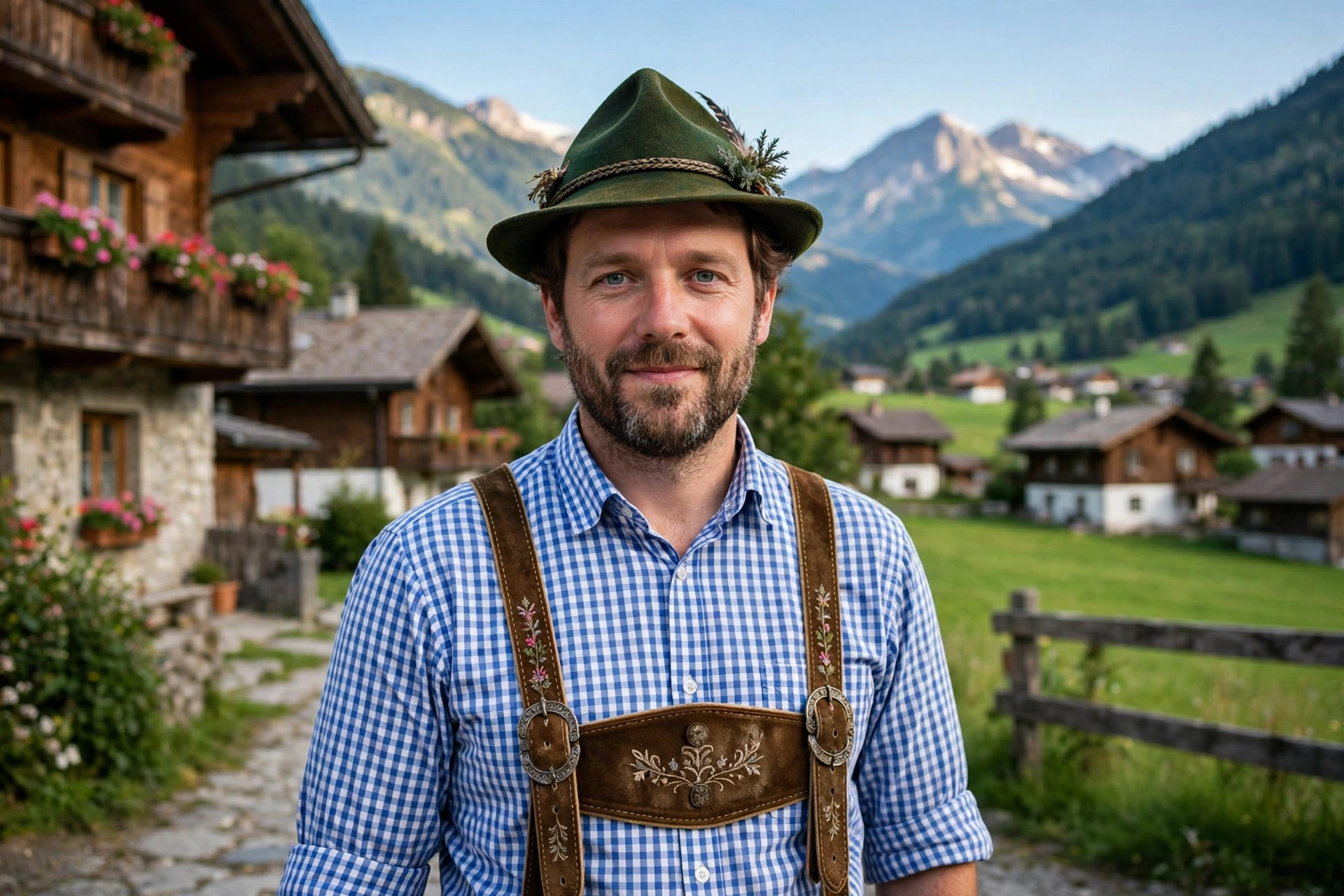
Lederhosen are the leather breeches of the Alpine regions — Bavaria, Austria and South Tyrol — and the men's counterpart to the dirndl in traditional Tracht dress. Made from tanned animal hide, traditionally deerskin, goatskin or cowhide, they were the hard-wearing work trousers of farmers, hunters and woodsmen, valued because leather shrugs off labour that would shred cloth. Today lederhosen are worn proudly at Oktoberfest and folk festivals, weddings and celebrations, and a good pair is still bought the old way: as a garment expected to serve for decades.
Cuts and Lengths
Lederhosen come in three classic lengths. Kurze are short breeches ending above the knee, the summer and festival favourite. Kniebund reach to just below the knee and fasten with a laced or buttoned cuff, the most traditional formal length. Lange are full-length leather trousers for cooler weather and work. All share the pattern's signatures: a front flap fastened with horn or stag-antler buttons, a small knife pocket on the right leg, lacing at the back for adjustment, and seams piped in contrasting leather or thread. Embroidery — edelweiss, oak leaves, deer and regional motifs — decorates the flap, legs and suspenders.
Suspenders, Shirt, Socks and Shoes
The suspenders (Hosenträger) are part of the garment, not an accessory: wide leather straps, joined by an embroidered chest bridge (the Steg) that keeps them in place, often carrying the wearer's regional or family motifs. With them goes the Tracht shirt — white or checked cotton or linen, sometimes with a standing collar and horn buttons — or, in cooler weather, a loden jacket or knitted Tracht waistcoat. Knee socks (Loferl are the short calf-worn style with separate foot pieces in some regions) and sturdy Haferl shoes, the traditional side-laced Alpine shoe, complete the outfit from the knee down.
Leather, Fit and Breaking In
Deerskin is the connoisseur's leather — soft, light, supple and the most expensive; goatskin offers a finer grain at a friendlier price; cowhide is firmest and most economical. All improve with wear, moulding to the body, which is why fit matters: new lederhosen should be snug, even firm, because the leather relaxes into shape. Traditional wearers prize the patina of age and use — a pair carried for years, darkened and polished by wear, carries more standing than a stiff new one. Embroidery quality, real horn buttons and hand-finished seams separate heirloom pairs from seasonal novelties at a glance.
Care: What Leather Breeches Need
Lederhosen are famously not washed in the ordinary way. Air them after wear, brush off dirt, treat stains locally with a leather brush or specialist suede care, and let rain spots dry naturally — the leather's character includes its marks. Store them hanging in a cool, airy place, never sealed in plastic, and keep the suspenders untwisted. Shirts, socks and the rest of the Tracht wash normally. Treated this way, leather breeches genuinely last a lifetime and are handed down — which, in the Alpine tradition, is precisely the point of buying them well in the first place.
Choosing Lederhosen: A Buyer's Checklist
Buying lederhosen well means buying once. Start with the leather: deerskin for softness and prestige, goatskin for a finer grain at a mid price, cowhide for firmness and value — all three are legitimate, and the right choice is the one that fits your budget and how hard you will wear them. Try them snug: new lederhosen should feel firm at the waist and thigh, because the leather gives and moulds within the first wears, and a pair that starts loose ends sloppy. Sit, crouch and climb a step in the shop. Then read the details: real horn or antler buttons, hand-guided embroidery with no loose threads, a properly laced back for adjustment, suspenders included with a well-made chest bridge, and seams piped and finished inside. Regional makers in Bavaria and Austria still produce heirloom pairs, and their work is priced like it — fairly, for a garment measured in decades. A checklist like this turns a festival purchase into the pair you are still wearing, with pride and patina, twenty Oktoberfests from now.
Common Questions
What lengths do lederhosen come in?
Three classic lengths: kurze (short, above the knee), kniebund (to below the knee with a fastened cuff, the most traditional) and lange (full-length trousers). All share the front flap, horn buttons and back lacing of the traditional pattern.
Should lederhosen be washed?
Not in water like ordinary trousers. Traditional care is airing, brushing and spot-cleaning with leather or suede tools; the leather develops a valued patina with wear. Shirts and socks in the outfit wash normally.
What do you wear with lederhosen?
Their own leather suspenders (Hosenträger) with an embroidered chest bridge, a white or checked Tracht shirt, knee socks and Haferl shoes. A loden jacket or Tracht waistcoat is added in cooler weather.
Traditional & Cultural Dress Guides
Traditional and cultural dress from around the world — every guide in this cluster:
More to Explore on Apparel Search
Next, the ankle-length white robe whose name changes as you cross the Peninsula.
Next: Men's Thawb Guide: The ankle-length robe of the Arabian Peninsula — thawb, thobe or dishdasha by region — in crisp white cotton and quietly varied detail. »Looking for Men's Clothing Stores?
This guide helps you understand and choose lederhosen styles with confidence. To browse where to buy, visit our mens clothing store directory, where you can find retailers that carry them.